
In the ever-evolving cyber battlefield, AI tools are racing against human hackers—but who’s actually ahead? The struggle isn’t just technical; it defines the security of businesses, governments, and individuals worldwide. Every day, cyberattacks become faster and more sophisticated, forcing organizations to question whether artificial intelligence can truly outmatch human ingenuity.
The debate over AI security tools vs. human hackers revolves around speed, scale, and creativity. While AI can process and respond to millions of security events per second, human attackers rely on intuition, strategy, and psychological manipulation. Understanding both sides is critical, not just for IT professionals, but for anyone connected to the digital world.
This battle touches multiple layers: AI-driven threat detection systems, firewalls, and predictive analytics face off against phishing attacks, ransomware, and social engineering tactics. The outcome isn’t predetermined; real-world incidents show both sides achieving victories and suffering setbacks. As the cyber landscape evolves, the contest between AI security tools vs. human hackers will continue to define who controls digital safety in 2026 and beyond.
The intensity of AI security tools vs human hackers grows as digital infrastructure expands, turning cybersecurity into a high-stakes arms race where seconds, not days, determine whether systems survive or collapse.
What Are AI-Powered Security Tools?
AI-powered security tools have turned conventional cybersecurity on its head. These systems go beyond reactive protection, using machine learning to monitor, analyze, and respond to threats automatically. From intrusion detection systems to AI-driven firewalls, these technologies can detect anomalies that would take human teams hours, if not days, to uncover.
Companies like Darktrace, CrowdStrike, and Cylance showcase the potential of AI in cybersecurity. They can identify subtle irregularities in network traffic, flag suspicious logins, and even quarantine malicious files before damage spreads. This automated vigilance provides organizations with unparalleled responsiveness.
Even so, AI security tools vs. human hackers is far from a one-sided battle. Hackers exploit loopholes, software flaws, and gaps in AI algorithms, demonstrating that automation is not infallible. The effectiveness of AI depends on how well it is implemented, monitored, and updated, highlighting that even the most advanced systems need human oversight.
In the contest of AI security tools vs human hackers, these platforms thrive on continuous learning, improving detection accuracy over time as they ingest new threat data from global attack surfaces.
Types of AI Security Tools
Network monitoring platforms, endpoint protection, and behavioral analytics tools provide multi-layered defense. Each targets a specific vulnerability, allowing organizations to address both known and emerging threats.
How AI Detects Threats
AI systems analyze massive datasets to uncover patterns invisible to humans. Using predictive modeling, anomaly detection, and real-time analytics, these tools can preemptively block malware, zero-day exploits, and unauthorized access.
AI-powered security tools analyze millions of events per second, while human hackers rely on manual
Human Hackers: Methods and Motivation
Despite the rise of AI defenses, human hackers remain unpredictable and adaptive. Skilled attackers exploit psychological and technical weaknesses that AI might overlook. Social engineering, phishing, and insider manipulation are methods where human intuition trumps automated systems.
Motivations vary widely—from financial gain and political objectives to personal notoriety. This variety forces organizations to defend against an array of unconventional tactics, making human hackers’ techniques a persistent threat even in AI-driven environments.
The dynamic between AI security tools vs. human hackers emphasizes that creativity cannot be entirely automated. While AI can process massive amounts of data quickly, human attackers adjust strategies mid-attack, leveraging context and opportunity to bypass even sophisticated algorithms.
What sustains AI security tools vs human hackers is the attacker’s ability to exploit trust, fear, and urgency—factors rooted in human psychology that algorithms still struggle to fully interpret.
Common Hacker Techniques
Phishing campaigns, ransomware attacks, DDoS exploits, and exploiting software vulnerabilities remain standard tactics. Often, these are layered together for complex, multi-stage attacks.
Human Intuition vs AI Automation
Where AI excels in speed and scale, human hackers exploit context and subtle behavioral cues that machines may fail to interpret, maintaining their relevance in cybersecurity.
AI vs Humans: Direct Comparison
Evaluating AI security tools vs. human hackers highlights a clear division of strength. AI can analyze millions of events per second, detect patterns invisible to humans, and reduce false positives, giving organizations rapid protection against automated and routine attacks.
Humans, however, bring creativity, adaptability, and the ability to manipulate social environments. Hackers exploit weak points in human behavior and system configurations, performing lateral movements that AI alone may not predict.
A comparative view of AI security tools vs. human hackers shows that speed and accuracy favor AI, while adaptability and unconventional thinking favor humans. Both sides evolve continuously, creating a cyber arms race where neither can claim permanent dominance.
The reality of AI security tools vs human hackers shows that automation dominates volume-based attacks, while humans excel in low-frequency, high-impact breaches that rely on deception rather than brute force.
Comparative Metrics
AI wins in processing speed and predictive analytics. Humans excel in ingenuity, strategy, and the ability to recognize and exploit system nuances.
Visualizing the Battle
In a simplified comparison, AI handles volume and automation, humans handle creativity and context, and effective defense requires integrating both strengths.
Human hackers adapt creatively, but modern AI-powered security tools now use machine learning to evolve faster after every attack.
Below is a detailed comparison showing how AI-powered security tools differ from human hackers across speed, accuracy, scalability, and long-term cybersecurity impact.
| Factor | AI-Powered Security Tools | Human Hackers |
|---|---|---|
| Response Speed | Instantly detects and blocks threats in real time using automation | Slower, requires manual execution and testing |
| Learning Ability | Continuously improves through machine learning and global data sharing | Learns through experience, trial, and error |
| Scalability | Can monitor millions of systems simultaneously | Limited by human capacity and time |
| Detection Accuracy | Identifies anomalies using behavior-based analysis | Relies on exploiting known vulnerabilities |
| Creativity | Pattern-based intelligence, limited original thinking | Highly creative, unpredictable attack methods |
| Cost Efficiency | High initial cost but low long-term operational expense | Low entry cost but high risk and effort |
| Adaptation Speed | Rapid updates across all protected systems | Slow adaptation when defenses change |
| Social Engineering | Weak against emotional manipulation attacks | Strong at phishing and psychological exploitation |
| Zero-Day Defense | Increasingly effective at detecting unknown threats | Often discovers and exploits zero-day flaws |
| Long-Term Advantage | Improves continuously with data and automation | Depends on individual skill and motivation |
Real-World Case Studies
Recent incidents underscore the stakes of AI security tools vs. human hackers. AI-driven platforms have successfully blocked ransomware campaigns within minutes, preventing costly damage. Conversely, human hackers have breached top-tier AI defenses by exploiting overlooked software flaws or social vulnerabilities.
Industries like finance, healthcare, and government showcase both outcomes. Organizations solely reliant on AI often miss context-driven attacks, while those relying purely on manual monitoring struggle with volume and speed.
Analyzing AI security tools vs. human hackers through real-world events emphasizes the need for strategic balance. Success is rarely about one side outperforming the other; it’s about integrating rapid detection with human insight to stay ahead of evolving threats.
Documented breaches reinforce that AI security tools vs. human hackers outcomes depend heavily on configuration quality, staff awareness, and response timing rather than the presence of advanced technology alone.
Lessons Learned
Combining AI and human oversight reduces risks and improves response times, turning isolated incidents into learning opportunities for future defenses.
Implications for Business
Hybrid systems enhance resilience, enabling proactive defense strategies against both automated and creative human attacks.
Strengths & Weaknesses
Examining AI security tools vs. human hackers reveals complementary strengths. AI excels in consistency, speed, and scalability, monitoring vast networks and detecting anomalies with high accuracy. Its limitations lie in interpreting human behavior and responding to creative, unexpected tactics.
Human hackers are adaptive and inventive, capable of exploiting context and manipulating system weaknesses. However, they cannot match the speed or scale of AI-driven analysis. This imbalance explains why neither side dominates completely.
Understanding AI security tools vs. human hackers requires acknowledging that weaknesses often emerge at integration points, where poor deployment or misinterpretation neutralizes otherwise powerful defensive capabilities.
AI Pros & Cons
Pros include rapid detection, automation, and minimal error rates. Cons involve vulnerability to adversarial attacks and blind spots in behavioral interpretation.
Hacker Pros & Cons
Pros include creativity, adaptability, and exploitation of human-centric weaknesses. Cons include slower processing, limited scale, and reliance on manual effort.
The Role of Hybrid Security Approaches
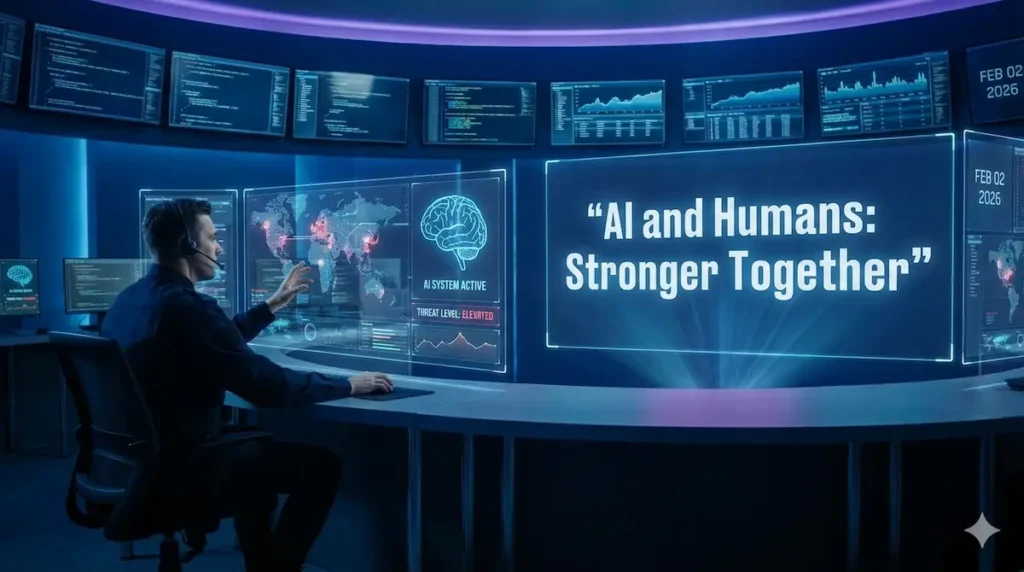
Hybrid security approaches bridge the gap between technology and intuition. Security operations centers increasingly integrate AI monitoring with human oversight, enabling analysts to focus on complex investigations while AI handles repetitive detection tasks.
This combination addresses weaknesses observed in AI security tools vs. human hackers. AI provides scale and precision, while humans supply judgment, strategy, and contextual understanding. Organizations adopting hybrid models achieve faster detection, better prioritization, and improved overall security posture.
Modern enterprises treating AI security tools vs. human hackers as a collaborative challenge outperform peers by aligning automated alerts with human-led threat hunting and contextual decision-making.
AI-Human Collaboration in Practice
Analysts use AI dashboards to identify high-risk activity, allowing humans to make informed, rapid decisions that machines alone cannot handle.
Benefits of Hybrid Approaches
The integration of AI and human intelligence reduces false positives, enhances threat response, and strengthens resilience against evolving attack methods.
Future of Cybersecurity
The battle of AI security tools vs. human hackers is poised to escalate. AI will continue advancing, employing predictive modeling, autonomous responses, and behavioral analytics. Meanwhile, hackers will evolve, exploiting algorithmic blind spots and social engineering vulnerabilities.
The likely path forward favors hybrid strategies. Ethical guidelines, regulations, and industry standards will dictate which sectors can rely on AI autonomously and which require human intervention. The future is not about AI or humans alone—it’s about collaboration.
As AI security tools vs. human hackers evolves, adversaries increasingly probe model behavior itself, forcing defenders to secure not just systems, but the intelligence layers powering them.
Emerging Trends
Expect autonomous threat hunting, predictive analytics, and AI-driven security orchestration to dominate enterprise defenses, while human hackers refine multi-layered and context-driven exploits.
Strategic Takeaways
Organizations must innovate continuously, combining AI efficiency with human expertise to stay ahead in an increasingly complex cyber landscape.
FAQs
Public concern around AI security tools vs human hackers continues to rise, especially as consumers question whether automation protects privacy or quietly introduces new, less visible attack surfaces.
Can AI fully replace human cybersecurity experts?
AI can automate detection and response but cannot replicate human intuition, judgment, and strategic insight.
Are human hackers becoming obsolete?
No. Hackers adapt creatively to bypass AI, remaining a significant threat.
What industries benefit most from AI security tools?
Finance, healthcare, government, and tech companies gain the highest advantage due to scale and sensitive data.
How to stay safe in 2026 with AI threats rising?
Integrate AI monitoring with trained human oversight, update systems regularly, and conduct employee awareness training.
Conclusion & Call-to-Action
Protecting digital assets requires acknowledging the strengths of both sides. The contest of AI security tools vs human hackers will continue shaping the cybersecurity landscape. Organizations that combine AI efficiency with human expertise stay better prepared for evolving threats.
Call-to-action: Equip your systems with AI-powered defenses and proactive monitoring to stay ahead of human hackers—because digital safety waits for no one.
The future of AI security tools vs human hackers favors organizations that invest early in adaptive defenses, continuous monitoring, and informed human oversight rather than reactive security upgrades.