
(Breaking WordPress Security News)
A newly discovered WordPress security flaw is putting over one million websites at risk
The Security Flaw WordPress Plugin 1M Sites has sent shockwaves across the WordPress ecosystem, putting thousands of websites at risk. Security researchers discovered that the vulnerability allows attackers to bypass standard permission checks, potentially gaining access to site data, injecting malicious code, or creating rogue admin accounts. The scale is alarming—over one million active installations are at risk, from personal blogs to small businesses and e-commerce websites. Automated bots have already been detected scanning for vulnerable sites, meaning site owners have no time to delay updates.
Experts warn that the Security Flaw WordPress Plugin 1M Sites could act as a launchpad for large-scale automated attacks, putting countless websites at risk. Sites that neglect updates may face defacement, data theft, or ransomware insertion. Even smaller blogs are targeted because bots indiscriminately scan the entire web for vulnerable plugins, making no site too insignificant to exploit.
What exactly is the WordPress plugin security flaw?
The Security Flaw WordPress Plugin 1M Sites originates from improper validation in a core function, allowing unauthorized users to perform actions that should be restricted to admins. This means attackers can craft requests that should only be allowed for admins, enabling:
- Unauthorized data access
- Injection of malicious code
- Creation of hidden admin accounts
It’s not just theoretical—proof-of-concept attacks already exist, and automated exploitation tools make this vulnerability easy to target at scale.
Digging deeper, the Security Flaw WordPress Plugin 1M Sites is caused by improperly sanitized input fields, allowing hackers to send malicious requests that bypass normal authentication checks. This vulnerability emphasizes that even widely trusted plugins require active monitoring. Site owners unaware of the patch risk prolonged exposure, which increases the likelihood of stealth attacks that can remain undetected for months.
Why this WordPress plugin is installed on over 1 million sites
The plugin became popular because it solves common WordPress issues like performance optimization and content management. Its widespread adoption is a double-edged sword: popularity ensures trust but also attracts attackers. Many site owners assume a high-install plugin is automatically safe. In reality, the Security Flaw WordPress Plugin 1M Sites turns it into a prime target for cybercriminals aiming to compromise multiple websites rapidly.
The plugin’s widespread adoption is due to its ease of use, performance features, and compatibility with major WordPress themes. However, this popularity amplifies the consequences of the Security Flaw WordPress Plugin 1M Sites, making it a high-value target for attackers seeking widespread access. Attackers focus on high-installation plugins because a single exploit can compromise thousands of websites in rapid succession, spreading malware efficiently.
How attackers can exploit this WordPress plugin vulnerability
Once a website with a vulnerable plugin is identified, exploitation is straightforward. Bots or hackers can send malicious requests that bypass authentication, allowing them to:
- Upload malicious PHP files
- Modify core WordPress files
- Inject SEO spam or redirect users
- Maintain persistent access with hidden accounts
Because these attacks can remain invisible, many sites continue functioning normally while quietly serving malware.
Attackers target the Security Flaw WordPress Plugin 1M Sites by scanning for outdated versions across numerous websites, allowing them to compromise multiple sites efficiently. Once located, they deploy scripts to inject code, manipulate site settings, or create persistent admin accounts. Many compromised sites remain operational, which allows attackers to continue harvesting sensitive data or redirect visitors to malicious pages without immediate detection.
Real-world impact: Why this security flaw is not “minor”
The Security Flaw WordPress Plugin 1M Sites is critical, with previous vulnerabilities of this kind causing serious consequences such as data theft, site defacement, and lasting SEO damage.
- Google blacklisting and SEO penalties
- Compromised user data
- Loss of site credibility and revenue
Even after patches are applied, recovery can be slow. For businesses, ignoring this flaw can have long-term financial and reputational consequences.
Beyond theoretical concerns, the Security Flaw WordPress Plugin 1M Sites can directly disrupt business continuity, leading to downtime, compromised data, and potential revenue losses. Exploited websites may experience blacklisting, visitor redirection to spam content, or permanent SEO damage. Even after remediation, the reputational and financial impacts linger. This makes it a critical security concern, not just a routine plugin update, requiring immediate attention from site owners.
Is your WordPress site affected by this security flaw?
Any site using the vulnerable plugin without the latest update is at risk, particularly if automatic updates are disabled. Sites that appear normal are not guaranteed safe—silent compromises are common. The only reliable method to verify safety is to check plugin versions, apply the patch, and scan the website for malicious changes.
To gauge their risk, website administrators should check whether their site is affected by the Security Flaw WordPress Plugin 1M Sites, ensuring no outdated versions leave them vulnerable to attacks. Sites running outdated versions are at immediate risk. Even minor neglect, such as skipping a monthly update, can leave a site vulnerable. Regular monitoring, combined with automated alerts, can help ensure no site remains unknowingly exposed to potential breaches.
What the plugin developer says about the security issue
The plugin’s development team has confirmed the Security Flaw WordPress Plugin 1M Sites and promptly released a patch to protect affected websites from potential exploitation. They advise users to update immediately. However, the developers cannot force installations, so sites that delay updates remain exposed. This highlights the shared responsibility between developers and site owners.
After confirming the Security Flaw WordPress Plugin 1M Sites, the development team issued an urgent advisory, urging site owners to update immediately to prevent potential breaches. They recommended updating immediately, noting that older plugin versions are the primary vulnerability vector. While the patch resolves the issue, developers stressed that continuous maintenance and vigilance are essential, as delayed updates dramatically increase the risk of real-world exploitation.
How to fix the WordPress plugin security flaw immediately
To protect your website:
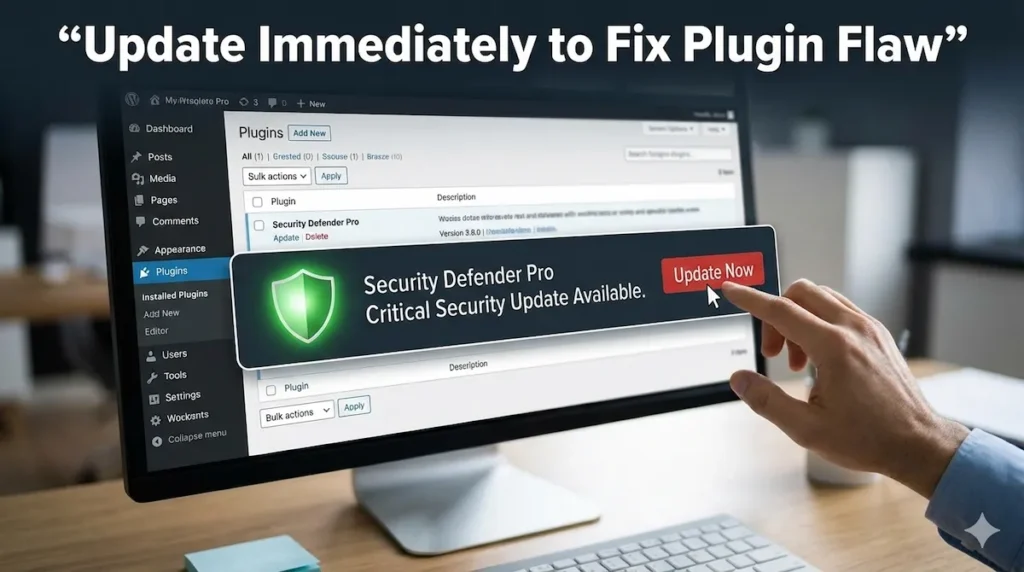
- Update the plugin to the latest patched version
- Scan for malware or unauthorized admin accounts
- Change passwords and database credentials
- Enable automatic updates for critical plugins
Acting immediately is crucial—any delay increases the risk of compromise.
Addressing the Security Flaw WordPress Plugin 1M Sites immediately requires a multi-step approach, including updating the plugin, scanning for malware, and securing site credentials to prevent further compromise. Updating to the latest plugin version closes the primary vulnerability. Following this, website owners should perform a thorough scan for malware, check for suspicious admin accounts, and enforce strong password policies. Proactive monitoring and enabling automatic updates prevent similar threats from compromising the site in the future.
Why WordPress plugin security flaws keep happening
The recurring appearance of the Security Flaw WordPress Plugin 1M Sites highlights systemic challenges in plugin development, where rapid growth often outpaces thorough security audits and leaves sites vulnerable. Many plugins scale quickly without thorough security audits, and site owners often neglect updates. The WordPress ecosystem is not insecure by design, but security requires proactive participation.
The ecosystem’s size makes recurring issues inevitable. The Security Flaw WordPress Plugin 1M Sites underscores the ongoing tension between rapid plugin development and comprehensive security auditing, showing how speed can sometimes come at the cost of site safety. Many high-installation plugins grow faster than their maintenance protocols, creating vulnerabilities. Coupled with administrators’ inconsistent update habits, this cycle ensures that WordPress security risks remain persistent across the platform.
What WordPress site owners should learn from this incident
Popularity is not a security guarantee. Every plugin adds code and potential risk. Regular audits, removing unused plugins, and timely updates are essential to minimize exposure. Security is ongoing maintenance, not a one-time task.
Site owners should view the Security Flaw WordPress Plugin 1M Sites as a wake-up call, emphasizing the importance of timely updates, routine audits, and vigilant security practices to protect their websites. Reliance on plugin popularity alone is insufficient; each plugin is code that must be actively managed. Routine audits, minimal plugin installation, timely updates, and robust monitoring are critical to prevent attacks. Learning from this incident reduces exposure and strengthens overall website security posture.
Frequently Asked Questions (FAQ)
Is this security flaw currently being exploited?
Yes. Exploit attempts targeting the Security Flaw WordPress Plugin 1M Sites have already been detected, highlighting the urgent need for site owners to update and secure their websites immediately.Automated bots scan for vulnerable sites, meaning any unpatched installation is at immediate risk. Sites may not show obvious signs of compromise until it’s too late.
Do I need to remove the plugin completely?
As long as you update promptly, the patch resolves the Security Flaw WordPress Plugin 1M Sites, protecting your website from potential exploits. Removing it is only necessary if you no longer use the plugin or want to reduce potential attack surfaces.
Can this vulnerability affect website SEO?
Absolutely. Compromised sites may suffer from SEO spam, malicious redirects, or Google Safe Browsing warnings. Recovery after an attack can take weeks or months, impacting traffic and revenue.
Are WordPress core files also at risk?
The flaw targets the plugin itself, but attackers often modify core files to maintain access. Simply updating the plugin is essential, but a full site scan for malicious changes is also recommended.
How can I prevent similar plugin security issues in the future?
Enable automatic updates, remove unused plugins, monitor security alerts, and audit your site regularly. The Security Flaw WordPress Plugin 1M Sites demonstrates that even widely used plugins are not automatically safe, and popularity alone cannot guarantee website security. Ongoing vigilance is the key to long-term protection.
Should hosting providers block vulnerable plugin versions?
Ideally, yes. Some managed hosts block known vulnerable plugin versions automatically. However, site owners cannot rely solely on hosts—they remain ultimately responsible for timely updates.
Final thoughts: This is a warning, not an exception
The Security Flaw WordPress Plugin 1M Sites is part of a recurring pattern: widely popular plugins, delayed updates, and widespread exposure, showing how quickly vulnerabilities can impact thousands of websites. Acting quickly, maintaining minimal plugins, and performing regular audits remain the only reliable defenses.
This event underscores a recurring trend: widespread adoption of plugins without rigorous security practices can have severe consequences. The Security Flaw WordPress Plugin 1M Sites serves as a stark reminder that website vigilance is essential, and proactive maintenance is the only reliable defense against potential attacks. The safest sites combine proactive maintenance, minimal plugin use, and rapid adoption of updates, demonstrating that security is about discipline, not luck.