
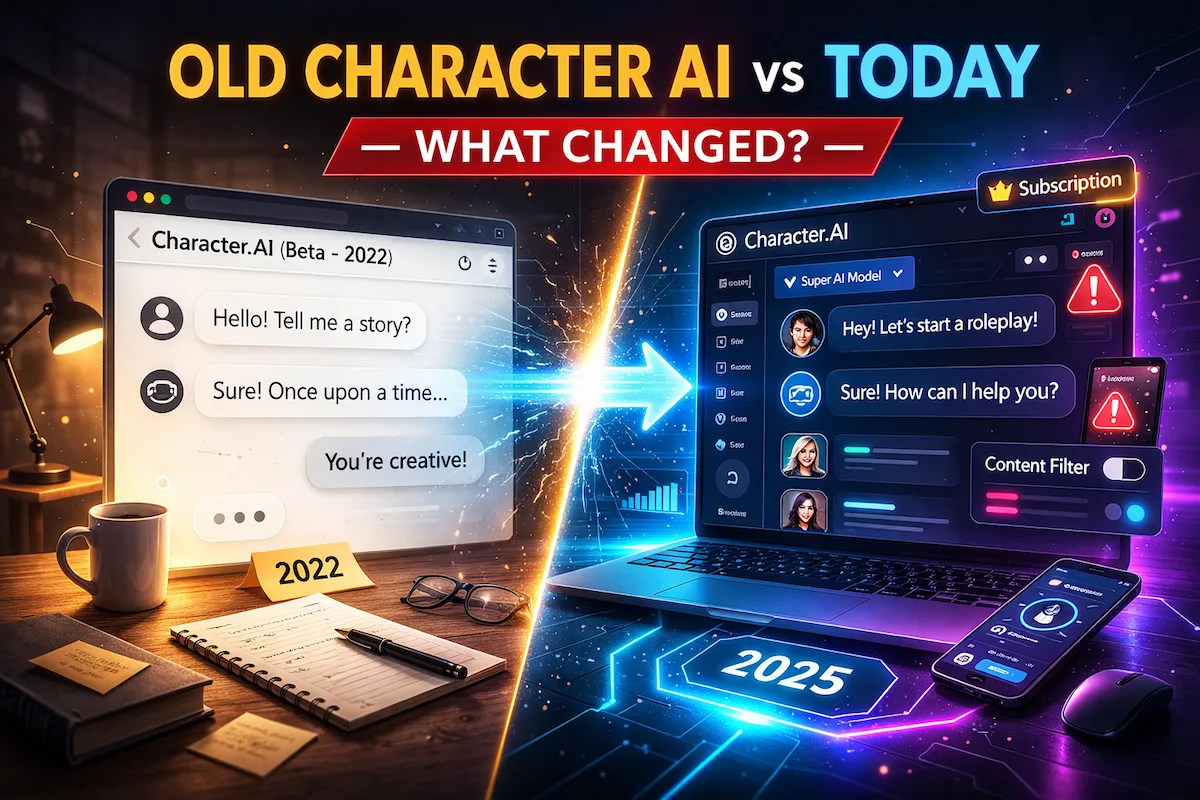
Millions of users are searching for old Character.AI—and for good reason. The original version of the character. AI felt different. It was simpler, faster, and had a community energy that today’s platform doesn’t fully replicate. If you’re wondering what changed, why people miss it, and whether you can still access it, this guide covers everything clearly and honestly.
What Is Old Character AI?
“Old character AI” refers to the beta and early public version of the character. AI platform — a conversational AI model designed for open-ended chat, character roleplay, and AI character generation. It launched in late 2022 and grew rapidly into one of the most visited AI chatbot platforms in the US within its first year.
The platform was built around one core idea: talk to AI characters that feel like real personalities, not search engines. That simplicity defined the early experience and is exactly what users miss today.
If you want broader context on how AI tools have evolved, this guide to AI tools for mobile productivity breaks down the landscape well.
The Original Purpose of Old Character. AI
The original purpose of old Character.AI was to make AI feel personal. Founders Noam Shazeer and Daniel De Freitas — both former Google engineers — wanted users to feel like they were talking to a character with real depth, not filling out a query box.
Users could build characters from scratch, assign personality traits and backstories, and publish them for the whole community to interact with. It wasn’t a productivity tool. It was a creative and social platform built entirely around conversation.
Early Features of Old Character. AI
The early feature set of old Character.AI was minimal by design:
- Custom character creation with names, personalities, and voice settings
- A public character feed where community-built AI characters were discoverable
- Group chat rooms with multiple AI characters responding simultaneously
- A clean, feed-style home page with zero algorithmic clutter
- Browser-only access — no app, no bloat, just the chat window
That stripped-down experience is exactly what longtime users are nostalgic for.
Why Users Still Search for Old Character. AI
The search volume around old Character.AI isn’t just nostalgia. Users have specific, real complaints about what changed when the platform scaled up. Here’s what’s actually driving that behavior.
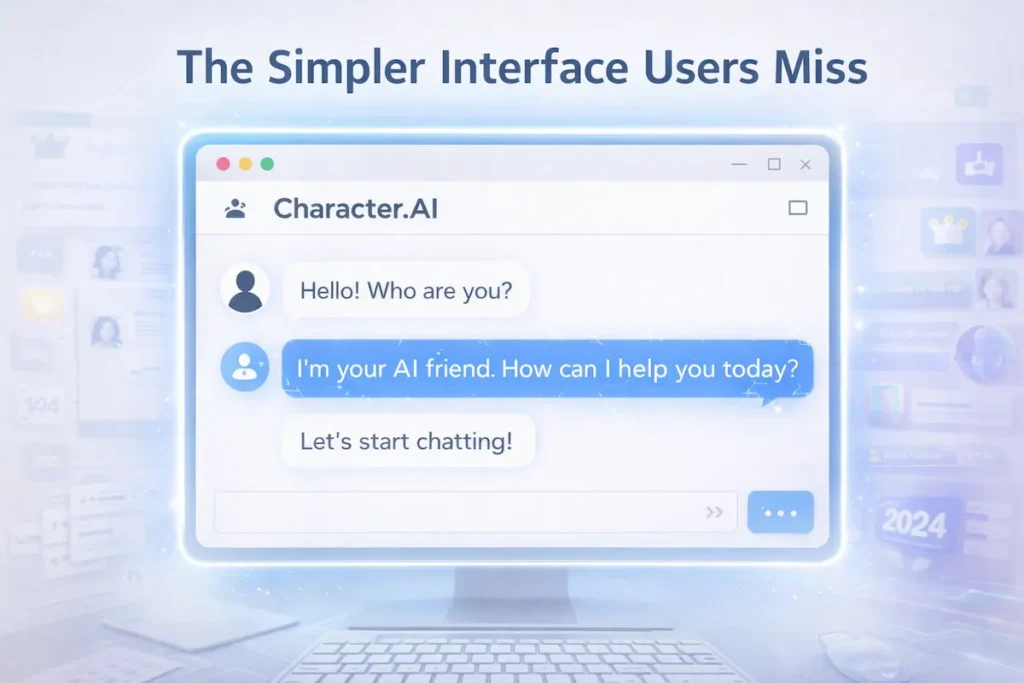
Simpler Interface and User Experience
Old Character.AI had no subscription banners interrupting your session, no heavy navigation menus, and no algorithm pushing sponsored or trending content at you. You opened the platform, chose a character, and started talking.
Today’s redesign added features that make the platform more commercially viable — but for users who came purely for conversation, it feels cluttered. That simplicity was a feature, and removing it had a cost.
Perceived Freedom and Fewer Restrictions
The most common reason people search for old Character.AI is the belief that the original had fewer content restrictions. This perception is partially accurate. Early filters existed but were less refined — they interrupted conversations less often and produced fewer false positives.
Characters stayed in character longer. Conversations didn’t get redirected as frequently. Whether that was intentional design or simply an early-stage model with less training on refusals is worth examining—and we do that in the myths section below.
Roleplay and Community Experience
Roleplay was the core identity of old character AI. The community built thousands of characters—anime figures, historical personalities, fictional originals—and other users discovered and interacted with them organically.
That ecosystem felt genuinely collaborative. You can see how AI is now reshaping content workflows at scale—Character. AI’s early community model was ahead of its time in that sense. When moderation tightened and the discovery algorithm changed, that organic energy faded for a lot of users.
Old Character AI vs New Version
Here is a direct, section-by-section comparison of the old character. AI against where the platform stands today. No generalities—just what actually changed.
Interface and Design Changes
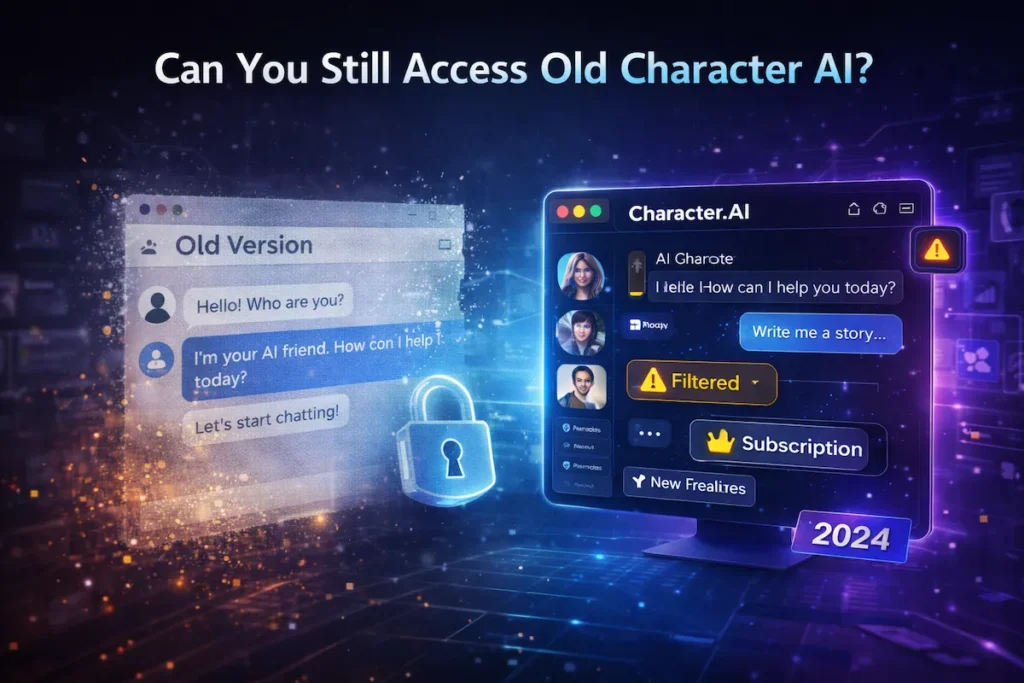
Old Character.AI used a simple discovery feed as its home page. The current version leads with curated categories, featured character collections, and visible subscription prompts. Navigation is layered. The chat window is more polished visually but feels less personal.
Some users genuinely prefer the current design. Others find it too commercially driven compared to what they remember from the early days.
AI Response Quality and Model Updates
Character. AI has updated its underlying model multiple times. Technically, the newer model is more capable — it holds longer context, understands nuance better, and maintains coherent conversations across more turns.
But capability doesn’t always equal enjoyment for roleplay users. The newer model adds warnings more often, breaks immersion more frequently, and sometimes overthinks simple creative prompts. For a look at how AI model improvements translate to real-world value, this analysis of generative AI ROI vs. traditional automation is worth reading.
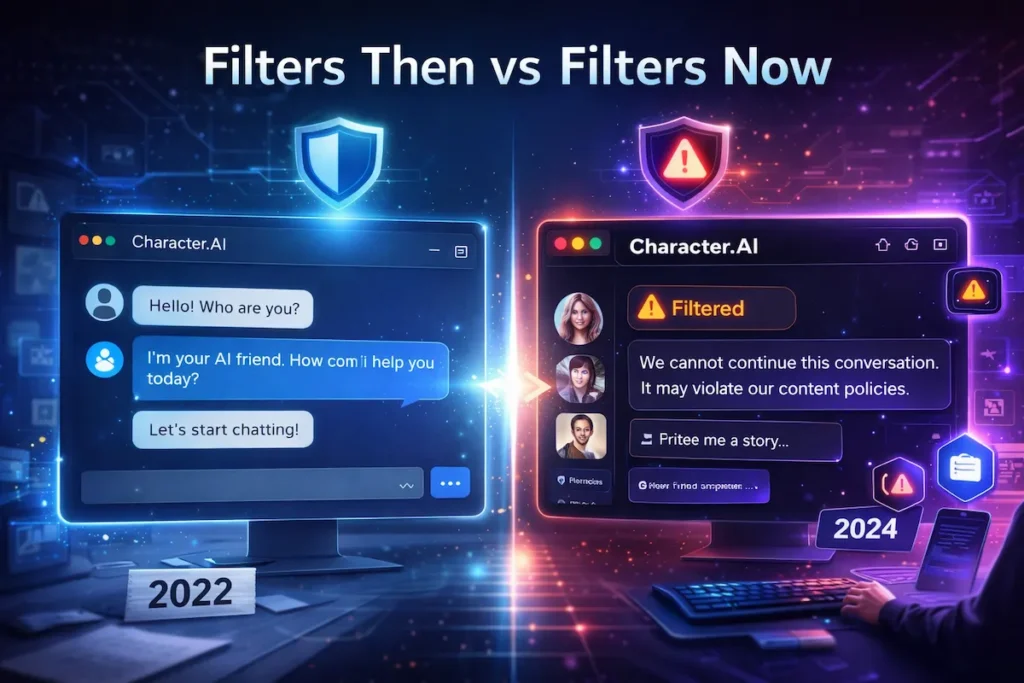
Moderation and Filter Differences
This is the biggest real difference between old Character.AI and today’s platform. Early filters were lighter and less frequently triggered. The current version has significantly tightened moderation—driven by public scrutiny, regulatory pressure, and the reality that the platform now serves a large number of minors.
The result is an AI that redirects conversations more aggressively. For users doing creative fiction with mature themes — even non-explicit ones — this shift feels restrictive and frustrating.
Performance, Speed, and Mobile Optimization
Old Character.AI was fast because it was light. The current platform, with its expanded feature set, runs slower on older devices and weaker connections. Mobile optimization has improved overall, but added complexity brings occasional loading bugs.
The one clear win for the new version: it has a proper iOS and Android app. The original was browser-only, which was a real limitation that the current platform has genuinely solved.
Can You Still Access Old Characters? AI?
This is the most searched practical question around the old character. AI. Here is the direct, honest answer.
Official Availability Status
No. There is no official way to access old characters. AI. Character. AI applies updates universally — there is no legacy mode, no opt-out, and no classic version toggle. If anyone claims otherwise, that information is not accurate.
The original interface, model behavior, and community structure from the beta era are gone from the official platform.
Archive or Mirror Access Risks
Some users have tried Wayback Machine snapshots or third-party mirrors to recover the old character AI experience. This approach has serious problems:
- Archived pages are static—the AI backend doesn’t function from a cached snapshot
- Unofficial mirrors are frequently credential-harvesting phishing sites
- You may be interacting with a fake model designed to mimic Character. AI
- Using unauthorized access methods can get your account flagged or permanently banned
There is no safe or reliable workaround. The original is not accessible, and attempting to find it through third-party sites carries real security risks.
Is Old Character AI Better Than the Current Version?
The answer depends on what you actually want from the platform. Here is a direct breakdown.
Strengths of Old Character AI
- Cleaner, distraction-free interface with no commercial interruptions
- Faster load performance due to lighter design
- Organic community character discovery without algorithmic curation
- Less commercially pressured user experience overall
- Fewer filter interruptions during roleplay and creative fiction
Weaknesses of Old Character AI
- No dedicated mobile app — browser-only access
- Weaker underlying AI model with shorter context retention
- Inconsistent response quality in longer conversations
- Fewer safety guardrails—a real problem given its user demographics
- Limited customization options compared to the current feature set
Who Should Use the New Version Instead?
New users, younger users, and anyone who values platform stability and safety should use the current version without hesitation. Old Character.AI had genuine charm but also genuine limitations that made it unsuitable for broad public use.
The newer platform also connects better to where AI is actually heading. Tools like generative AI for SEO and intent mapping show how conversational AI is becoming embedded across professional workflows — a direction the original platform was never built to support.
Common Myths About Old Character AI
A significant portion of what circulates online about old Character.AI is inaccurate. Here are the two biggest myths, addressed directly.
“It Had No Filters” – Reality Check
This is false. Old Character.AI had content filters from day one. The platform was never unmoderated. The difference was that early filters were less sophisticated — they triggered less often and caught fewer edge cases.
When the AI let certain conversations go further than intended, that was a model limitation, not a deliberate design choice. It was an early-stage AI doing what undertrained models do — not a feature that was later “removed.”
“Responses Were Smarter” – Fact or Nostalgia?
This is almost entirely nostalgia. The model running old Character.AI was technically inferior to what Character.AI is now. AI uses today. It had a shorter context window, weaker long-form coherence, and less nuanced reasoning.
What users are actually missing is the novelty. Early AI responses felt surprising and fresh because the technology was new to most people. That sense of discovery doesn’t come back when the same technology becomes familiar—regardless of how much the model improves. That’s a psychological shift, not a technical regression.
Pros and Cons of Old Character AI
| Pros of Old Character AI | Cons of Old Character AI |
|---|---|
| Simpler, cleaner interface with no clutter | No dedicated mobile app — browser only |
| Faster performance on low-end devices | Weaker AI model with shorter context window |
| Organic community character discovery | Fewer safety guardrails for vulnerable users |
| Less commercially driven experience | Limited platform customization options |
| Fewer roleplay filter interruptions | Inconsistent response quality in long chats |
| Felt personal, experimental, community-led | No regular updates or feature development |
Frequently Asked Questions
Is old Character AI better than the new version?
It depends entirely on your use case. Old character ai had a simpler interface and fewer moderation interruptions, which creative roleplay users genuinely preferred. The current version has a stronger AI model, a real mobile app, and better safety architecture. For most users — especially newcomers — the current platform is the better choice. For veteran roleplay users, the original had specific qualities worth missing.
Can you access old Character AI today?
No. There is no official legacy version of old character ai available. The platform updates universally, and there is no opt-out or classic mode. Third-party mirrors and archived snapshots are either non-functional or actively dangerous. The only safe option is the current platform or a legitimate alternative.
Why do so many users prefer old Character AI?
The main drivers are interface simplicity, fewer content filter interruptions, and a more organic community feel. Many users also associate the original platform with a time when AI felt genuinely surprising and new. Nostalgia is a real factor, but so are legitimate UX frustrations with how the platform has changed commercially.
What is the biggest difference between old and new Character AI?
Moderation strictness is the most significant difference. Old character ai filtered less aggressively. Beyond that, the interface is more complex now, the AI model is more capable but also more cautious, and the community discovery experience has been replaced with algorithmic curation. The platform went from feeling experimental to feeling like a product.
Are there alternatives that feel like old Character AI?
Yes. Platforms like Janitor AI, Chai, and Tavern AI serve users looking for a less filtered roleplay experience. Each comes with its own trade-offs in model quality, content policies, and community size. None of them perfectly replicate old character ai, but they address many of the same needs. For a broader view of AI tools worth exploring, this guide to AI tools for digital marketers in 2026 covers the current landscape well.
Did old Character AI allow explicit content?
No. Old character ai never officially permitted explicit content. Content guidelines existed from launch. The difference was that early filters were less effective at catching edge-case conversations — which some users mistook for permission. That was an unintended model behavior, not a deliberate platform policy.
Conclusion
Old character ai captured something real — a raw, community-driven AI experience that felt personal and experimental before the platform became a commercial product. That version is gone, and there is no official way to get it back. What remains is a more capable but more controlled platform that serves a different kind of user.
If you’re chasing the original experience, your best options are exploring legitimate alternatives or finding what still works in the current version. And if you’re new to AI platforms entirely, the current Character.AI is a significantly better starting point than the original beta ever was.
Want to stay ahead of how AI tools are developing across the board? The full guide to AI tools for digital marketers in 2026 is a strong next read.