
Introduction—Xiaomi’s Bold Entry into Electric Cars
The global electric vehicle market rarely pauses for newcomers, yet this launch has forced even established players to look twice. Xiaomi SU7 marks Xiaomi’s first serious step into electric mobility, not as an experiment, but as a statement of intent backed by years of ecosystem dominance and hardware discipline. The company is entering the EV space with the confidence of a brand that already understands scale, efficiency, and consumer trust.
What’s driving the excitement isn’t just the badge—it’s the ambition behind it. Xiaomi has positioned this sedan as a performance-oriented, design-forward electric car that speaks directly to tech-savvy buyers who expect more than just range numbers. Midway through its reveal cycle, the Xiaomi SU7 has already proven it’s not chasing trends but attempting to redefine how a technology company builds a car from the ground up.
Design, performance, and software integration sit at the core of this approach. Xiaomi’s experience with smart devices gives it an unusual advantage: the ability to think of a car as a connected product rather than a standalone machine. Instead of easing into the segment, Xiaomi arrives fully formed, signaling that its EV ambitions are long-term, global, and serious.
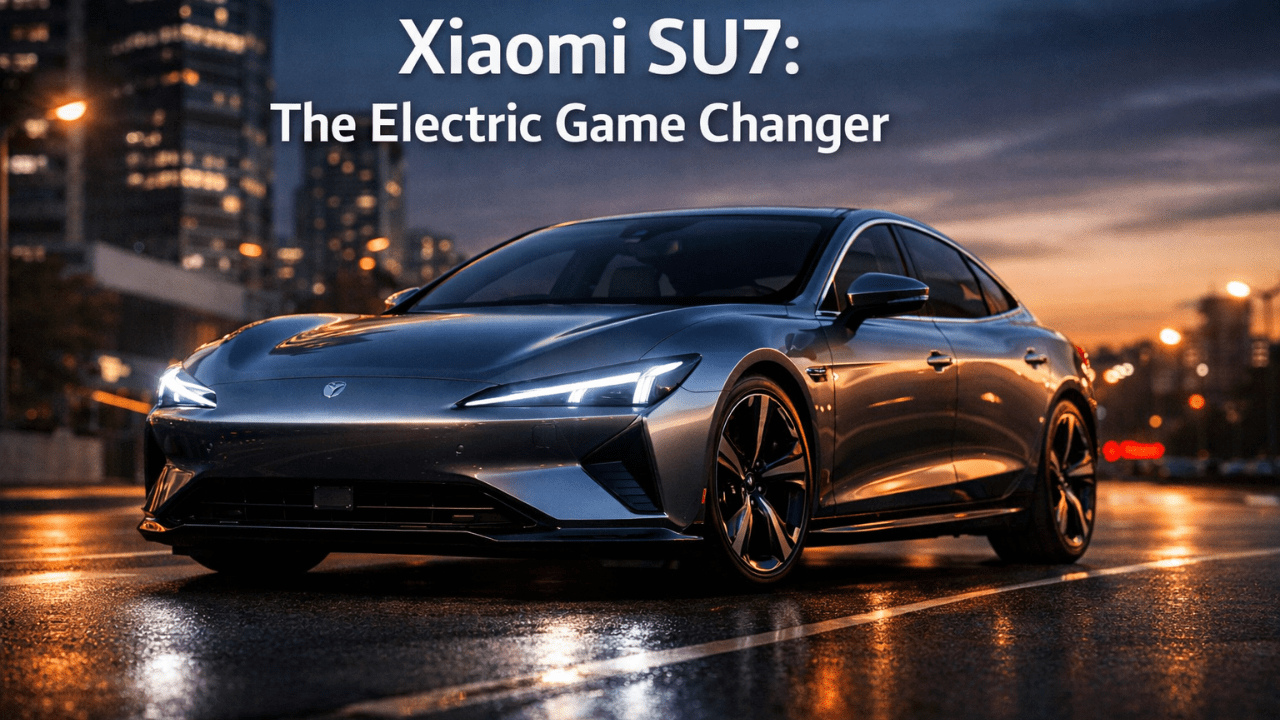
Xiaomi SU7 Design Philosophy (Matches Featured Image)
First impressions matter in electric vehicles, and this one is engineered to stop scrolling thumbs instantly. The Xiaomi SU7 follows a design philosophy rooted in motion, where every surface appears shaped by airflow rather than ornamentation. The coupe-inspired silhouette lowers visual weight while reinforcing speed, even when the car is standing still.
Aerodynamics plays a central role here, not as an afterthought but as a design driver. The body lines remain clean and uninterrupted, allowing light to glide smoothly across the panels. Halfway through the visual experience, the Xiaomi SU7 reveals its premium intent through restrained use of chrome, flush elements, and paint finishes that reflect environmental light instead of overpowering it.
Modern design language replaces aggression with confidence. LED lighting elements are slim, purposeful, and sharply defined, creating a recognizable light signature without visual noise. Smooth curves blend into a sporty stance, reinforcing the idea that this sedan is built for performance without sacrificing elegance.
The result is a car that communicates speed, power, and innovation without shouting. Xiaomi’s design team clearly aimed for longevity—something that looks relevant today and convincing years from now.
Exterior Highlights of Xiaomi SU7
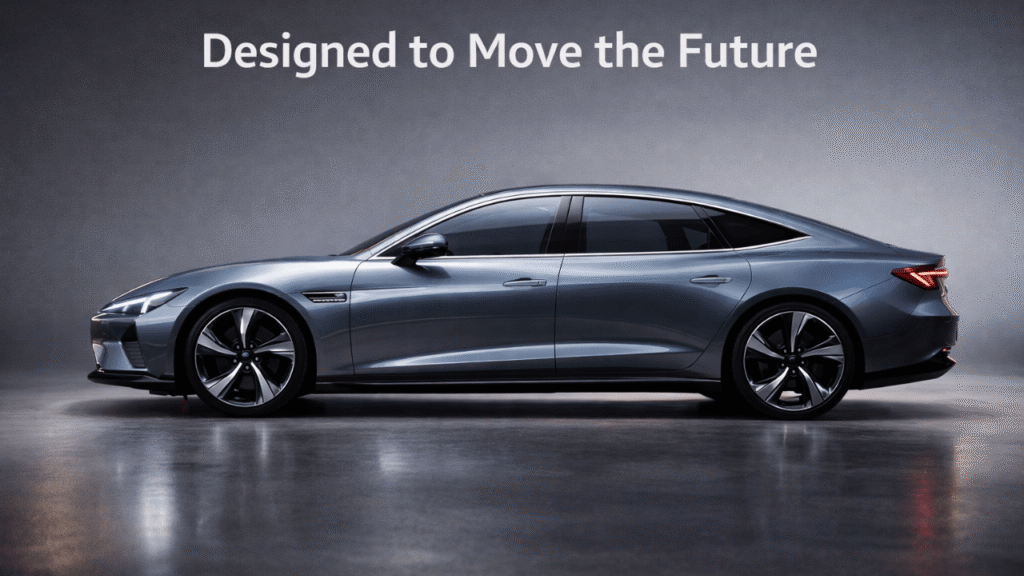
Some electric cars rely on novelty; this one relies on discipline. The Xiaomi SU7 introduces an exterior that feels deliberately sculpted rather than over-styled, starting with a front fascia that balances sharpness with restraint. The lighting system anchors the face, using aggressive geometry without drifting into excess.
Move along the side profile, and the engineering intent becomes clearer. The low-drag structure is emphasized through smooth door contours, tightly integrated handles, and wheel designs that serve both form and airflow efficiency. Midway through the exterior walkaround, the Xiaomi SU7 begins to resemble performance-focused sedans like the Tesla Model 3, though with a more expressive stance.
At the rear, futuristic taillight elements stretch across the width, reinforcing visual stability while adding a high-end finish. The lighting pattern feels inspired rather than derivative, subtly nodding to premium electric sedans such as the Porsche Taycan without imitating them.
Overall, the exterior communicates balance. It doesn’t attempt to dominate visually but instead earns attention through proportion, surface control, and coherence. That restraint is what gives the car long-term appeal.
Interior & Cabin Experience
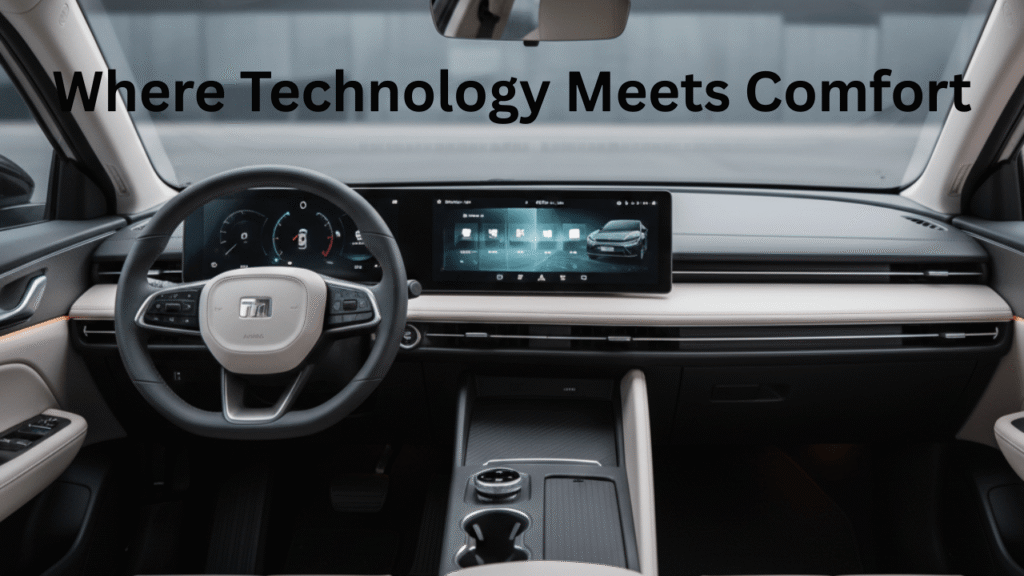
Stepping inside feels less like entering a car and more like entering a carefully curated digital environment. The Xiaomi SU7 embraces a minimalist luxury philosophy where every control has purpose and every surface feels intentional. The cabin avoids clutter, letting space and light define the experience.
The digital cockpit is the centerpiece, anchored by a wide infotainment display that prioritizes clarity over gimmicks. Mid-drive interactions inside the Xiaomi SU7 feel familiar to Xiaomi users, with intuitive menus, fast response times, and a user interface designed around real-world use rather than visual excess.
Comfort hasn’t been sacrificed for minimalism. Seating geometry supports long drives, while material choices elevate the tactile experience. Soft-touch surfaces, refined trims, and well-judged contrasts contribute to a sense of understated luxury.
What truly differentiates the cabin is ecosystem integration. Xiaomi phones, AI assistants, and smart devices interact seamlessly with the vehicle, turning the interior into an extension of the user’s digital life. This isn’t just connectivity—it’s continuity.
Xiaomi SU7 Performance & Powertrain
Electric performance is no longer about numbers alone—it’s about delivery. The Xiaomi SU7 is engineered to provide immediate response without sacrificing control, focusing on how power reaches the road rather than how loudly it’s advertised. The electric motor configuration emphasizes balance, ensuring acceleration feels confident but composed.
From a standstill, the car delivers smooth yet forceful motion, eliminating hesitation while maintaining stability. Mid-range acceleration in the Xiaomi SU7 feels particularly refined, making highway overtakes effortless without sudden surges that unsettle the chassis.
Driving modes allow subtle personality shifts, adjusting throttle response and steering feel to match conditions. Road stability remains consistent across scenarios, supported by a suspension setup tuned for both performance and comfort.
Rather than chasing extreme top-speed claims, Xiaomi prioritizes real-world drivability. The result is a sedan that feels powerful without being tiring, quick without being nervous, and controlled without feeling restrained.

Battery, Range & Charging Capabilities
Range anxiety fades quickly when engineering meets practicality. Xiaomi SU7 offers battery configurations designed to handle both daily commutes and extended journeys without compromise. Capacity options are tuned for efficiency, ensuring energy use remains predictable across driving conditions.
In real-world scenarios, city and highway ranges are expected to remain competitive, supported by smart energy management systems. Midway through longer drives, the Xiaomi SU7 demonstrates its efficiency advantage by maintaining consistent range estimates rather than fluctuating dramatically.
Fast-charging support plays a key role here. The car is engineered to recover meaningful range quickly, minimizing downtime during longer trips. Charging efficiency isn’t just about speed—it’s about reliability and thermal stability.
Together, these elements reduce mental load for drivers. Instead of constantly monitoring percentages, the vehicle allows users to focus on the journey, which is where electric mobility truly succeeds.
Smart Technology & AI Features
This car doesn’t just run software—it thinks in software terms. Xiaomi SU7 integrates HyperOS deeply into its systems, creating a unified digital environment where hardware and intelligence evolve together. The interface responds instantly, adapting to user behavior rather than forcing rigid workflows.
Advanced driver assistance systems operate quietly in the background, enhancing safety without overwhelming the driver. Mid-journey, the Xiaomi SU7 uses AI to optimize navigation, energy use, and cabin settings based on conditions and habits.
Voice control feels conversational rather than mechanical, enabling natural commands without memorization. Over-the-air updates ensure the vehicle improves over time, adding features and refining existing systems long after purchase.
This future-proof approach transforms ownership into an evolving experience. The car you buy today won’t be the same one you drive two years from now—and that’s intentional.
Safety Features & Build Quality
Confidence on the road begins with trust in structure. The Xiaomi SU7 is built on a rigid chassis designed to absorb and distribute impact forces efficiently, reinforcing safety without adding unnecessary weight. Build quality reflects a focus on durability rather than cost-cutting.
Smart braking systems respond instantly to hazards, supported by collision avoidance technologies that monitor surroundings continuously. During complex traffic situations, the Xiaomi SU7 uses a network of sensors and cameras to maintain spatial awareness with impressive accuracy.
Radar systems extend detection range beyond human perception, especially in low-visibility conditions. These layers of safety operate cohesively, not independently, reducing false alerts while improving real-world effectiveness.
Together, these elements build trust. Safety becomes less about fear mitigation and more about silent reassurance, allowing drivers to focus on the drive itself.
Xiaomi SU7 vs Competitors
Competition defines relevance, and Xiaomi SU7 enters a crowded field with confidence. Against the Tesla Model 3, it counters minimalist familiarity with deeper ecosystem integration. Mid-comparison, Xiaomi SU7 feels more tailored to users who value software continuity across devices.
When compared to the BYD Seal, Xiaomi’s offering leans harder into performance refinement and interface design, while BYD emphasizes value and manufacturing scale. Other electric sedans struggle to match Xiaomi’s blend of tech fluency and design restraint.
Where the car wins is in user experience and connected intelligence. Where it struggles is brand legacy—established EV makers still hold an edge in long-term reliability perception.
This balance makes the competition healthy. Xiaomi isn’t replacing competitors; it’s reshaping expectations.
Expected Price & Availability
Pricing strategy will define market impact. Xiaomi SU7 is expected to land aggressively within its segment, reflecting Xiaomi’s history of delivering premium experiences at calculated prices. Market-specific pricing will vary, but the intent remains clear: undercut rivals without eroding value.
China will serve as the launch foundation, with global expansion likely once production stabilizes. Mid-term plans for Xiaomi SU7 suggest international ambition rather than regional experimentation.
The risk lies in perception. Aggressive pricing invites scrutiny, especially for a first-generation vehicle. However, Xiaomi’s manufacturing discipline may offset concerns.
If executed correctly, pricing could become the model’s strongest weapon rather than its biggest gamble.
Pros & Cons of Xiaomi SU7
Every first-generation vehicle carries trade-offs, and Xiaomi SU7 is no exception.
Pros:
Powerful performance delivers confidence without harshness.
Futuristic design feels intentional rather than experimental.
Smart Xiaomi ecosystem integration creates unmatched continuity.
Cons:
New brand presence in the EV space raises caution.
Limited long-term reliability data remains a question.
Mid-ownership expectations for Xiaomi SU7 will depend on how quickly Xiaomi addresses early feedback and scales support infrastructure.
Who Should Buy the Xiaomi SU7?
This sedan isn’t designed for everyone—and that’s its strength. Xiaomi SU7 appeals most to tech-focused buyers who value intelligent design over brand nostalgia. It speaks to drivers seeking alternatives to Tesla without abandoning innovation.
Xiaomi loyalists will feel instantly at home, recognizing familiar design logic and software behavior. Mid-market buyers considering their first premium EV will also find Xiaomi SU7 compelling due to its balanced approach.
It’s less suited for those who prioritize legacy over evolution. For forward-looking drivers, however, the fit feels natural.
Frequently Asked Questions (FAQs) About Xiaomi SU7
❓ What is the Xiaomi SU7, and why is it important?
The Xiaomi SU7 is Xiaomi’s first flagship electric sedan, marking the company’s official entry into the global EV market. Its importance lies in how Xiaomi applies consumer-tech thinking to automotive design, blending performance, software intelligence, and ecosystem integration in one product. Unlike experimental EV launches, this model represents a long-term commitment to electric mobility.
❓ Is the Xiaomi SU7 fully electric or a hybrid?
The Xiaomi SU7 is a fully electric vehicle, built on a dedicated EV platform with no internal combustion components. Xiaomi has focused entirely on battery efficiency, electric power delivery, and software-driven optimization rather than hybrid compromises. This makes it a true competitor to modern electric sedans.
❓ How does the Xiaomi SU7 compare to the Tesla Model 3?
When compared to the Tesla Model 3, Xiaomi SU7 emphasizes deeper ecosystem integration and a more expressive design language. Tesla still leads in charging infrastructure and brand maturity, but Xiaomi counters with refined interiors, AI-driven features, and tighter device connectivity. The choice largely depends on whether buyers value ecosystem experience or established EV legacy.
❓ What kind of driving range can buyers expect from Xiaomi SU7?
The Xiaomi SU7 is engineered to deliver competitive real-world range suitable for both city and highway driving. While exact figures vary by battery configuration, efficiency-focused software helps maintain consistent range estimates during daily use. This approach reduces uncertainty and improves long-distance usability.
❓ Does the Xiaomi SU7 support fast charging?
Yes, the Xiaomi SU7 supports fast-charging technology designed to minimize downtime on long trips. The system prioritizes stable charging speeds and battery health rather than peak numbers alone. This makes charging sessions predictable and practical for everyday ownership.
❓ What makes the Xiaomi SU7 different from other new EV brands?
What sets the Xiaomi SU7 apart is Xiaomi’s experience in building connected ecosystems at scale. Instead of treating software as an add-on, Xiaomi integrates AI, cloud services, and smart-device continuity into the core driving experience. This results in a car that feels like a living product rather than a static machine.
❓ Will the Xiaomi SU7 be available outside China?
Xiaomi has indicated strong global ambitions for the Xiaomi SU7, with China serving as the initial launch market. International availability is expected to follow once production capacity and regulatory approvals align. Global expansion is viewed as a strategic move, not an experiment.
❓ Is the Xiaomi SU7 suitable for first-time EV buyers?
Yes, the Xiaomi SU7 is well-suited for first-time EV buyers due to its intuitive interface, predictable range behavior, and familiar Xiaomi-style software experience. The car reduces common EV learning curves by automating many decisions in the background. This makes the transition from combustion vehicles smoother and less intimidating.
Final Verdict – Is the Xiaomi SU7 Worth the Hype?
Some products arrive with noise; others arrive with purpose. Xiaomi SU7 belongs firmly in the second category, delivering a confident blend of performance, design, and intelligence that feels deliberate rather than rushed. It doesn’t chase the market—it challenges it.
Long-term potential depends on execution, but the foundation is strong. Mid-cycle updates, ecosystem growth, and real-world reliability will shape its future. Xiaomi SU7 isn’t just worth the hype—it’s redefining what a tech-driven electric sedan can be.
Powerful, refined, and strategically bold, this is Xiaomi’s most ambitious product yet.
2 thoughts on “Xiaomi SU7 Review: The Future of Smart Electric Sedans in 2026”
Comments are closed.