
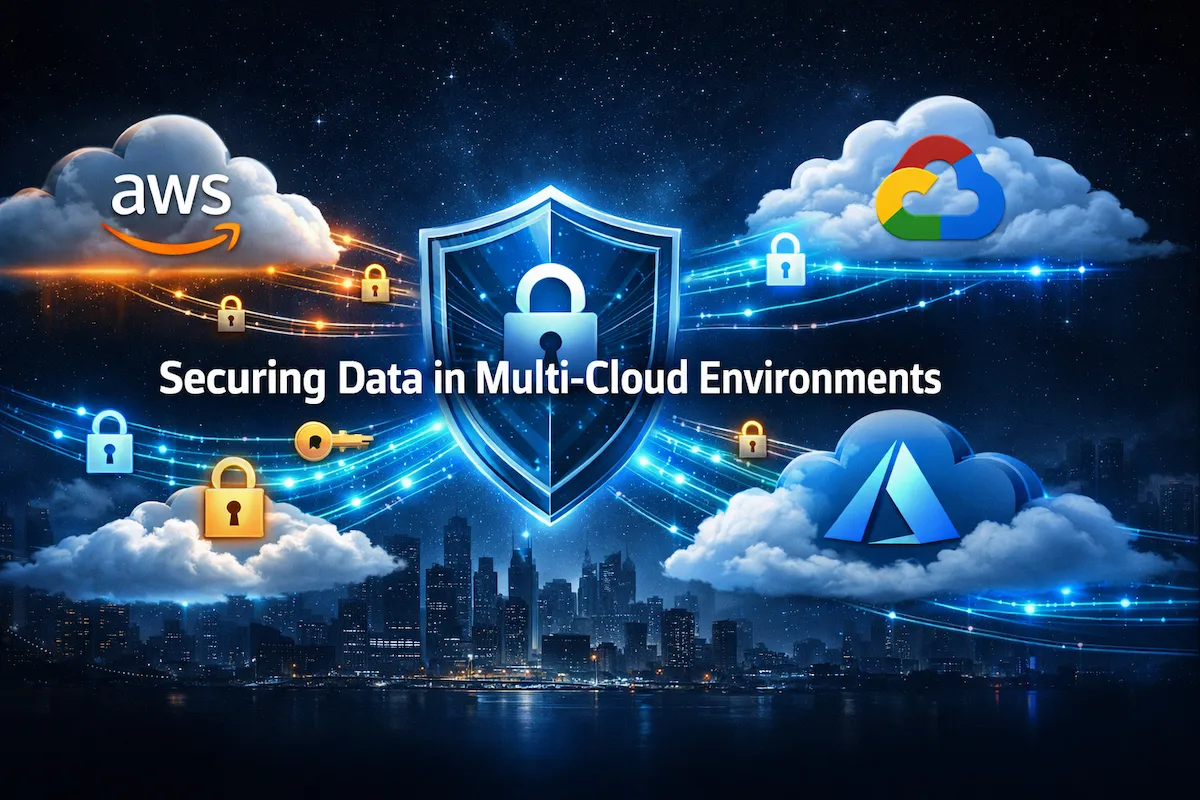
Multi-cloud adoption has become the norm for American organizations. Companies now run workloads across AWS, Azure, Google Cloud, and specialized platforms simultaneously. This approach delivers flexibility and prevents vendor lock-in, but it creates serious security gaps that single-cloud strategies never had to address.
The focus keyword for this guide is securing data in multi-cloud environments—a challenge that affects over 87% of US enterprises currently operating across multiple cloud providers. This article breaks down the real problems, practical solutions, and compliance considerations that matter for American businesses today.
Understanding Securing Data in Multi-Cloud Environments
Securing data in multi-cloud environments means protecting information assets that exist across two or more cloud service providers. Unlike hybrid cloud setups that combine on-premises infrastructure with a single cloud platform, multi-cloud strategies distribute workloads among completely separate cloud vendors.
A manufacturing company might run production databases on AWS, development environments on Azure, and analytics pipelines on Google Cloud. Each platform has its own security controls, access protocols, and monitoring tools. The data moves between these systems constantly—during API calls, backup operations, disaster recovery procedures, and business processes.
Why Multi-Cloud Data Security Is More Complex
The complexity of securing data in multi-cloud environments stems from fragmentation. Each cloud provider implements security differently. AWS uses IAM roles and policies. Azure relies on Active Directory integration and role-based access control. Google Cloud has its own identity and resource hierarchy model.
Security teams cannot apply uniform policies across these platforms without additional orchestration layers. A vulnerability in one cloud does not automatically trigger alerts in another. Attackers exploit these gaps by moving laterally between cloud environments after gaining initial access to the weakest link.
US businesses face additional pressure because data sovereignty laws, industry regulations, and compliance frameworks expect consistent protection regardless of where workloads run. The responsibility for security always remains with the organization, not the cloud vendor. This confusion about cloud security responsibilities leads many companies to leave critical gaps in their defenses.
Key Security Challenges in Multi-Cloud
Real incidents show where securing data in multi-cloud environments breaks down. A 2024 breach at a US healthcare provider happened because credentials for their Azure environment were accidentally committed to a GitHub repository that also contained AWS access keys. The attackers used both sets of credentials to move between clouds and exfiltrate patient records from multiple storage locations.
Identity and Access Control Issues
Different authentication systems create identity sprawl. Employees end up with separate accounts for each cloud platform. Contractors might have access to AWS but not Azure. Service accounts proliferate without proper lifecycle management.
When securing data in multi-cloud environments, organizations struggle to answer basic questions: Who has access to what? Which permissions are actually being used? How do we revoke access quickly across all platforms when someone leaves the company? Implementing proper identity and access management practices becomes essential for maintaining control across cloud boundaries.
Federated identity helps, but implementation varies. SAML works differently across providers. OAuth token handling has platform-specific quirks. Multi-factor authentication might be enforced on one cloud but not another.
Lack of Visibility Across Platforms
Security teams cannot see everything happening across clouds from a single dashboard. AWS CloudTrail logs do not automatically correlate with Azure Monitor data. Google Cloud’s operations suite has no native integration with other vendors’ security tools.
This blind spot becomes critical during incident response. When securing data in multi-cloud environments, responders need to trace an attack path that might start in one cloud, move through on-premises systems, and end in a different cloud. Without unified visibility, the investigation takes days instead of hours. The difference between cloud visibility and true understanding becomes apparent during security incidents when teams realize they can see events but cannot interpret their significance across platform boundaries.
Cost management tools provide some cross-cloud visibility, but they focus on spending patterns, not security events. True security visibility requires intentional integration work that many organizations skip during initial cloud adoption.
Data Sprawl and Misconfiguration Risks
Data replication across clouds creates tracking problems. A customer database might have copies in AWS RDS, Azure SQL Database, and Google Cloud Storage for different business purposes. Securing data in multi-cloud environments means knowing where all copies exist and applying consistent protection to each one.
Misconfigurations happen more frequently in multi-cloud scenarios. Teams familiar with AWS security groups might incorrectly configure Azure network security groups. Default settings that are secure on one platform might be dangerously permissive on another.
Storage buckets become publicly accessible because an engineer copied a Terraform template from AWS to Google Cloud without adjusting the access control parameters. Encryption gets skipped because the team assumed another cloud automatically encrypts data at rest the way their primary platform does. These represent just a few of the common cloud security mistakes that compromise multi-cloud deployments.
Core Strategies for Securing Data in Multi-Cloud Environments
Effective protection requires deliberate architecture choices and consistent implementation across all cloud platforms. These strategies address the fundamental challenges that securing data in multi-cloud environments creates for U.S. organizations.
Centralized Identity and Access Management
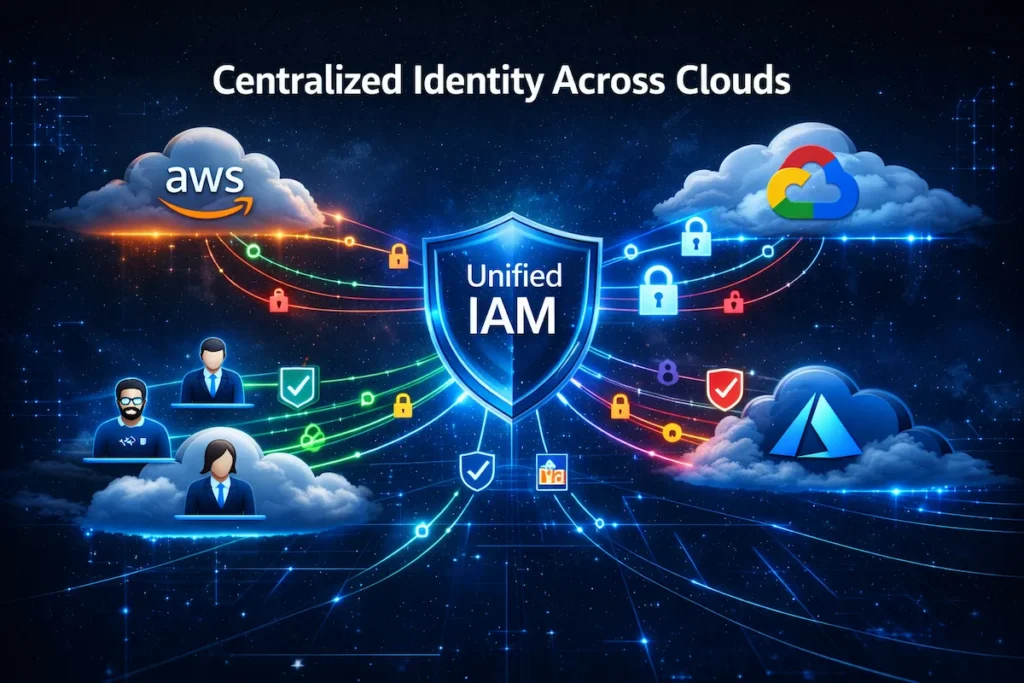
Implement a single identity provider that federates to all cloud platforms. This approach to securing data in multi-cloud environments eliminates redundant user accounts and creates one authoritative source for access decisions.
Okta, Azure AD, or Ping Identity can serve as the central identity hub. Configure SAML or OIDC integration with each cloud provider. Users authenticate once and receive time-limited tokens for each platform they need to access.
Service accounts require special handling. Create unique service principals for each cloud, but manage them through a centralized vault like HashiCorp Vault or AWS Secrets Manager with cross-cloud access. Rotate credentials automatically every 90 days.
Role mapping becomes crucial. Define roles by job function, not by cloud platform. A data engineer should have one role that automatically translates to appropriate permissions across AWS, Azure, and Google Cloud. Tools like CloudHealth or Flexera help maintain these mappings.
Data Encryption Across All Cloud Providers
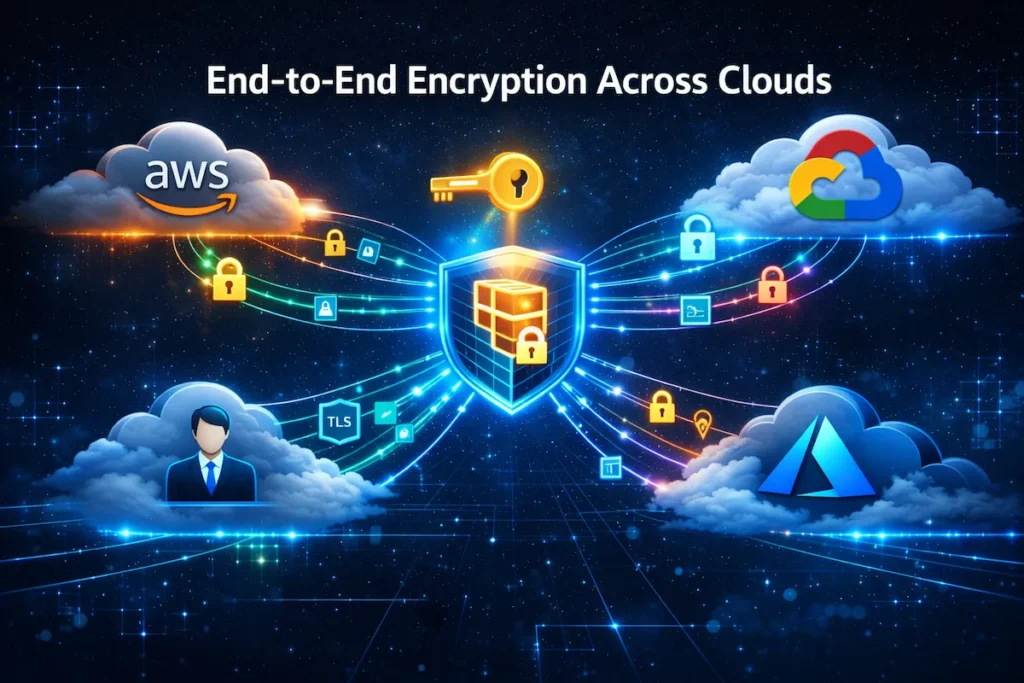
Securing data in multi-cloud environments demands encryption both at rest and in transit, but do not rely solely on each cloud provider’s default encryption. Use your own encryption keys managed through a hardware security module or a key management service under your control.
Implement envelope encryption. Generate data encryption keys in each cloud, but encrypt those keys with a master key you control. This pattern works across AWS KMS, Azure Key Vault, and Google Cloud KMS. If you need to revoke access to data across all clouds simultaneously, you only need to disable the master key.
For data moving between clouds, use TLS 1.3 with strong cipher suites. Configure private connectivity between clouds through dedicated interconnects or encrypted VPN tunnels rather than sending data over the public internet. Advanced encryption techniques like homomorphic encryption and tokenization add additional layers of protection for highly sensitive data that moves between cloud platforms.
Unified Security Monitoring and Logging
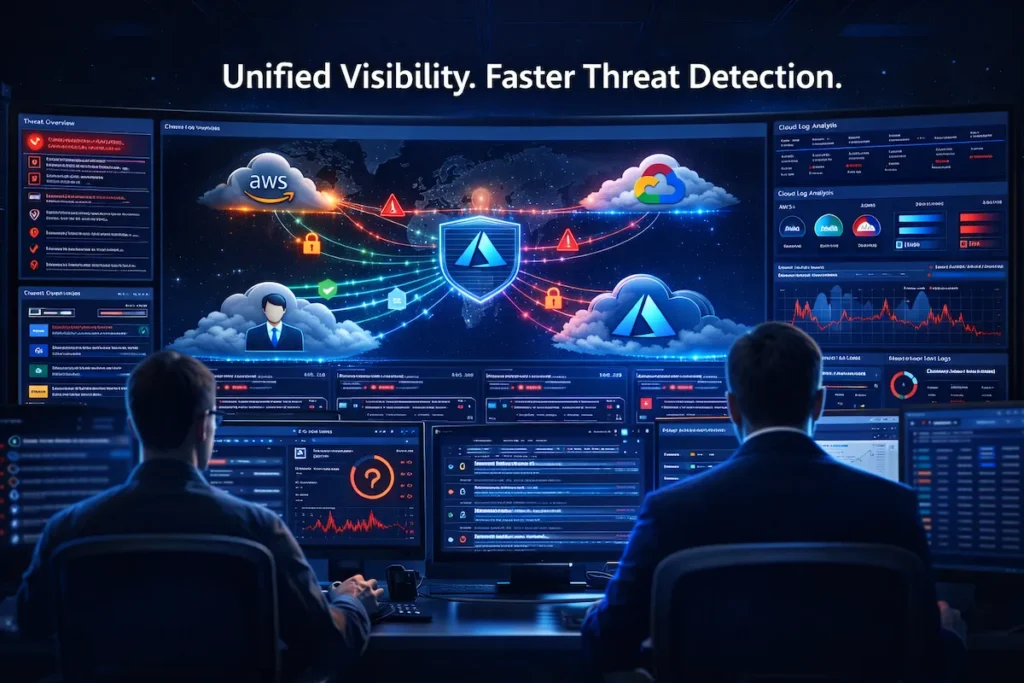
Securing data in multi-cloud environments requires aggregating logs from all platforms into a single analysis system. Forward AWS CloudTrail, Azure Activity Logs, and Google Cloud Audit Logs to a central SIEM or data lake.
Configure log retention consistently. US organizations subject to HIPAA must retain logs for six years. Financial services firms under SEC requirements need seven years. Set these retention policies in your central logging system rather than managing different retention periods in each cloud.
Create correlation rules that work across cloud boundaries. Alert when a user account attempts to access sensitive data in AWS immediately after unusual activity in Azure. Detect when IP addresses associated with known threat actors appear in logs from any cloud platform you use.
Real-time streaming improves detection speed. Use Amazon Kinesis, Azure Event Hubs, or Google Cloud Pub/Sub to stream logs to your security tools as events happen rather than batching them hourly or daily.
Zero Trust Security Approach
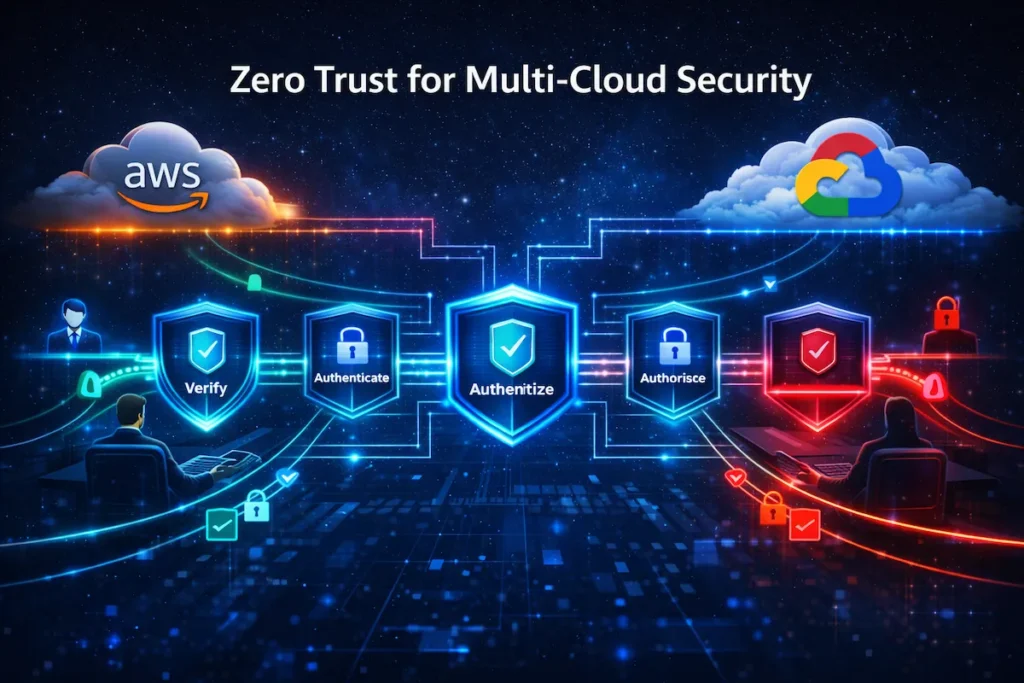
Zero trust architecture fits naturally with securing data in multi-cloud environments. Never trust any request based solely on network location or prior authentication. Verify every access attempt regardless of where it originates.
Implement micro-segmentation across clouds. Workloads in AWS should authenticate before accessing resources in Azure even if they belong to the same application. Use service mesh technology like Istio or Linkerd to enforce mutual TLS between services regardless of which cloud hosts them.
Continuously verify device posture before granting access. Check that endpoints connecting to cloud resources run updated operating systems, have endpoint protection installed, and have not been jailbroken or rooted. Tools like Microsoft Intune or VMware Workspace ONE enforce these checks across multi-cloud access scenarios.
Context-aware access policies strengthen protection. Securing data in multi-cloud environments works better when policies consider user behavior patterns, access times, and data sensitivity. Block a typical developer from accessing production databases at 2 AM on Sunday even if their credentials are valid.
Automated Policy Enforcement and Governance
Manual security reviews cannot scale across multiple clouds. Implement policy-as-code frameworks that automatically prevent misconfigurations before they reach production.
Open Policy Agent provides a vendor-neutral way to define security policies that work across AWS, Azure, and Google Cloud. Write policies once in Rego language, then enforce them during infrastructure deployment regardless of which Terraform, CloudFormation, or ARM template developers use.
Securing data in multi-cloud environments becomes more reliable with automated remediation. When a storage bucket loses encryption, automatically re-enable it and notify the responsible team. When a database becomes publicly accessible, immediately restrict access and create a ticket for investigation.
Tag enforcement prevents governance gaps. Require every cloud resource to have tags identifying the data classification, owning team, and purpose. Block deployment of any resource missing these tags. Use tags to automatically apply appropriate security controls based on data sensitivity.
Tools That Support Multi-Cloud Data Protection
The right tools reduce complexity when securing data in multi-cloud environments. US organizations need solutions that understand American compliance requirements and integrate with common enterprise technology stacks.
Cloud Security Posture Management (CSPM) Tools
CSPM platforms continuously assess security configurations across multiple clouds. They detect misconfigurations, compliance violations, and security risks in real time without requiring agents on individual workloads.
Palo Alto Networks Prisma Cloud connects to AWS, Azure, and Google Cloud through API integrations. It compares actual configurations against security frameworks like CIS Benchmarks, NIST, and PCI DSS. When securing data in multi-cloud environments with Prisma Cloud, you get a unified risk score across all platforms.
Wiz takes an agentless approach. It scans cloud environments by accessing cloud provider APIs and analyzing workload snapshots. The platform builds a complete graph of resources, identities, and connections across clouds. This visibility helps identify attack paths that cross cloud boundaries.
Orca Security also operates without agents. It analyzes cloud configurations and workload metadata to find security issues. The platform prioritizes risks based on business impact rather than just severity scores, helping teams focus on what matters most when securing data in multi-cloud environments.
Leading CSPM platforms such as Prisma Cloud, Wiz, and Orca Security provide unified visibility across AWS, Azure, and Google Cloud environments.
SIEM and SOAR for Multi-Cloud Security
Security Information and Event Management platforms aggregate and analyze logs from all clouds. Security Orchestration, Automation, and Response tools automate incident response workflows across multiple platforms.
Splunk Enterprise Security ingests data from AWS, Azure, Google Cloud, and on-premises sources. It correlates events using machine learning to detect threats that span multiple environments. When securing data in multi-cloud environments, Splunk’s pre-built dashboards for each cloud provider accelerate threat hunting.
Microsoft Sentinel offers native Azure integration plus connectors for AWS and Google Cloud. The platform uses AI to detect anomalies in user behavior and resource access patterns. Sentinel’s automated playbooks can respond to threats by revoking access in Azure AD, modifying AWS security groups, or isolating Google Cloud workloads.
Sumo Logic provides cloud-native log management with strong analytics capabilities. It handles high-volume log ingestion from multiple clouds without requiring dedicated infrastructure. The continuous intelligence platform helps with both real-time security monitoring and forensic analysis after incidents.
Compliance Requirements for US Organizations
American businesses face specific regulatory requirements when securing data in multi-cloud environments. These obligations do not disappear just because data moves to the cloud or spreads across multiple providers.
Health Insurance Portability and Accountability Act (HIPAA)
Payment Card Industry Data Security Standard
NIST SP 800-171
SOC 2
California Consumer Privacy Act
HIPAA applies to healthcare organizations regardless of cloud deployment models. Covered entities must ensure business associate agreements exist with every cloud provider touching protected health information. When securing data in multi-cloud environments, healthcare companies need consistent audit logging across all platforms to demonstrate compliance during HHS investigations.
PCI DSS affects any organization processing credit card data. The standard requires network segmentation, encryption, and access controls that many multi-cloud deployments break. If cardholder data exists in AWS and Azure simultaneously, both environments must pass PCI assessments. Shared responsibility gets complicated—merchants remain responsible for security even when using compliant cloud services.
SOC 2 Type II reports matter for B2B SaaS companies and service providers. When your application runs across multiple clouds, your SOC 2 audit scope must include controls for securing data in multi-cloud environments. Auditors will examine how you manage encryption keys, monitor access, and detect security incidents across all platforms.
State privacy laws like the California Consumer Privacy Act create data handling requirements that follow information regardless of where it processes. When customer data moves between clouds, organizations must maintain the ability to locate, export, and delete that data on request. Multi-cloud architectures complicate these data subject rights requests.
Federal contractors dealing with controlled unclassified information must follow NIST SP 800-171 requirements. The framework specifies 110 security controls that must apply consistently when securing data in multi-cloud environments. CMMC certification for defense contractors will audit implementation of these controls across all systems handling CUI.
Common Multi-Cloud Security Mistakes
Many organizations undermine their security efforts through preventable errors when securing data in multi-cloud environments.
Assuming cloud providers secure everything automatically ranks as the most dangerous misconception. Cloud vendors secure the infrastructure—physical data centers, hypervisors, and networking hardware. Customers must secure everything built on top of that infrastructure including data, applications, access controls, and configurations. This shared responsibility model catches unprepared companies off guard.
Treating each cloud as a separate security project creates gaps. When the AWS team and Azure team operate independently with different tools and processes, attackers exploit the inconsistencies. Securing data in multi-cloud environments requires centralized governance even when implementation happens through distributed teams.
Neglecting regular access reviews lets permissions accumulate. An engineer who briefly needed read access to a production database on AWS two years ago probably still has that access today. Multiply this scenario across hundreds of users and three cloud platforms, and the excess permissions create massive risk.
Skipping encryption for internal cloud-to-cloud communication based on false assumptions about private networks. Even traffic moving through AWS PrivateLink or Azure Private Link crosses infrastructure you do not fully control. Securing data in multi-cloud environments means encrypting data in transit regardless of network path.
Failing to test incident response procedures across cloud boundaries leaves teams scrambling during actual breaches. Running tabletop exercises that simulate multi-cloud compromise scenarios reveals gaps in playbooks, tool integrations, and communication workflows before they matter during a real incident.
Over-relying on native cloud security tools without integration creates the visibility problems discussed earlier. Native tools work well within their own cloud but do not communicate with each other. Organizations need either third-party platforms or custom integration work to achieve unified security monitoring when securing data in multi-cloud environments.
Benefits of Strong Multi-Cloud Data Security
Organizations that invest in securing data in multi-cloud environments see measurable business advantages beyond just risk reduction.
Operational resilience improves dramatically. When security controls work consistently across clouds, failover between providers becomes safer during outages or disasters. Companies can shift workloads from an affected region to a different cloud provider without compromising data protection.
Negotiating leverage with cloud vendors increases. Organizations confident in their multi-cloud security posture can evaluate providers based on features and pricing rather than feeling locked in due to security investments. This flexibility saved US companies an average of 23% on cloud spending in 2024 according to Flexera research.
Innovation accelerates when teams can use the right cloud for each workload without security becoming a bottleneck. Developers can choose the best machine learning platform, database technology, or compute option while security controls automatically extend to their choices. This freedom drives faster time-to-market for new products and services.
Audit and compliance work gets easier. Instead of maintaining separate documentation for AWS security, Azure security, and Google Cloud security, organizations with unified approaches to securing data in multi-cloud environments produce single control matrices that auditors review once.
Customer trust improves when companies demonstrate sophisticated security programs. Enterprise buyers increasingly ask vendors about multi-cloud security during procurement. Organizations that can articulate their approach to securing data in multi-cloud environments win competitive bids.
FAQ
What is securing data in multi-cloud environments?
Securing data in multi-cloud environments means protecting sensitive information across multiple cloud providers using unified identity management, encryption, monitoring, and governance controls.
Why is multi-cloud security harder than single cloud?
Each cloud provider has different identity systems, logging formats, encryption controls, and default settings, making consistent protection more complex.
How do US businesses stay compliant in multi-cloud setups?
They apply consistent encryption, centralized logging, documented access controls, and ensure frameworks like HIPAA, PCI DSS, and SOC 2 are enforced across all providers.
What is the biggest multi-cloud security mistake?
Assuming cloud providers secure everything automatically. The shared responsibility model requires businesses to secure data, access, and configurations.
Conclusion
Securing data in multi-cloud environments requires deliberate planning, consistent implementation, and ongoing vigilance. US organizations cannot treat multi-cloud security as an afterthought or assume that cloud providers handle protection automatically.
The strategies outlined here—centralized identity management, comprehensive encryption, unified monitoring, zero trust architecture, and automated governance—work together to create defense in depth across cloud boundaries. The right combination of CSPM tools, SIEM platforms, and policy automation reduces complexity while improving security posture.
American businesses must also navigate compliance requirements that apply regardless of cloud architecture choices. HIPAA, PCI DSS, SOC 2, state privacy laws, and federal security frameworks all expect consistent data protection across every platform hosting sensitive information.
Organizations should conduct a multi-cloud security assessment to identify current gaps and prioritize improvements. Map data flows between clouds, document access patterns, and test whether security controls actually work as intended across all platforms. This foundation enables confident adoption of multi-cloud strategies that deliver business value without unnecessary risk.
The companies that excel at securing data in multi-cloud environments treat security as an architectural decision, not a compliance checkbox. They build visibility, enforce policies consistently, and prepare teams to respond effectively when incidents inevitably occur. This proactive approach turns multi-cloud complexity from a security liability into a competitive advantage.
3 thoughts on “Securing Data in Multi-Cloud Environments: A Practical Guide for US Businesses”