
Introduction
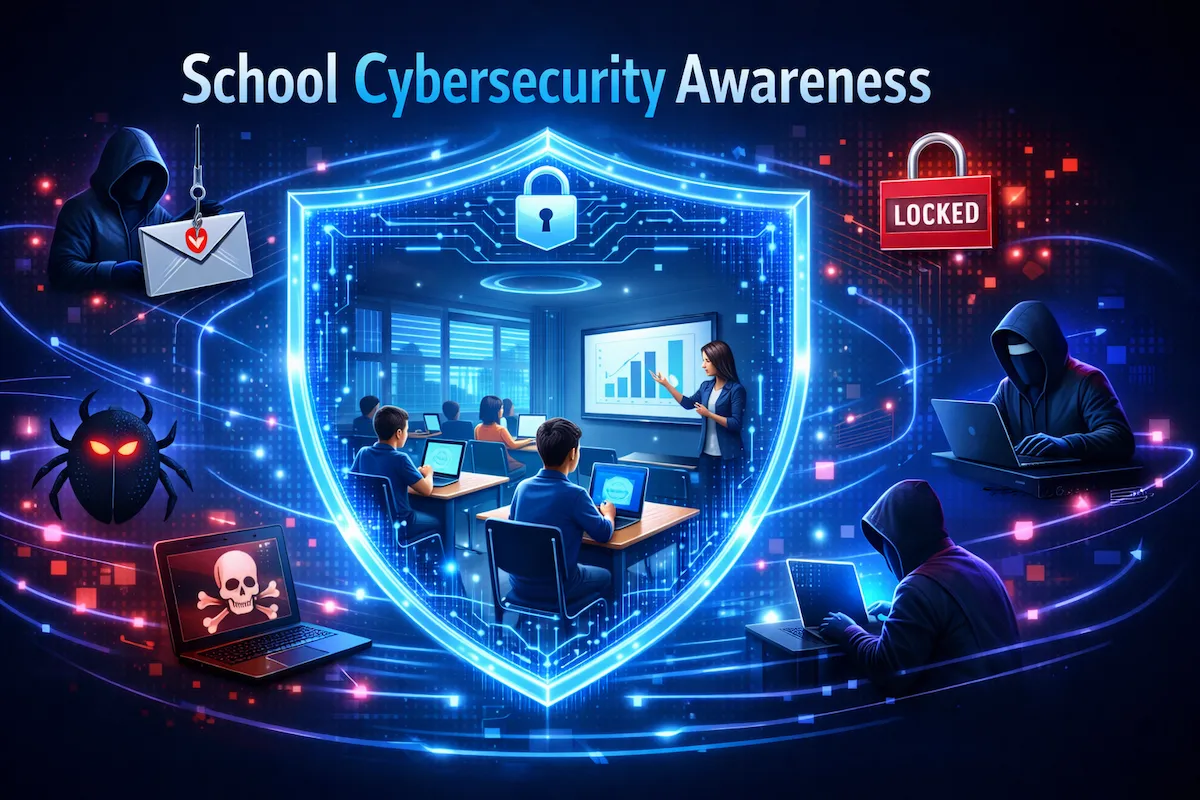
Digital learning has completely transformed American classrooms. From Google Classroom to one-to-one Chromebook programs, students and teachers now rely on technology for almost everything — submitting homework, communicating with parents, storing grades, and even attending class. This shift brings incredible opportunities, but it also opens the door to serious cyber threats.
Cyberattacks on US schools have surged in recent years. According to reports from the K-12 Security Information Exchange, publicly disclosed cybersecurity incidents in US schools rose dramatically between 2016 and 2023. Ransomware attacks, phishing scams, and data breaches have hit school districts in nearly every state—costing millions of dollars and exposing student records. The scale of this problem is growing fast, and schools are not immune. Recent AI-driven cybersecurity statistics for SMBs show how automated and AI-powered attacks are increasing across every sector — a trend that directly affects schools too.
That’s exactly why school cybersecurity awareness has become one of the most urgent priorities in education today. Schools can no longer afford to treat cybersecurity as an IT department problem. It requires a whole-school approach—involving teachers, administrators, IT staff, students, and parents alike.
This guide explains the most common threats facing US schools, how to build a strong cybersecurity awareness program, and the practical steps your school can take right now to protect students and staff online.
Why School Cybersecurity Awareness Matters
Think about how much sensitive data lives inside a school network. Student names, addresses, health information, Social Security numbers, grades, and disciplinary records—all of it stored in district databases and accessed through school devices daily.
A single data breach can expose thousands of students’ personal information. A ransomware attack can shut down an entire district for days or even weeks. Phishing emails can trick teachers into handing over login credentials that give attackers access to everything.
School cybersecurity awareness helps prevent all of this. When students, teachers, and staff understand how cyber threats work and how to respond, they become the school’s first line of defense. Digital safety education isn’t just a nice-to-have anymore — it’s essential for school data protection and the safety of every person in the building.
Beyond technical protections, cybersecurity awareness for students builds lifelong habits. The habits kids develop now — how they create passwords, what they share online, how they recognize a scam — will protect them well into adulthood.
School Cybersecurity Awareness: 10 Powerful Ways Schools Stay Safe
Every school needs a clear, actionable plan. Here are 10 powerful ways schools are strengthening school cybersecurity awareness and protecting their communities right now.
- Train staff to spot phishing—Teach every teacher and administrator to recognize suspicious emails before clicking.
- Teach students safe internet habits—build cyber safety for students into regular classroom instruction from an early age.
- Enforce strong passwords and MFA—Require complex, unique passwords and multi-factor authentication across all school accounts.
- Run phishing simulations—Send controlled fake phishing emails to staff to test and build real-world recognition skills.
- Limit admin access—Apply the least-privilege principle so staff only access the data and systems they genuinely need.
- Patch devices and apps regularly—keep all school software and devices updated to close known security vulnerabilities.
- Back up critical systems—Maintain secure, regular backups so ransomware attacks can’t permanently destroy school data.
- Use content filtering and monitoring—deploy network-level tools to block dangerous websites and flag unsafe activity.
- Create an incident response plan—Every school should have a clear, practiced plan for responding when a cyberattack occurs.
- Run monthly awareness campaigns—Reinforce internet safety awareness in schools year-round through tips, events, and challenges.
Common Cyber Threats Facing Schools
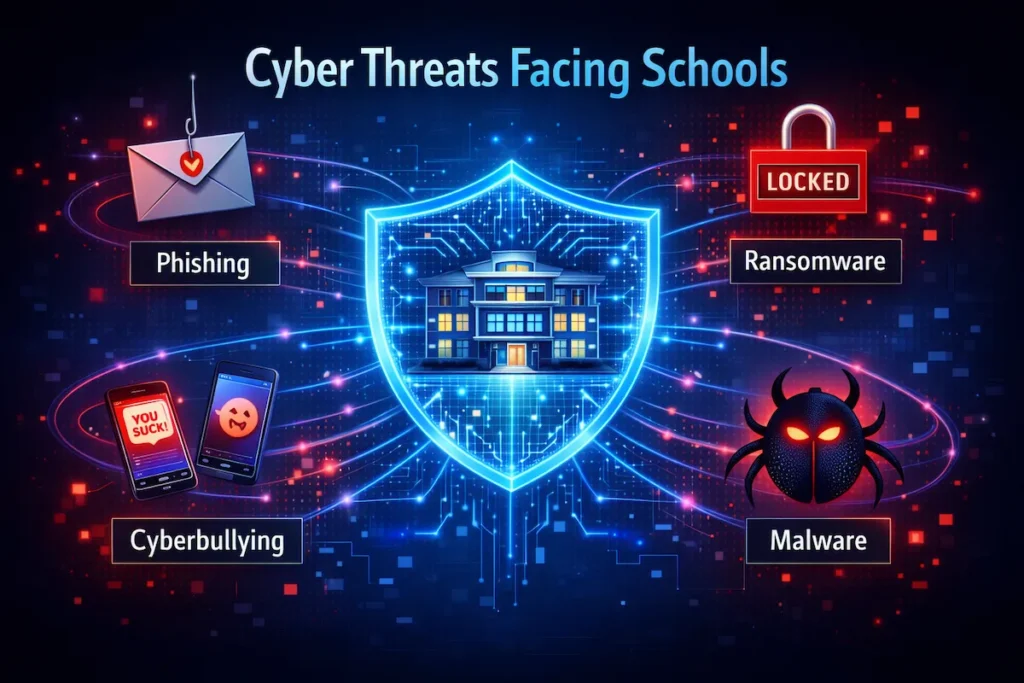
Before schools can defend themselves, they need to understand what they’re up against. Here are the most common cyber threats targeting US schools today.
Phishing Attacks in Schools
Phishing is one of the top threats facing school staff and students. A phishing attack usually comes as a deceptive email or message that looks legitimate — maybe it appears to come from your school’s IT department, a popular app, or even a colleague. The goal is to trick you into clicking a link, entering your credentials, or downloading a file that installs malware.
Teachers are prime targets. A phishing email disguised as a Google Drive sharing request or a school district announcement can easily fool someone who’s busy managing a classroom. Once an attacker has login credentials, they can access student records, financial data, or internal communications.
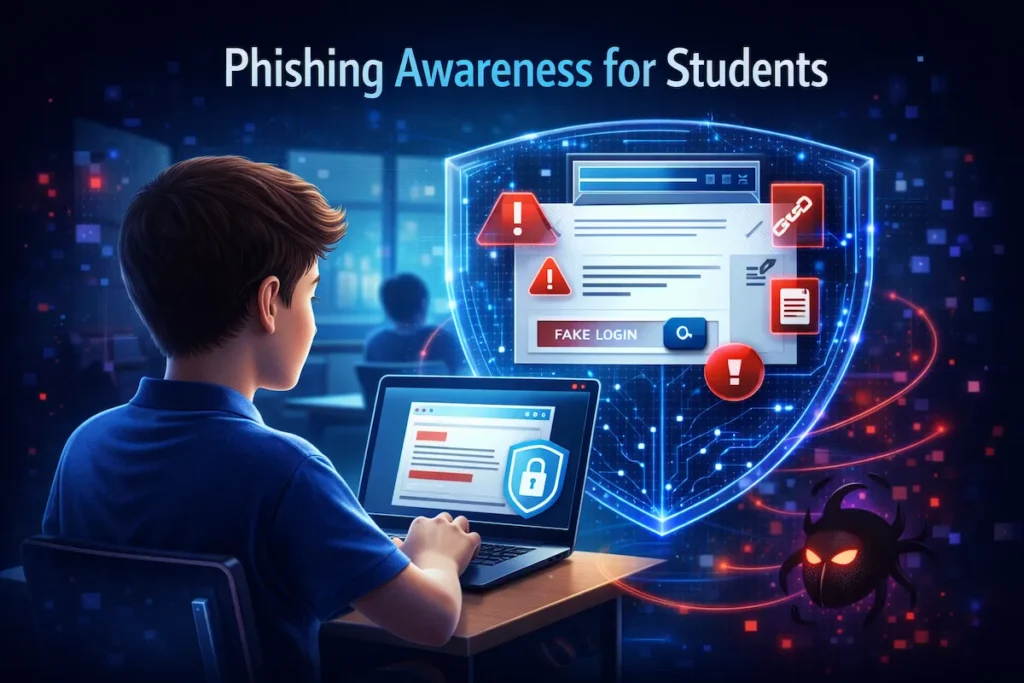
Building school cybersecurity awareness around phishing recognition is critical. Staff and students need to know the warning signs—suspicious sender addresses, urgent language, unexpected attachments, and links that don’t match where they claim to go. Phishing awareness for students and staff isn’t optional; it’s a foundational skill for any school serious about digital safety.
Ransomware Attacks on Educational Institutions
Ransomware has become one of the most disruptive and costly cyber threats in the US education sector. In a ransomware attack, criminals encrypt a school’s data and demand payment — often in cryptocurrency — to restore access. Even when schools pay, there’s no guarantee of getting their data back.
Some attacks have forced entire school districts to cancel classes, revert to paper records, and spend weeks rebuilding their systems from scratch. The financial damage alone can run into the millions. But the disruption to students’ education and staff productivity can be equally devastating.
This is why cybersecurity training for students and staff should always include awareness of ransomware risks. Clicking on an infected attachment or visiting a compromised website is often all it takes. School cybersecurity awareness programs that teach careful browsing habits and email hygiene can dramatically reduce the risk of an attack succeeding.
Cyberbullying and Online Harassment
Not every digital threat to students comes from outside the school. Cyberbullying — using digital platforms to harass, threaten, humiliate, or exclude others — is a serious problem in schools across the US. It happens on social media, in group chats, through anonymous apps, and even via school-issued devices.
Cyberbullying can cause significant psychological harm to victims, including anxiety, depression, and academic decline. It also creates a hostile learning environment that affects the whole school community.
School cybersecurity awareness goes beyond passwords and phishing. It also means teaching students about responsible, respectful digital behavior — what cyberbullying is, how to report it, and the real-world consequences of online actions. Cyberbullying prevention requires a culture of digital responsibility, not just a school policy buried in a handbook.
Unsafe Internet Usage by Students
Students often don’t think twice before clicking a link, downloading an app, or visiting an unfamiliar website. Unsafe browsing habits can expose school devices to malware, put student data at risk, and even leave students vulnerable to exploitation by bad actors.
Common risky behaviors include visiting unsecured websites (those without HTTPS), downloading files from unknown sources, sharing personal information on public platforms, and using weak passwords across multiple accounts.
School cybersecurity awareness programs teach safe internet practices for kids from an early age. When students understand why certain behaviors are risky and learn alternatives, they start making smarter choices—not just at school, but at home too.
Key Components of a Strong School Cybersecurity Awareness Program
A solid school cybersecurity awareness program covers multiple areas. It’s not enough to send one email about strong passwords. Effective programs are ongoing, age-appropriate, and cover a range of topics.
Password Security Education
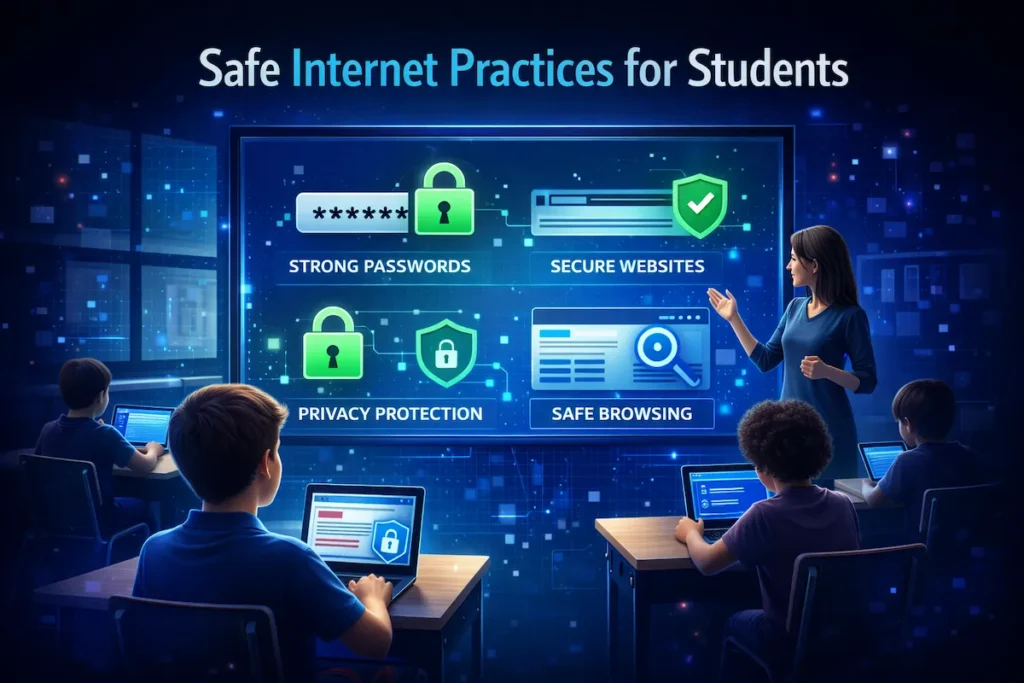
Weak passwords are one of the leading causes of data breaches. Students and staff frequently reuse passwords, choose obvious phrases, or share credentials with friends. Password security education is a core part of school cybersecurity awareness.
A strong password security curriculum teaches students to create long, unique passwords using a mix of letters, numbers, and symbols. It also introduces tools like password managers and explains why two-factor authentication (2FA) adds a critical extra layer of security. These habits, learned early, stick for life.
Phishing Awareness Training
Recognizing a phishing attempt is one of the most valuable skills a student or staff member can develop. Phishing awareness for students means teaching them to slow down before clicking, examine sender email addresses, hover over links before opening them, and report anything suspicious to IT staff.
School cybersecurity awareness programs often use simulated phishing exercises — sending fake phishing emails to staff to test and train their responses. These simulations are highly effective because they create a low-stakes environment to practice real-world skills.
Safe Internet Practices
Cyber safety for students means more than just avoiding bad websites. It includes understanding privacy settings on social media, knowing not to share personal information online, understanding the risks of public Wi-Fi, and being cautious about what gets downloaded or installed on school devices.
When school cybersecurity awareness programs integrate these lessons into regular classroom instruction, students begin to see digital safety as a natural part of how they use technology — not as a lecture they only hear once a year.
Data Privacy Awareness
Students and staff often don’t realize how much personal data is collected by apps and online services. When a student signs up for an educational tool using their school email, they may be agreeing to data collection practices they’ve never read about.
School cybersecurity awareness must include data privacy education — teaching students what data is, why it matters, who collects it, and how to make informed choices. The National Institute of Standards and Technology cybersecurity framework provides a practical structure that schools can adapt when building data protection policies. School data protection starts with the understanding that data has real value and deserves real protection.
Best Practices to Improve School Cybersecurity Awareness
Teacher Cybersecurity Training
Teachers are both a valuable asset and a potential vulnerability in school cybersecurity. They handle student data, manage digital tools, and set the tone for responsible technology use in the classroom. That’s why any school cybersecurity awareness program must prioritize teacher training first.
Teachers need practical, hands-on training — not just a slideshow. Training should cover recognizing phishing emails, securing their accounts, understanding school policies around data handling, and knowing how to report a security incident. Cybersecurity education in schools works best when teachers feel confident and prepared.
School Cybersecurity Policies
Strong policies are the backbone of any school cybersecurity awareness effort. Without clear rules, even well-intentioned staff and students make inconsistent decisions that create vulnerabilities.
Effective school cybersecurity policies should cover acceptable use of school devices and networks, data handling and storage requirements, procedures for reporting security incidents, and rules around social media and personal device use on school property. The CISA K-12 cybersecurity resources offer free, government-backed guidance that school districts can use directly when drafting or updating their policies. Policies work best when they’re simple, clearly communicated, and consistently enforced.
Cybersecurity Workshops
Workshops are one of the most effective ways to build school cybersecurity awareness across an entire school community. Unlike passive learning, workshops put participants in scenarios where they have to make decisions, practice skills, and engage with real-world situations.
Cybersecurity training for students through interactive workshops — where they practice spotting phishing emails, creating secure passwords, or handling a simulated data breach — produces far better results than lectures alone. Workshops can be tailored for different grade levels, making them appropriate for elementary, middle, and high school students.
Regular Awareness Campaigns
Cybersecurity awareness can’t be a once-a-year conversation. Internet safety awareness in schools requires ongoing reinforcement. Regular awareness campaigns keep digital safety top of mind throughout the school year.
These campaigns can include digital safety posters displayed throughout the building, monthly cybersecurity tips sent to staff and families, awareness events during Cybersecurity Awareness Month (October), and school-wide challenges or competitions related to digital safety. When school cybersecurity awareness becomes part of the school culture, it stops feeling like a chore and starts feeling like a shared responsibility.
School Cybersecurity Awareness Activities for Students
The best way to build lasting school cybersecurity awareness among students is through active, engaging learning. Passive lessons don’t stick. Hands-on activities do.
Here are some highly effective activities schools can use:
- Phishing simulation drills — Show students example phishing emails and ask them to identify red flags. Then show what happens when someone falls for one.
- Password strength contests — Have students create the strongest password they can (without sharing real passwords) and explain why it’s strong.
- Cybersecurity quizzes — Short, gamified quizzes using tools like Kahoot or Google Forms to test knowledge on safe browsing, data privacy, and phishing.
- Role-playing scenarios — Present cyberbullying situations and ask students how they would respond, report, and support the victim.
- Digital citizenship projects — Have students create posters, videos, or presentations about a cybersecurity topic to share with the school.
These activities build cybersecurity awareness for students in a memorable way. When students learn by doing, they’re far more likely to apply those lessons outside the classroom.
Role of Teachers and Parents in Cybersecurity Education
School cybersecurity awareness doesn’t stop at the school gate. Teachers and parents both play a critical role in reinforcing digital safety lessons.
Teachers are in a unique position to embed cybersecurity education in schools into everyday instruction. A history teacher can discuss how misinformation spreads online. An English teacher can explore the ethical implications of sharing someone else’s writing without permission. A math teacher can explain how data is collected and used. Cybersecurity doesn’t have to live only in the computer science classroom.
Parents are equally important. Kids spend a significant portion of their digital lives at home, away from school filters and supervision. When parents understand internet safety awareness in schools, they can reinforce those lessons at home — setting rules around screen time, discussing what their child encounters online, and modeling safe internet behavior themselves.
One area parents often overlook is the AI-based platforms their children use daily. Many students interact with AI chatbots and digital assistants for homework help and entertainment. Understanding what these tools are and what safe, vetted alternatives to popular AI platforms look like helps parents make more informed decisions about what their children access online.
Schools can support parents by hosting family cybersecurity nights, sending home simple guides on digital safety education, and keeping communication open about the cybersecurity topics being covered in the curriculum. When schools and families work together, cybersecurity awareness becomes a consistent message that students hear from all directions.
Benefits of Cybersecurity Awareness in Schools
Investing in school cybersecurity awareness delivers real, measurable benefits for everyone involved.
- Reduced risk of data breaches — Educated students and staff are far less likely to fall for phishing attacks or make mistakes that expose school data.
- Stronger school network security — When everyone follows best practices, the overall security posture of the school improves dramatically.
- Safer online experiences for students — Digital safety education empowers students to protect themselves online, both now and in the future.
- Cyberbullying prevention — Awareness programs that address online behavior reduce incidents and create a healthier school culture.
- Cost savings — Preventing a cyberattack is far less expensive than recovering from one. Strong school cybersecurity awareness programs can save districts millions.
- Lifelong digital citizenship — Students who learn responsible online behavior early carry those habits into college, careers, and adult life.
The return on investment for school cybersecurity awareness is significant. The cost of training is a fraction of the cost of recovering from a ransomware attack or managing the fallout from a student data breach.
Future of Cybersecurity Education in Schools
Cyber threats are evolving constantly. As technology changes, the challenges schools face will change too. The future of school cybersecurity awareness will need to keep pace.
Artificial intelligence is already being used by cybercriminals to create more convincing phishing emails, deepfake videos, and automated attacks. Students who are taught to think critically about the digital content they encounter will be far better equipped to navigate this landscape. Understanding how AI is reshaping digital communication — including how it’s used in platforms students interact with daily — is explored in depth in this guide on AI in content marketing workflows, which gives useful context for how AI-generated content is produced and why critical evaluation skills matter.
In the coming years, we can expect to see cybersecurity education integrated more formally into K-12 curricula across the US. Several states have already begun requiring computer science and digital literacy standards that include cybersecurity topics. Federal initiatives like the K-12 Cybersecurity Act of 2021 have highlighted the urgency of addressing cyber risks in schools.
Schools that invest in cybersecurity education in schools now will be far ahead when these requirements become mandatory. The students graduating from these programs will enter the workforce as digitally literate, security-conscious individuals — and some may even pursue careers in cybersecurity, helping to fill the significant talent gap in the field.
The future is digital. Building a culture of school cybersecurity awareness today is an investment in safer schools, safer students, and a safer society tomorrow.
Frequently Asked Questions About School Cybersecurity Awareness
School cybersecurity awareness questions come up in every district, especially as digital learning expands. Here are the answers to the most common ones.
Q: What is school cybersecurity awareness?
School cybersecurity awareness is the ongoing effort to educate students, teachers, and staff about online threats and safe digital behavior. It covers topics like phishing, password security, data privacy, and responsible internet use. The goal is to make the entire school community the first line of defense against cyberattacks.
Q: Why is cybersecurity education important in schools?
Schools store enormous amounts of sensitive student data, making them frequent targets for hackers and ransomware attacks. Cybersecurity education in schools reduces the risk of breaches by teaching everyone how to recognize and avoid threats. It also builds digital responsibility that students carry into adult life.
Q: What are the most common cyber threats facing US schools?
The most common threats are phishing attacks, ransomware, cyberbullying, and unsafe internet usage by students. Phishing alone accounts for a large share of school data breaches, often through deceptive emails targeting teachers and administrators. Ransomware attacks have shut down entire school districts across the country.
Q: How can teachers help with cybersecurity awareness?
Teachers can embed digital safety lessons into everyday subjects and model responsible technology use in the classroom. They should also complete regular cybersecurity training so they can recognize threats like phishing emails and know how to report incidents. When teachers lead by example, students follow.
Q: What activities help build cybersecurity awareness for students?
Effective activities include phishing simulation drills, password strength contests, gamified quizzes, and role-playing cyberbullying scenarios. Hands-on experiences are far more effective than passive instruction because students are required to make real decisions. Digital citizenship projects also help students teach each other, reinforcing learning in a lasting way.
Q: How do parents support school cybersecurity awareness at home?
Parents can reinforce school lessons by talking openly with their children about online safety, setting clear rules around app usage, and staying informed about the platforms their kids use. Attending school-hosted cybersecurity family nights is a great starting point. When home and school send the same message, digital safety habits form faster.
Q: What should a school cybersecurity policy include?
A strong school cybersecurity policy should cover acceptable use of devices and networks, data handling procedures, rules around personal devices on school property, and clear steps for reporting a security incident. Policies should be written in plain language so students and staff actually understand them. Regular reviews ensure policies stay current as technology evolves.
Q: How often should schools update their cybersecurity awareness programs?
Cyber threats evolve quickly, so awareness programs should be reviewed and updated at least once a year. Major updates to school technology, new apps in the classroom, or a rise in local cyber incidents are all triggers for an immediate review. Ongoing campaigns — not one-time events — are what make school cybersecurity awareness stick long term.
Conclusion
Cyber threats to US schools are real, growing, and increasingly sophisticated. Ransomware attacks have shut down entire districts. Phishing scams have exposed thousands of student records. Cyberbullying continues to harm students in every community across the country.
The good news is that school cybersecurity awareness works. When schools make cybersecurity a priority — through ongoing training, clear policies, engaging activities, and strong communication with families — they dramatically reduce their risk and protect everyone in the school community.
Cybersecurity awareness for students isn’t just about teaching kids to create a strong password. It’s about building a generation of digitally responsible citizens who understand the online world and can navigate it safely and confidently.
Whether you’re a teacher, school administrator, IT professional, or parent, you have a role to play. Start by talking about digital safety. Review your school’s cybersecurity policies. Host a workshop. Send a tip home to families. Every action, no matter how small, contributes to a culture of school cybersecurity awareness that keeps students safe.
The time to act is now. Cyber threats won’t wait — and neither should your school.