
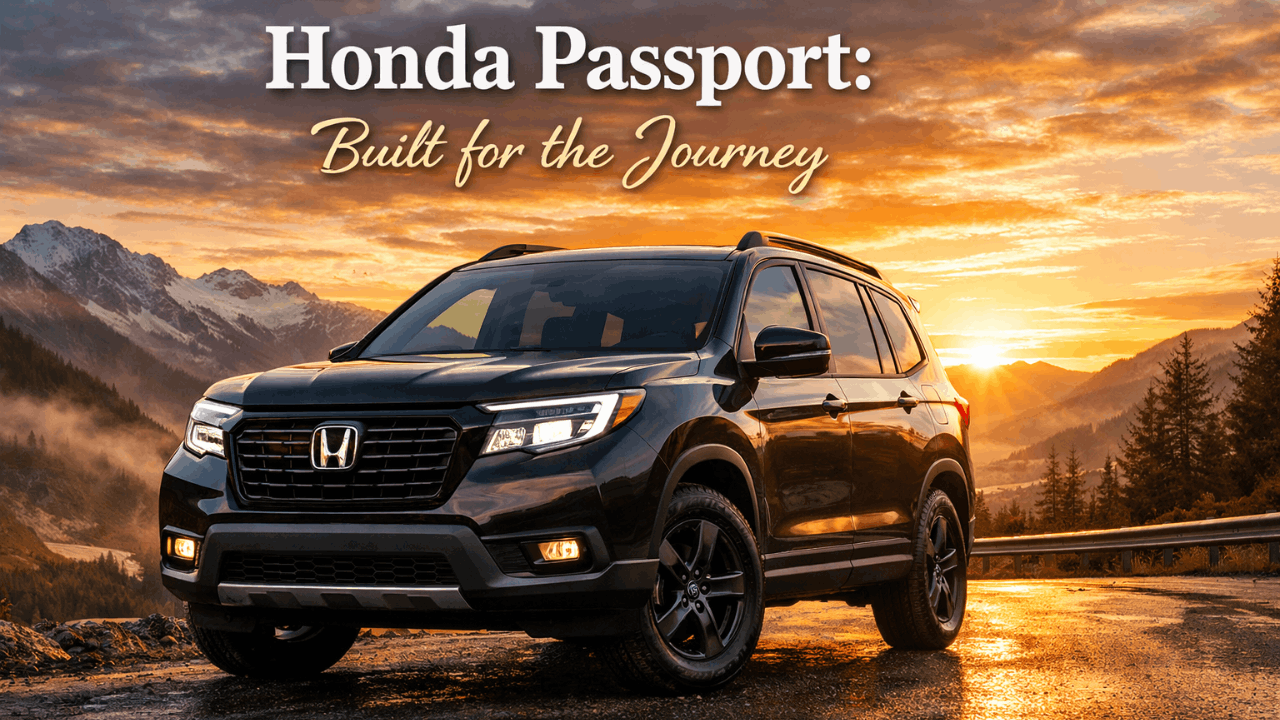
Introduction—What Is the Honda Passport?
The Honda Passport enters the midsize SUV space with a clear mission: deliver rugged confidence without sacrificing everyday comfort. It is not built to chase luxury trends or oversized dimensions. Instead, it focuses on usable power, smart packaging, and long-term reliability—qualities that matter when an SUV is more than just a driveway ornament. From the first drive, it feels purposeful rather than performative.
What makes this model stand out is how naturally it balances multiple roles. In the city, it behaves like a refined commuter with predictable handling and a comfortable ride. On open highways, it remains planted and quiet, offering confidence at speed. That dual personality has helped the Honda Passport gain traction among buyers who want one vehicle that can handle workdays and weekends without compromise.
The appeal stretches across a wide audience. Families appreciate the generous cabin space and safety focus. Outdoor enthusiasts are drawn to its available all-wheel-drive system and ground clearance. Daily drivers find value in its smooth power delivery and straightforward controls. Midway through its appeal, the Honda Passport proves that versatility does not need to feel complicated.
Strength has always been a defining trait here. A capable V6 engine, a sturdy chassis, and Honda’s reputation for reliability give it long-term credibility. Rather than trying to impress with gimmicks, it builds trust through consistency, making it a practical choice in a crowded SUV market.
Honda Passport Overview & Background
Honda Passport has a history that reflects Honda’s evolving understanding of SUV buyers. Originally introduced in earlier decades, the nameplate disappeared for years before returning with a clearer identity. Its modern revival positioned it as a rugged alternative within Honda’s lineup, sitting between compact crossovers and full-size family SUVs.
In Honda’s current SUV hierarchy, this model fills a crucial gap. It is larger and more powerful than the CR-V, offering significantly more cargo room and towing capability. At the same time, it is more manageable and less family-focused than the three-row Pilot. That middle-ground positioning gives it a personality of its own rather than making it feel like a compromise.
The design philosophy behind the Honda Passport favors function over flash. While the CR-V leans toward urban practicality and the Pilot emphasizes maximum passenger capacity, this model prioritizes strength and space without excess bulk. Midway through Honda’s SUV range, the Honda Passport appeals to buyers who do not need a third row but still want serious capability.
This background explains its growing relevance. Honda identified a segment of drivers who wanted power, reliability, and a sense of adventure without moving into truck-based SUVs. By reviving the Passport name with modern engineering and a focused purpose, Honda created a vehicle that feels intentional rather than recycled.
Exterior Design & Styling
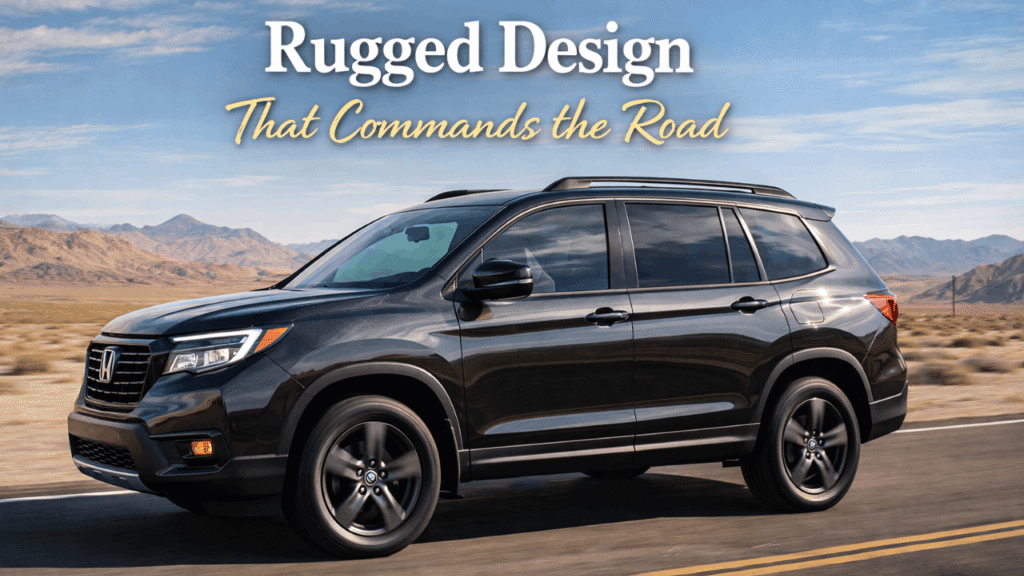
Honda Passport makes its first impression with confidence rather than elegance. The exterior design leans into a rugged aesthetic, avoiding soft curves in favor of bold surfaces and upright proportions. It looks ready for dirt roads and long highway stretches alike, which instantly separates it from softer-looking crossovers.
At the front, the grille is wide and assertive, flanked by sharp LED headlights that emphasize width. The sculpted hood and strong shoulder lines give the vehicle visual muscle without appearing oversized. Midway through its profile, the Honda Passport maintains a clean, uncluttered look that ages better than trend-driven designs.
Wheel options add to its stance, with larger alloys reinforcing the SUV’s planted appearance. Color choices range from understated neutrals to deeper tones that highlight the body lines without distracting from them. Ground clearance is generous, giving it real-world usability beyond paved roads.
From a distance, the road presence feels deliberate. It does not shout for attention, but it commands respect through proportion and posture. The overall design communicates durability and purpose, aligning perfectly with buyers who value capability over decorative styling.
Interior Design & Comfort
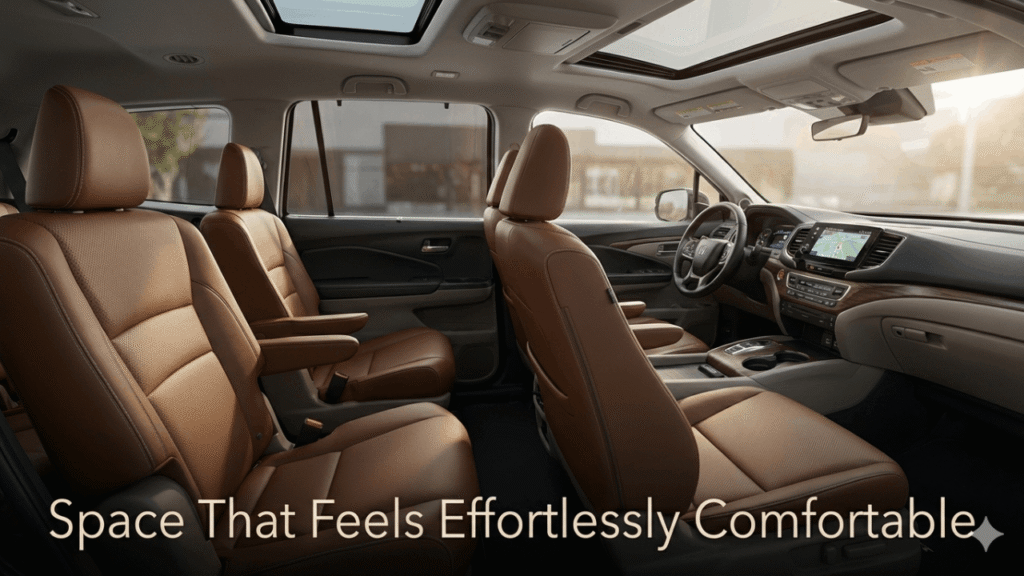
Honda Passport focuses its interior design on space and usability rather than unnecessary luxury cues. Step inside, and the cabin immediately feels open, thanks to wide door openings and smart layout choices. Seating is supportive and comfortable, making long drives feel less demanding.
Materials are chosen with durability in mind. Soft-touch surfaces appear where they matter most, while harder plastics are reserved for high-wear areas. The dashboard layout is clean and intuitive, avoiding overly complex designs. Midway through the cabin experience, the Honda Passport proves that comfort does not require visual excess.
The infotainment system is positioned for easy reach, with physical controls that reduce distraction. Screens are clear and responsive, but they do not dominate the interior. Rear-seat passengers benefit from generous legroom, and the seating angle supports longer journeys without fatigue.
Cargo space is one of the strongest advantages. With the rear seats in place, storage is already generous. Fold them down, and the interior transforms into a practical load area suitable for gear, luggage, or bulky equipment. Flexibility is baked into the design rather than added as an afterthought.
Engine, Performance & Driving Experience
The Honda Passport relies on a naturally aspirated V6 engine that prioritizes smooth, predictable power. It delivers strong acceleration without feeling aggressive, making it easy to control in everyday driving. The engine’s tuning favors usable torque rather than headline-grabbing numbers.
On the road, the balance between comfort and control is well judged. Steering feels stable and reassuring, especially at highway speeds. Around town, the vehicle remains easy to maneuver despite its size. Midway through the driving experience, the Honda Passport demonstrates a confidence that comes from refined engineering rather than raw performance.
Highway driving highlights its strength. The cabin stays quiet, and passing power is readily available without dramatic downshifts. Suspension tuning absorbs road imperfections while maintaining composure through curves.
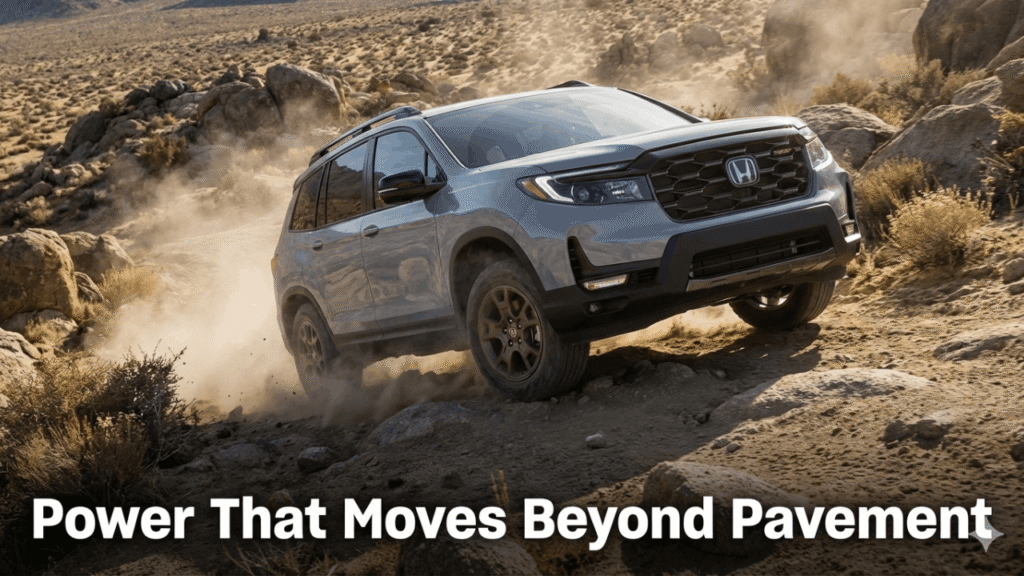
Off-road capability is where it quietly impresses. With available all-wheel drive and intelligent traction management, it handles uneven surfaces and light trails with ease. It is not a hardcore off-roader, but it is far more capable than many crossovers in its class.
Fuel Economy & Practicality
The Honda Passport takes a realistic approach to fuel efficiency. Its V6 engine prioritizes power and reliability, which naturally impacts fuel consumption. City driving returns moderate figures, while highway efficiency improves thanks to stable cruising behavior.
Compared to turbocharged rivals, fuel economy may not lead the segment. However, the consistency of its performance and the absence of complex powertrain components appeal to long-term owners. Midway through ownership, the Honda Passport offers predictability rather than surprise expenses.
Daily usability remains a strong point. The driving position is comfortable, visibility is excellent, and controls are intuitive. Long-distance comfort is enhanced by supportive seating and a well-insulated cabin.
Maintenance practicality is another advantage. Honda’s engineering reputation translates into accessible servicing and strong reliability records. While fuel costs may be slightly higher, ownership peace of mind often balances that equation for many buyers.
Safety Features & Driver Assistance
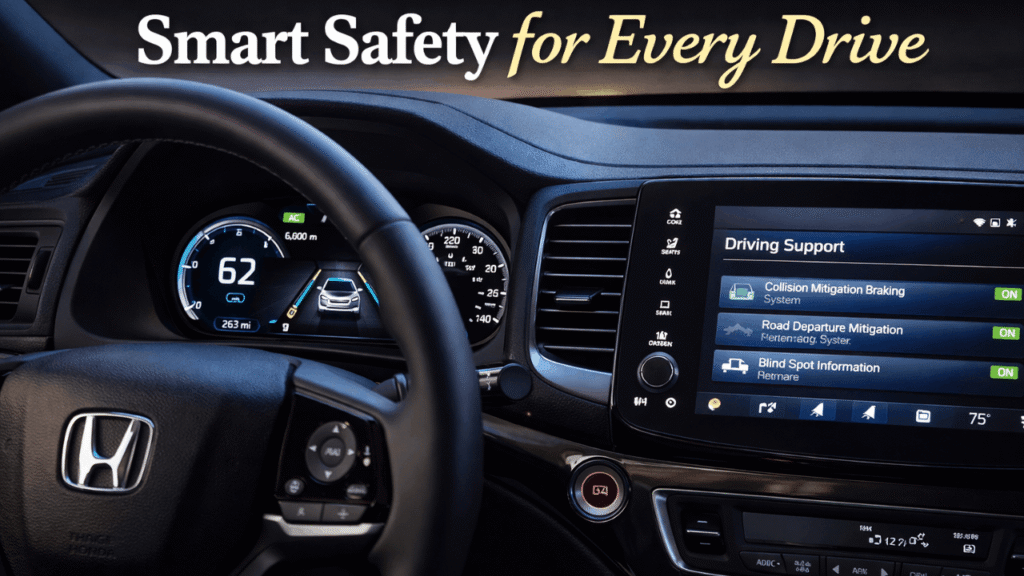
The Honda Passport places safety at the core of its design rather than treating it as an optional upgrade. Honda Sensing comes standard, offering a suite of driver-assistance technologies that operate quietly in the background.
Adaptive cruise control maintains distance smoothly, reducing fatigue on long drives. Lane-keeping assistance works subtly, guiding rather than correcting aggressively. Midway through its safety experience, the Honda Passport feels like a supportive co-driver rather than an intrusive system.
Collision mitigation braking adds another layer of confidence, especially in urban traffic. Blind-spot monitoring and rear cross-traffic alerts further enhance situational awareness.
Overall, the safety reputation is strong. Consistent performance in crash testing and real-world reliability reinforce trust. The technology is designed to assist rather than overwhelm, which aligns with the vehicle’s broader philosophy of calm capability.
Technology & Infotainment Features
The Honda Passport keeps its technology focused and practical. The central touchscreen is responsive and easy to navigate, avoiding unnecessary layers of menus. Information is presented clearly, which reduces distraction while driving.
Apple CarPlay and Android Auto integration allow seamless smartphone connectivity. The system works reliably, making navigation and media access straightforward. Midway through daily use, the Honda Passport proves that stability matters more than flashy interfaces.
Sound system quality is balanced, delivering clear audio without distortion. It may not compete with premium luxury systems, but it suits the cabin’s size and purpose well.
Additional connectivity features, including charging ports and wireless options in higher trims, support modern usage without cluttering the interior. Technology here enhances convenience rather than redefining the driving experience.
Honda Passport Trim Levels & Variants
Honda Passport offers trims that are clearly differentiated, making the buying process less confusing. Entry-level versions focus on core comfort and safety, providing strong value without stripping essential features.
Higher trims introduce enhanced styling, additional technology, and improved off-road capability. Midway through the lineup, the Honda Passport allows buyers to choose between simplicity and added refinement based on lifestyle needs.
Adventure-oriented trims emphasize all-wheel-drive systems and exterior enhancements, while upper trims add interior upgrades. This structure ensures that no version feels incomplete.
Choosing the right trim depends on priorities. Daily commuters may prefer lower trims for value, while outdoor enthusiasts benefit from the additional features offered higher up the range.
Honda Passport Pros and Cons
Honda Passport excels where it matters most. The V6 engine delivers confident power, making it suitable for towing and highway driving. Interior space is generous, offering comfort for passengers and flexibility for cargo. Off-road capability, while not extreme, surpasses many rivals in the crossover segment.
On the other hand, fuel economy could be more competitive, especially in city conditions. Some interior design elements feel conservative compared to more luxurious competitors. Midway through evaluation, the Honda Passport reveals itself as a vehicle that prioritizes function over flair.
These trade-offs are intentional rather than accidental. Buyers who value durability and performance often accept these compromises willingly.
Honda Passport vs Competitors
Honda Passport competes in a crowded segment filled with strong alternatives. Against the Toyota 4Runner, it feels more refined on-road while sacrificing some hardcore off-road capability. Compared to the Ford Edge, it offers better durability and space, though with less emphasis on sporty handling.
The Jeep Grand Cherokee presents a more luxurious interior and broader engine choices. However, the Honda Passport counters with long-term reliability and simpler ownership. Midway through comparisons, the Honda Passport stands out as the most balanced option rather than the most extreme.
Each rival excels in a specific area, but few combine everyday comfort and adventure readiness as effectively.
Who Should Buy the Honda Passport?
Honda Passport is best suited for drivers who value versatility over specialization. Adventure lovers will appreciate its ground clearance and traction systems. Families benefit from the spacious cabin and strong safety features.
Long road trips feel effortless thanks to stable highway manners and comfortable seating. Midway through ownership, the Honda Passport proves reliable across multiple use cases rather than excelling in just one.
It is ideal for those who want one vehicle that adapts to different lifestyles without constant compromise.
Pricing & Value for Money
Honda Passport positions itself competitively within the midsize SUV market. Pricing reflects its V6 powertrain, standard safety features, and durable construction. It is not the cheapest option, but it justifies its cost through substance.
What buyers receive is a well-rounded package with few weak points. Midway through the ownership experience, the Honda Passport delivers consistent value rather than short-term excitement.
For those prioritizing longevity and capability, it represents a solid investment rather than a flashy purchase.
Frequently Asked Questions About Honda Passport
Is the Honda Passport good for off-roading?
The Honda Passport is well-suited for light to moderate off-road use rather than extreme trail driving. Its available all-wheel-drive system with intelligent traction management allows it to handle dirt roads, snow, mud, and uneven terrain confidently. Ground clearance is better than most crossovers, which helps on rough paths. Midway through real-world use, the Honda Passport feels dependable for weekend adventures without demanding specialized off-road skills.
Is the Honda Passport a reliable SUV?
Reliability is one of the strongest reasons buyers consider the Honda Passport. It uses a proven V6 engine and avoids overly complex mechanical systems that can cause long-term issues. Honda’s track record for durability adds further confidence. With regular maintenance, the Honda Passport is designed to deliver consistent performance over many years of ownership.
How long does a Honda Passport typically last?
A well-maintained Honda Passport can easily last well beyond 200,000 miles. The naturally aspirated engine and solid transmission setup are known for longevity. Midway through its lifespan, owners often report stable performance with minimal major repairs. This makes the Honda Passport a strong option for buyers planning long-term ownership rather than short lease cycles.
Is the Honda Passport better than the Honda Pilot?
The Honda Passport and Honda Pilot serve different needs despite sharing some mechanical elements. The Passport offers more cargo space and a sportier, more rugged feel, while the Pilot focuses on three-row seating for larger families. Midway through comparison, the Honda Passport is better for drivers who do not need extra seating but want more versatility and a less bulky driving experience.
Does the Honda Passport offer good value for money?
The Honda Passport delivers strong value by combining power, space, safety, and long-term reliability in one package. While it may not be the cheapest midsize SUV, the ownership experience often justifies the price. Midway through cost evaluation, the Honda Passport appeals most to buyers who value durability and real-world usability over flashy features.
Final Verdict – Is the Honda Passport Worth It?
Honda Passport succeeds by staying true to its purpose. It delivers power, space, and reliability without unnecessary complexity. While it may not lead in fuel efficiency or luxury, it compensates with balance and long-term dependability.
For buyers seeking a midsize SUV that feels capable every day, the Honda Passport remains a compelling choice worth serious consideration.
3 thoughts on “Honda Passport Review: A Powerful SUV Built for Real Adventures”
Comments are closed.