
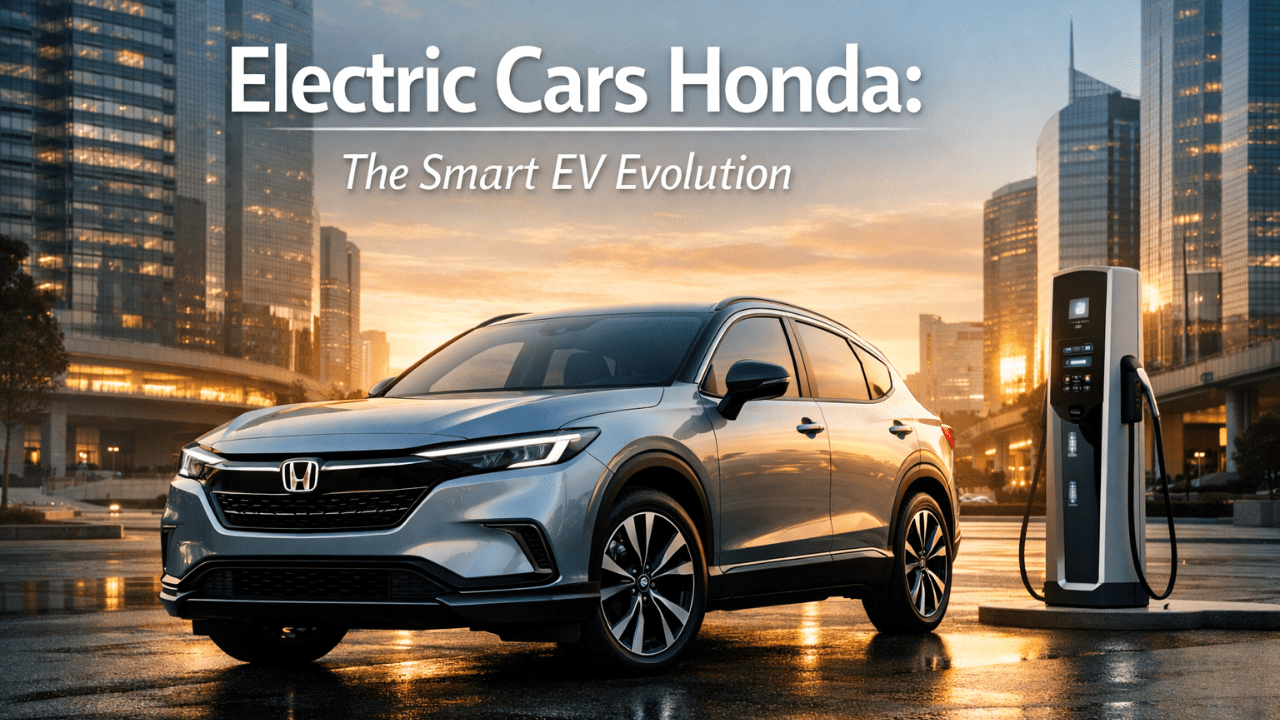
Introduction: Honda’s Entry into Electric Cars
Electric Honda cars are no longer a future promise—they represent a strategic shift by one of the world’s most trusted automakers toward clean, intelligent mobility. Honda’s move into electrification is not driven by hype but by engineering discipline, long-term planning, and a clear understanding of real-world drivers. This positive transition reflects Honda’s intention to stay relevant in a rapidly evolving automotive landscape while maintaining its reputation for reliability.
Instead of rushing half-baked models to market, Honda has taken a deliberate path, aligning electric innovation with its proven manufacturing expertise. The brand’s EV journey emphasizes efficiency, safety, and usability over exaggerated performance claims. That balance is precisely why electric Honda cars are gaining attention among buyers who value substance over spectacle.
Midway through this shift, electric Hondacars stand out as a powerful alternative to aggressive EV startups. They appeal to drivers who want electric mobility without sacrificing build quality or long-term dependability. Honda’s approach feels confident, calculated, and refreshingly practical—an underrated but decisive strength in a crowded EV market.
Honda’s Electric Vehicle Strategy Explained
Electric Honda cars are built around a global strategy that prioritizes scalability, partnerships, and regional adaptability. Honda has committed to full electrification across major markets by the mid-2030s, but the company’s roadmap avoids risky shortcuts. Instead, it integrates EVs into existing production systems while investing heavily in next-generation battery platforms.
Sustainability is not treated as a marketing slogan here. Honda’s EV plans include carbon-neutral manufacturing, reduced lifecycle emissions, and recyclable battery materials. These goals are tied directly to measurable benchmarks rather than vague environmental promises. That realism gives Honda credibility where many competitors overpromise.
In the middle of this strategy, electric Honda cars benefit from strategic alliances, particularly in battery development and software systems. When compared to rivals like Tesla or emerging Chinese EV brands, Honda appears less flashy but more stable. Its long-term vision favors consistency and trust—qualities that matter more as the EV market matures.
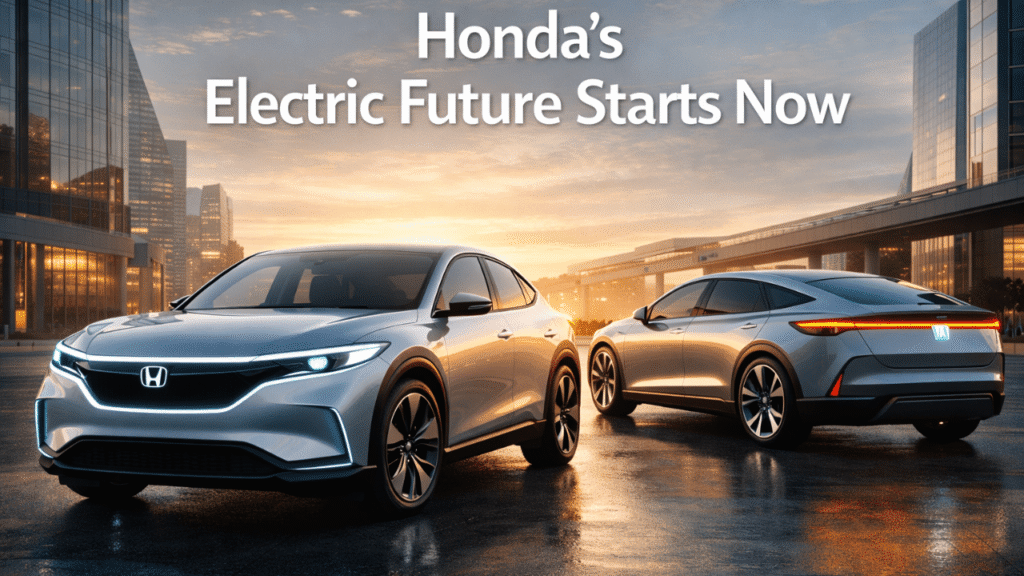
Upcoming Honda Electric Cars (Future Models)
Electric Honda cars is entering a decisive phase as the brand prepares a new generation of vehicles designed from the ground up for electrification. Unlike earlier models that adapted existing platforms, upcoming Honda EVs are being built on dedicated architectures focused on efficiency, weight reduction, and advanced software integration. This shift matters because it directly improves range stability, interior space, and driving balance—three areas buyers consistently care about.
Honda’s future lineup, including the widely discussed 0 Series, signals a cleaner design language and a smarter approach to battery packaging. These models are expected to introduce improved energy density, better thermal control, and simplified manufacturing processes that reduce long-term maintenance risks. Instead of chasing extreme performance numbers, Honda is aiming for predictable real-world results.
Midway through this transition, electric Honda cars will appeal most to drivers who want dependable innovation rather than experimental tech. Launch timelines are staggered intentionally, allowing Honda to scale production without sacrificing quality. This cautious rollout may seem slow, but it solves a real problem in the EV market: rushed vehicles that age poorly.
Honda 0 Series
Electric Honda cars will redefine their lineup through the Honda 0 Series, a next-generation EV family emphasizing minimalism, lightweight construction, and advanced software integration. The design language is bold yet restrained, signaling a clean break from traditional combustion-era styling. These vehicles are expected to feature advanced AI-assisted driving systems and improved energy efficiency.
Expected Launch Years
Electric cars under the Honda 0 Series are expected to begin rolling out globally starting in the mid-2020s. Honda plans staggered launches to ensure production stability and quality control. This cautious timeline reflects Honda’s unwillingness to compromise reliability for speed.
Design & Battery Innovation
Electric Honda cars will benefit from new battery chemistries focused on faster charging and improved thermal management. Honda is investing in solid-state battery research, aiming to reduce degradation while increasing energy density. These advancements could position Honda as a quiet leader in long-term EV durability.
Design & Interior of Honda Electric Cars
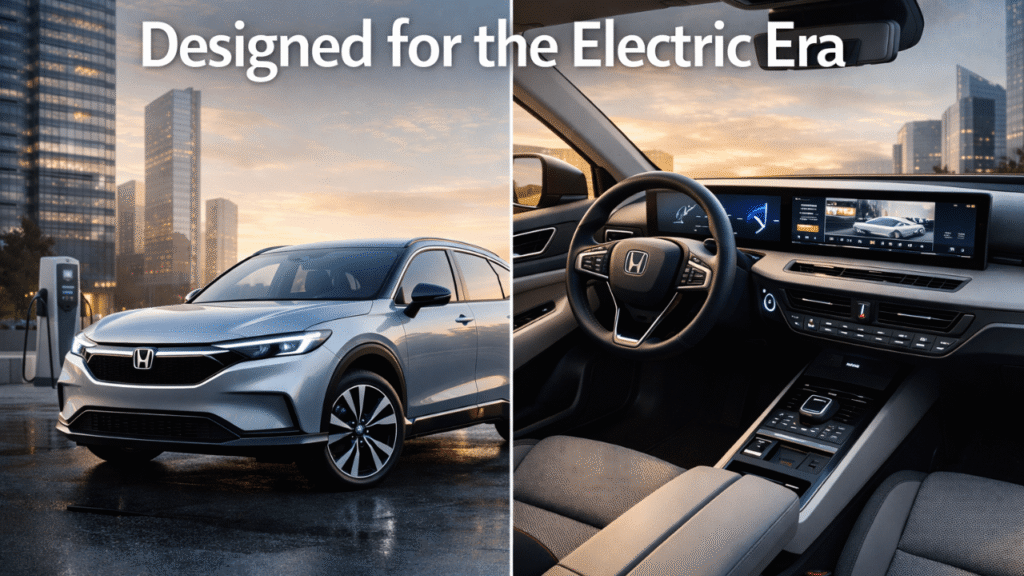
Electric Honda cars reflect a design philosophy that prioritizes longevity over short-lived trends. On the exterior, Honda avoids aggressive styling that can quickly feel outdated. Instead, clean surfaces, balanced proportions, and subtle aerodynamic details create vehicles that look modern without demanding attention. This restraint helps Honda EVs age gracefully, an important factor for buyers planning long-term ownership.
Inside the cabin, Honda’s approach becomes even more practical. The interiors are intentionally uncluttered, with screens positioned for usability rather than spectacle. Physical controls are retained where they make sense, reducing driver distraction and improving safety. Materials are selected for durability and comfort, not novelty, which solves a common EV complaint—interiors that feel futuristic but impractical.
At the center of this experience, electric Honda cars focus on comfort and trust. Seating ergonomics, quiet cabins, and thoughtful storage layouts reflect Honda’s deep understanding of everyday driving needs. Rather than overwhelming users with experimental interfaces, Honda designs spaces that feel familiar yet modern, making the transition to electric far less intimidating.
Exterior Styling
Electric Honda cars feature clean silhouettes with understated detailing. Instead of aggressive curves or exaggerated lighting, Honda favors timeless proportions that age well. This design restraint appeals to buyers who prefer sophistication over trend-chasing aesthetics.
Interior Technology
Electric cars Honda integrates technology seamlessly, avoiding cluttered dashboards or distracting interfaces. Digital displays are intuitive, responsive, and positioned for minimal driver distraction. Honda’s infotainment systems emphasize reliability and ease of use rather than experimental features.
Comfort & Safety
Electric Honda cars maintains the brand’s long-standing commitment to safety. Advanced driver-assistance systems come standard, while cabin materials prioritize durability and comfort. The result is an interior environment that feels calm, secure, and purpose-built.
Performance, Range & Battery Technology
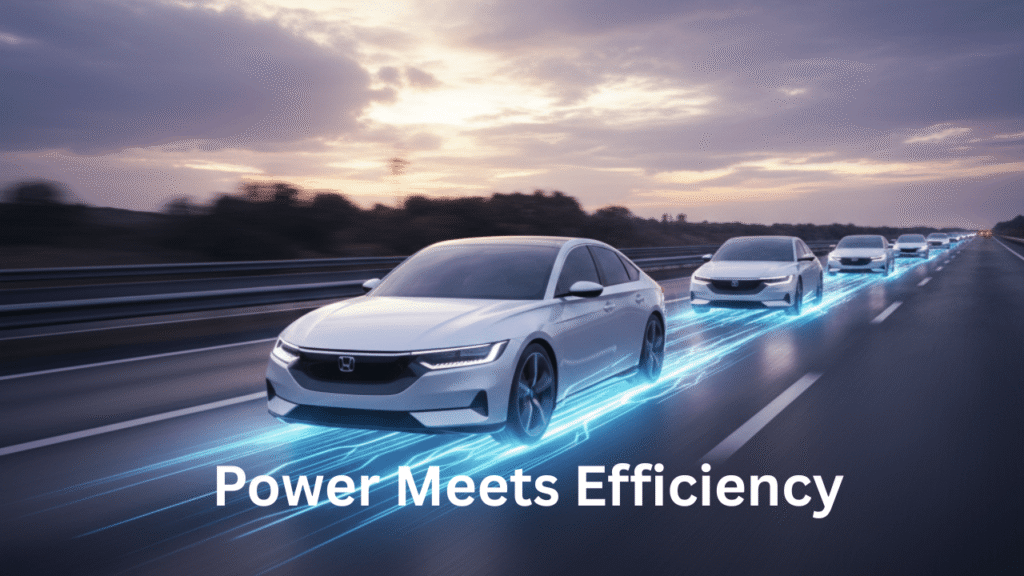
Electric Honda cars are engineered to deliver consistent performance rather than headline-grabbing acceleration. Honda tunes its electric drivetrains for smooth power delivery, predictable throttle response, and balanced handling. This approach improves control in daily driving and reduces fatigue, especially in urban and highway conditions where most EVs spend their time.
Range is treated realistically. Instead of advertising maximum numbers achievable only in ideal conditions, Honda focuses on maintaining a stable range across varied temperatures and driving styles. This reliability helps drivers plan charging with confidence. Battery systems are supported by conservative thermal management, which minimizes degradation and extends usable lifespan.
At the core of this system, electric Honda cars prioritize battery health over short-term performance gains. Charging speeds are optimized to balance convenience with longevity, addressing a major concern among EV buyers worried about long-term replacement costs. Honda’s investment in solid-state battery research further reinforces its commitment to future-proof technology, aiming to reduce charging times while improving safety and durability without compromising reliability.
Driving Range
Electric cars Honda offers competitive range figures optimized for daily use. Rather than pushing maximum numbers under ideal conditions, Honda tunes range performance to remain stable across varied driving scenarios.
Charging Speed
Electric cars Honda supports modern fast-charging standards, enabling practical recharge times without stressing battery health. Honda deliberately avoids extreme fast-charging claims that can accelerate battery degradation.
Battery Lifespan
Electric Honda cars are engineered for longevity. Advanced cooling systems and conservative charging limits help preserve battery capacity over years of ownership. This long-term durability aligns with Honda’s reputation for dependable vehicles.
Honda Electric Cars Price & Availability
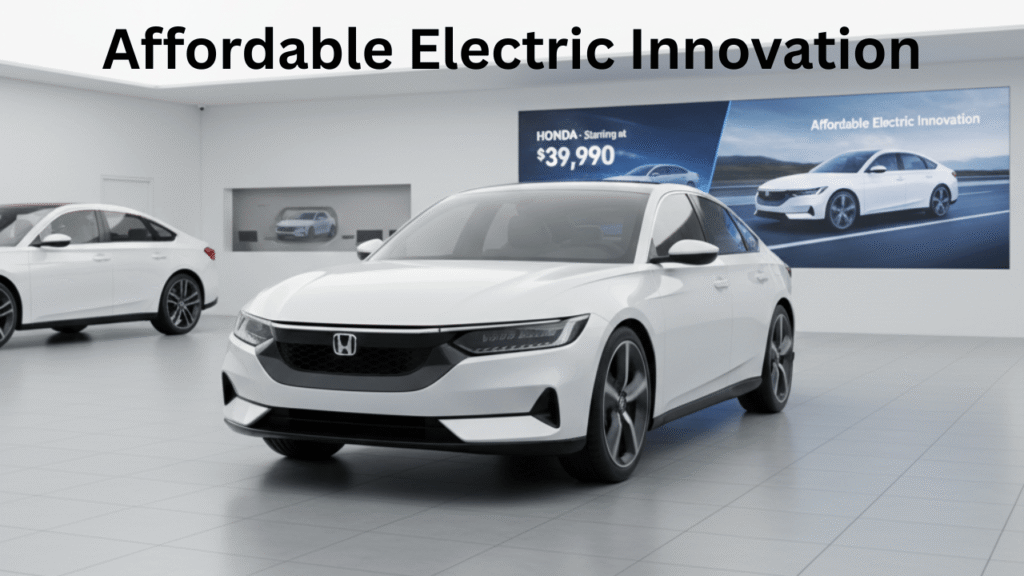
Electric Honda cars are priced with intention, targeting buyers who want value rather than extremes. Honda avoids the race to the bottom seen in some budget EVs while also steering clear of inflated premium pricing. This middle-ground strategy allows the brand to maintain build quality while keeping ownership costs reasonable over time.
Availability is expanding gradually, starting in key markets where charging infrastructure and service networks are already mature. Honda’s phased rollout reduces logistical issues and ensures consistent after-sales support—an often-overlooked problem with rapidly launched EVs. Buyers benefit from better parts availability, trained technicians, and reliable software updates.
From a positioning standpoint, electric Honda cars sit comfortably between mass-market EVs and luxury brands. They are not designed to be status symbols but dependable tools for daily life. This pricing philosophy appeals to practical buyers who value reliability, resale potential, and predictable maintenance costs. By focusing on sustainable ownership rather than aggressive discounts, Honda solves a real consumer concern: long-term affordability beyond the sticker price.
Estimated Pricing
Electric cars Honda are expected to remain competitively priced within their respective categories. Honda aims to deliver strong value by focusing on reliability rather than luxury add-ons.
Market Availability
Electric Honda cars availability varies by region, with initial focus on North America, Europe, and Japan. Expansion into additional markets is planned as infrastructure improves.
Affordable vs Premium Positioning
Electric cars Honda sit comfortably between mass-market affordability and premium refinement. This positioning allows Honda to attract both first-time EV buyers and brand-loyal customers.
Pros and Cons of Honda Electric Cars
Electric Honda cars offer clear strengths but are not without limitations.
The positive aspect lies in Honda’s disciplined engineering, long-term reliability, and balanced performance. A powerful advantage is the brand’s focus on battery health and real-world usability.
On the negative side, electric cars Honda may feel conservative to buyers seeking cutting-edge acceleration or flashy designs. A notable limitation is the slower rollout compared to aggressive EV competitors.
Honda Electric Cars vs Competitors
Electric Honda cars compete in a market filled with bold promises and rapid experimentation. Against Tesla, Honda takes a fundamentally different path. While Tesla emphasizes constant software evolution and performance extremes, Honda focuses on mechanical stability, predictable updates, and long-term reliability. This difference matters to buyers who prefer consistency over frequent change.
When compared to Toyota’s EV efforts, Honda appears more decisive. Toyota leans heavily on hybrids as a transitional solution, whereas Honda is committing more clearly to fully electric platforms. This positions Honda as a brand willing to evolve without abandoning its engineering principles.
What ultimately separates electric Honda cars competitors is restraint. Honda avoids exaggerated range claims, experimental interiors, and rushed production cycles. Instead, it delivers vehicles that feel finished from day one. In a segment where many EVs feel like beta products, Honda’s disciplined approach offers reassurance to buyers who want electric mobility without unnecessary risk.
Honda vs Tesla
Electric cars Honda prioritize refinement and longevity, while Tesla emphasizes software-driven performance and rapid innovation. Honda appeals to drivers seeking stability over experimentation.
Honda vs Toyota EVs
Electric cars Honda adopt a more committed EV stance compared to Toyota’s cautious hybrid-heavy approach. Honda’s strategy signals stronger long-term confidence in full electrification.
Why Honda Stands Out
Electric cars Honda stand out for their consistency, engineering maturity, and realistic promises. Honda builds EVs meant to last, not to impress temporarily.
Are Honda Electric Cars Worth Buying?
Electric Honda cars make sense for buyers who value trust, reliability, and thoughtful design. They are ideal for daily commuting, family use, and long-term ownership.
Electric cars Honda may not thrill performance enthusiasts, but they deliver peace of mind and practical efficiency. For many buyers, that trade-off is more than worth it.
FAQs About Honda Electric Cars
Are electric cars Honda reliable for long-term use?
Electric Honda cars benefit from the brand’s conservative engineering philosophy, which prioritizes durability over experimental features. Honda designs its electric platforms with controlled charging speeds, stable thermal management, and proven components. This approach reduces long-term battery stress and electronic failures. As a result, Honda EVs are expected to age more predictably than many fast-evolving competitors.
When will Honda launch more electric cars globally?
Electric Honda cars will expand significantly starting in the mid-2020s, with global rollouts planned in phases rather than mass launches. Honda is aligning new EV releases with regional charging infrastructure readiness and manufacturing capacity. This staggered approach helps maintain quality control while scaling production responsibly. Future models will appear first in major markets before wider availability.
Are Honda electric cars affordable compared to competitors?
Electric cars Honda are positioned between mass-market EVs and premium electric brands. Honda avoids extreme low-cost compromises while also steering clear of inflated luxury pricing. The focus is on value—reliable hardware, long battery life, and practical features rather than expensive novelty tech. This pricing strategy appeals to buyers seeking balance rather than extremes.
Do Honda electric cars support fast charging?
Electric cars Honda support modern fast-charging standards but with moderated charging curves. Honda intentionally limits peak charging speeds to protect battery longevity and maintain consistent performance over time. While charging may not be the fastest in the segment, it is optimized for long-term battery health. This trade-off reflects Honda’s reliability-first mindset.
Will Honda focus on fully electric cars or hybrids in the future?
Electric cars Honda are part of a broader electrification roadmap that includes hybrids in the short term and full EVs in the long run. Honda views hybrids as a transitional solution while charging networks and battery technology continue to mature. However, long-term investment is clearly shifting toward dedicated electric platforms. This ensures a stable transition rather than an abrupt overhaul.
Conclusion: The Future of Electric Cars at Honda
Electric Honda cars represent a calculated evolution built on decades of engineering experience rather than short-term trends. Honda’s EV strategy is not about dominating headlines but about creating vehicles that integrate smoothly into everyday life. This focus on reliability, usability, and long-term value addresses the real concerns many buyers have about switching to electric.
As infrastructure improves and battery technology advances, Honda is positioning itself to scale without compromising quality. Its slow-but-steady approach reduces the risks associated with early adoption while ensuring that each new model meets strict internal standards. Trust, once earned, becomes a competitive advantage.
Looking ahead, electric Honda cars are likely to gain momentum as the market matures and buyers prioritize stability over novelty. For drivers seeking electric vehicles that feel thoughtfully engineered rather than experimentally assembled, Honda’s future holds quiet confidence—and lasting power.
2 thoughts on “Electric Honda Cars Is Building: A Calm, Confident EV Revolution”
Comments are closed.