
Introduction
The electric car tax credit has quietly become one of the most powerful financial tools shaping how people buy vehicles today. Instead of acting as a vague government perk, it directly reduces how much you owe when you purchase an eligible electric vehicle, making EV ownership feel far more attainable than it did just a few years ago. As electric cars move from early adoption into the mainstream, this incentive now plays a decisive role in buying decisions.
In 2026, the electric car tax credit matters more than ever because prices remain volatile, interest rates fluctuate, and buyers are increasingly selective about value. A properly claimed credit can erase thousands of dollars from the effective purchase price, narrowing the cost gap between electric and gas-powered vehicles. That shift alone has changed the EV conversation from “future tech” to “financially practical.”
Savings vary widely depending on eligibility, income, vehicle type, and where you live. Federal incentives form the backbone of the program, while state-level credits, rebates, and utility incentives can stack on top, sometimes dramatically. Understanding how much you can save—and whether you qualify—has become essential before signing any EV paperwork.
What Is the Electric Car Tax Credit?
At its core, the electric car tax credit is a government-backed incentive designed to reduce the financial barrier of switching to electric vehicles. Rather than offering a vague promise of savings, it directly offsets a portion of your tax liability, turning policy into tangible value for buyers. This approach ensures the benefit feels immediate, even if it’s realized during tax season.
Governments use the electric car tax credit to accelerate EV adoption, reduce carbon emissions, and strengthen domestic manufacturing. By rewarding buyers who choose cleaner transportation, policymakers steer demand toward vehicles that align with long-term environmental and energy goals. It’s not just about cars—it’s about reshaping entire supply chains.
Unlike rebates, which typically arrive as cash after purchase, a tax credit reduces the amount of tax you owe. If structured correctly, it can feel more substantial than a rebate because it directly offsets federal obligations. The maximum credit can reach several thousand dollars, depending on vehicle eligibility and buyer income.
Midway through the purchase equation, the electric car tax credit becomes a deciding factor for many buyers who might otherwise hesitate. Understanding this distinction is critical, because confusing credits with rebates often leads to overestimated savings.

How the Electric Cars Tax Credit Works
The electric car tax credit operates through a structured process that begins the moment you choose an eligible vehicle. Once the purchase is completed, the credit doesn’t appear instantly unless transferred at the dealership—it’s applied during your tax filing. This delayed gratification often surprises first-time EV buyers.
When filing your federal return, the electric car tax credit reduces your tax liability rather than increasing your refund outright. If the credit is nonrefundable, it can only lower your taxes to zero, not beyond. That distinction determines how much of the credit you can actually use.
Timing matters. Buyers must claim the credit for the tax year in which the vehicle is placed into service, not ordered or reserved. Documentation from the dealer plays a critical role, especially as reporting requirements have tightened.
Halfway through the process, the electric car tax credit demands precision. Errors in income reporting, VIN eligibility, or filing forms can delay or completely void the benefit, making attention to detail essential.
Federal Electric Cars Tax Credit (Latest Rules)
The modern federal framework for the electric car tax credit is far more complex than earlier versions. Updated IRS rules now tie eligibility to battery sourcing, final assembly location, and strict income limits. These changes transformed the credit from a simple incentive into a compliance-driven program.
Maximum credit amounts depend on meeting specific technical requirements, with partial credits available if only certain conditions are satisfied. Vehicles assembled outside approved regions or using non-compliant battery components may qualify for reduced benefits—or none at all.
Income caps now act as a gatekeeper. Individual and household earnings beyond defined thresholds immediately disqualify buyers, regardless of vehicle eligibility. This shift ensures the electric car tax credit targets middle-income households rather than luxury buyers.
Mid-article clarity matters here: the electric car tax credit is no longer automatic. Buyers must verify both personal and vehicle compliance before assuming any savings will apply.
Income & Vehicle Eligibility Requirements
Eligibility for the electric car tax credit starts with adjusted gross income, not sticker price or enthusiasm. Income thresholds differ based on filing status, and exceeding them—even slightly—can eliminate the credit entirely. This makes timing and financial planning surprisingly important.
Vehicle pricing also plays a decisive role. Sedans, SUVs, and trucks each fall under specific price caps, designed to prevent high-end EVs from consuming public incentives. A single optional upgrade can push a vehicle over the limit.
New and used EVs follow separate eligibility paths, each with distinct rules. Domestic manufacturing requirements further narrow the field, ensuring vehicles contribute to local economic growth.
Halfway through buyer evaluation, the electric car tax credit becomes less about desire and more about qualification. Understanding these boundaries prevents costly assumptions.
Electric Cars That Qualify for the Tax Credit
Not all electric vehicles qualify, even if they dominate headlines. The electric car tax credit favors models that meet strict sourcing, assembly, and pricing rules, which means eligibility can change year to year—even mid-model cycle.
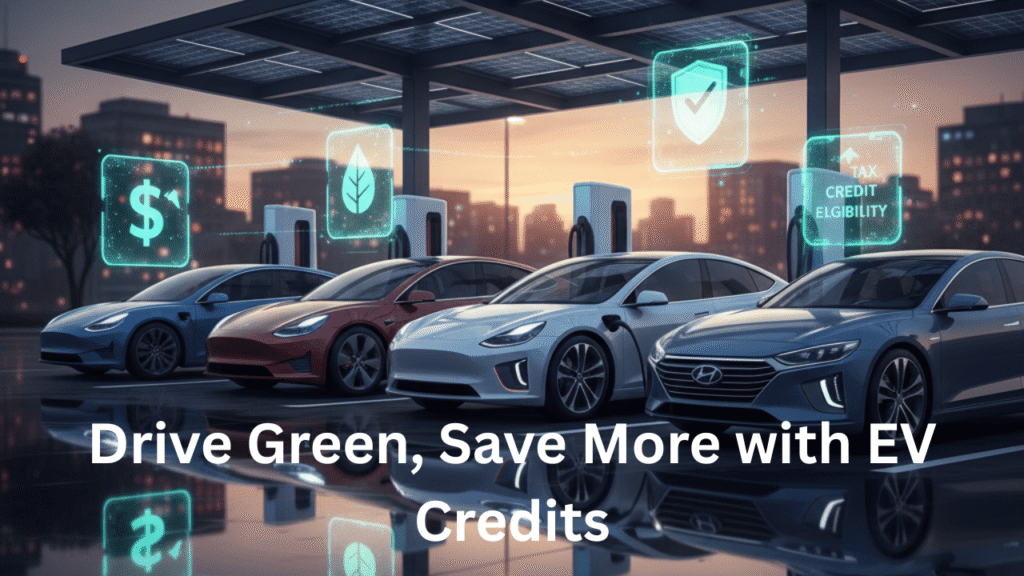
Brands like Tesla, Ford, and Hyundai often appear on qualifying lists, but specific trims matter. A single configuration difference can determine whether a vehicle earns the credit or misses out entirely.
Some EVs are excluded due to overseas assembly or battery sourcing that fails compliance thresholds. These exclusions frustrate buyers but reflect the policy’s manufacturing priorities.
Midway through the research process, checking official eligibility databases becomes essential. Assuming a popular EV qualifies for the electric car tax credit is one of the most common—and costly—mistakes buyers make.

Used Electric Cars Tax Credit Explained
The used electric car tax credit opens the door for budget-conscious buyers who want EV benefits without new-car pricing. Unlike the new-vehicle credit, it focuses heavily on resale value, age, and transaction structure.
Eligibility requires the vehicle to meet age and price limits, ensuring the incentive supports affordable adoption. Credit amounts are smaller, but they can significantly reduce effective purchase cost.
Buyers must also meet income thresholds, while dealers must be registered and compliant with IRS reporting rules. Private-party sales typically do not qualify.
Halfway through ownership planning, the electric car tax credit for used vehicles proves that affordability and sustainability don’t have to be mutually exclusive.
State-Level Electric Cars Tax Credits & Incentives
Beyond federal programs, state-level incentives add another dimension to the electric car tax credit ecosystem. These benefits vary widely, ranging from tax credits and rebates to reduced registration fees and charging incentives.
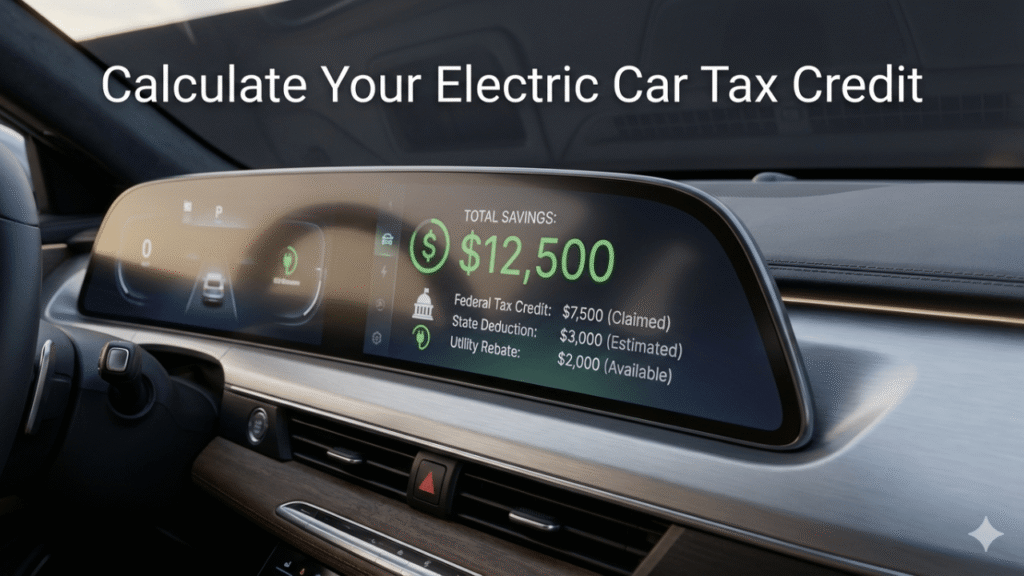
States with aggressive climate policies often offer the most generous packages, sometimes stacking thousands of dollars in savings on top of federal benefits. Utility companies may further sweeten the deal through charging rebates.
Combining state and federal incentives requires careful coordination, as rules and timelines differ. Overlooking one program can mean leaving money on the table.
Midway through total cost calculations, the electric car tax credit becomes only part of a larger savings strategy shaped by geography.
Point-of-Sale EV Tax Credit (New System)
The point-of-sale option reshapes how the electric car tax credit feels to buyers. Instead of waiting until tax season, eligible consumers can apply the credit directly at purchase, lowering upfront costs immediately.
This system improves accessibility, especially for buyers who might not have sufficient tax liability to benefit later. It also simplifies budgeting and financing.
However, not all dealers participate, and eligibility verification happens instantly. Mistakes can delay or reverse the applied discount.
Halfway through dealership negotiations, the electric car tax credit at point-of-sale becomes a powerful leverage tool—when handled correctly.
Pros and Cons of Electric Cars Tax Credit
The electric car tax credit delivers undeniable benefits, but it comes with real trade-offs. On the upside, it dramatically reduces the effective purchase price and accelerates EV adoption at scale.
On the downside, strict rules, income caps, and confusing requirements exclude many willing buyers. Navigating eligibility often feels more complex than buying the car itself.
Midway through evaluation, the electric car tax credit proves valuable—but not universally accessible.
Benefits of Electric Cars Tax Credit for Buyers
For qualified buyers, the electric car tax credit reshapes the entire ownership equation. Reduced upfront cost improves affordability, while long-term savings compound through lower fuel and maintenance expenses.
This incentive bridges the gap between EVs and traditional vehicles, making electric ownership feel less experimental and more practical.
Midway through financial planning, the electric car tax credit transforms EVs from aspirational purchases into rational ones.
Common Mistakes to Avoid When Claiming EV Tax Credit
Many buyers lose the electric car tax credit due to avoidable errors. Purchasing non-qualifying vehicles remains the most common mistake, followed closely by misjudging income limits.
Filing mistakes and relying on incomplete dealer information further complicate claims. Even small documentation errors can delay approval.
Midway through the claim process, precision becomes as important as eligibility itself.
How to Claim the Electric Cars Tax Credit
Claiming the electric car tax credit requires proper documentation, including dealer reports and vehicle identification details. IRS forms must be completed accurately and submitted on time.
The filing timeline aligns with annual tax returns, making organization critical. Missing paperwork can nullify the benefit entirely.
Halfway through tax preparation, the electric car tax credit rewards those who treat it as a financial process—not a perk.
Future of Electric Cars Tax Credit
The future of the electric car tax credit remains fluid, shaped by political priorities and market conditions. Policy expansions could broaden eligibility, while budget pressures may tighten requirements.
Market trends suggest incentives will increasingly favor affordability and domestic production. EV adoption depends heavily on how these credits evolve.
Midway through long-term planning, the electric car tax credit remains a moving target worth monitoring closely.
Frequently Asked Questions About Electric Car Tax Credit
How much can I actually save with the electric car tax credit?
The electric car tax credit can reduce your federal tax liability by up to several thousand dollars, but the exact amount depends on vehicle eligibility, battery sourcing rules, and your income level. Some buyers qualify for the full credit, while others receive a partial amount based on compliance factors. State incentives can further increase total savings if combined correctly. The real value comes from understanding eligibility before purchase, not after filing taxes.
Can I combine federal and state electric car tax credit benefits?
Yes, federal and state incentives are often stackable, but they operate independently. The electric car tax credit at the federal level reduces tax liability, while state programs may offer rebates, credits, or utility incentives. Eligibility rules, application processes, and timelines differ, so coordination matters. Buyers who research both layers typically unlock significantly higher total savings.
Does leasing an EV qualify for the electric car tax credit?
In most cases, the electric car tax credit applies to the leasing company, not the individual driver. However, many lessors pass the value of the credit to consumers through reduced lease payments or upfront discounts. The benefit may not appear as a tax credit on your return, but it can still lower overall lease cost. Terms vary by dealer and manufacturer, so confirmation before signing is essential.
What happens if my income changes after buying the car?
Eligibility for the electric car tax credit is based on income for the tax year in which the vehicle is placed into service. If your income exceeds the threshold when filing, you may lose eligibility even if you qualified at purchase. Some buyers use prior-year income when allowed, but this depends on current IRS rules. Income planning can be just as important as vehicle selection.
Is the electric car tax credit refundable if I owe little or no tax?
Most versions of the electric car tax credit are non-refundable, meaning they can only reduce your tax liability to zero. If you owe less tax than the credit amount, the unused portion is typically lost unless transferred at point of sale. This limitation affects lower-income buyers the most. Understanding refundability prevents overestimating the benefit.
How do I verify if a vehicle qualifies before buying?
Official eligibility lists published by government agencies are the only reliable source. Dealer claims, online forums, and marketing materials can be outdated or inaccurate. Vehicle eligibility may change by trim, model year, or manufacturing location. Verifying qualification protects you from assuming an electric car tax credit that may not apply.
Final Verdict: Is the Electric Car Tax Credit Worth It?
For eligible buyers, the electric car tax credit delivers substantial value and accelerates the shift to electric mobility. Those within income and vehicle limits benefit the most.
High-income buyers or those eyeing premium imports may find limited value. Understanding eligibility upfront determines whether the credit is a game-changer—or irrelevant.
3 thoughts on “Electric Car Tax Credit: What Buyers Need to Know Before 2026”
Comments are closed.