
What Are Cloud Cost Optimization Strategies?
Definition of Cloud Cost Optimization Strategies
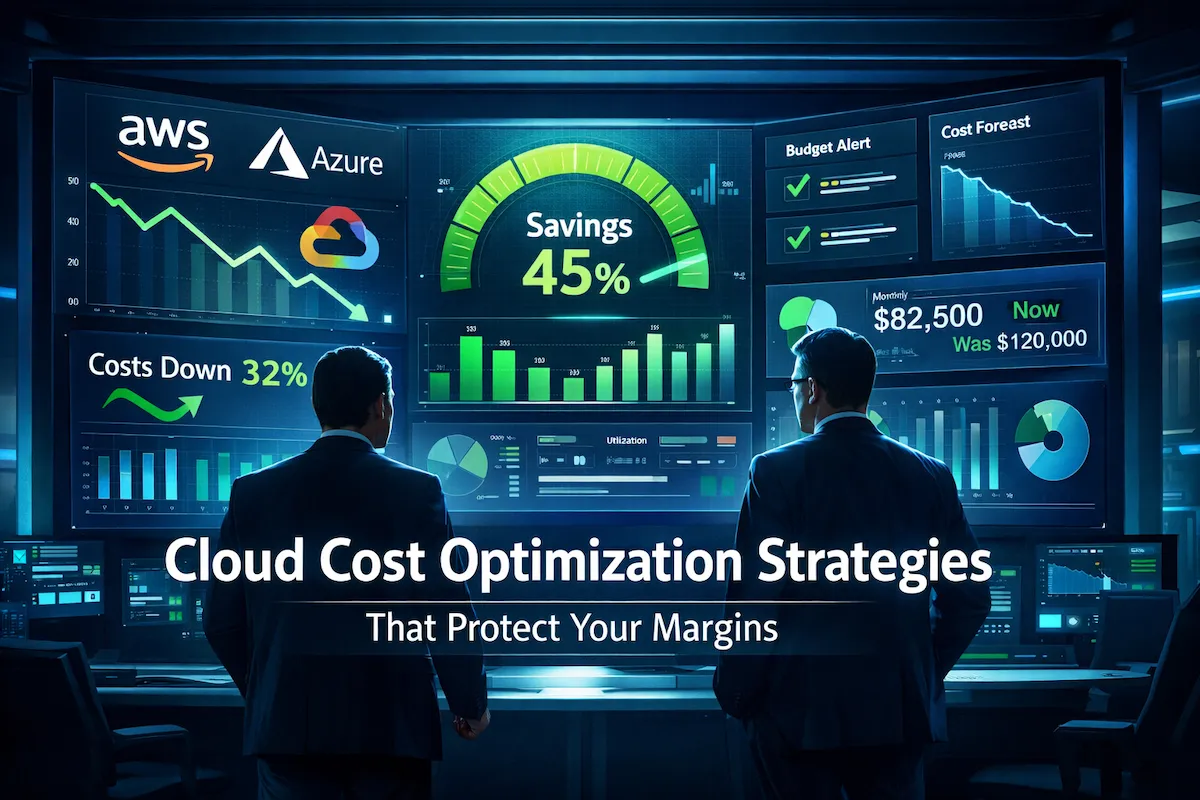
Cloud cost optimization strategies are the specific methods, processes, and tools businesses use to reduce unnecessary cloud spending while maintaining—or improving—performance and reliability. This isn’t just about cutting costs. It’s about making every dollar you spend on cloud infrastructure actually work for your business.
Your cloud bill is essentially a reflection of how well-engineered your infrastructure decisions are. Cloud cost optimization strategies help you align spending with actual business value, not just raw technical capacity. And in a market where margins matter more than ever, that alignment is everything.
Why Cloud Cost Optimization Strategies Matter for Growing Businesses
Here’s a number that should get your attention: Gartner estimates that organizations waste between 30–35% of their cloud spend. For a business spending $50,000 a month on AWS or Azure, that’s $15,000–$17,000 disappearing every single month—not into growth, not into product, just gone.
For growing businesses in the US, cloud financial optimization isn’t optional. It’s a competitive advantage. Startups and mid-sized companies don’t have the financial padding that enterprises do. When your AWS bill spikes unexpectedly right before a funding round, or when your margins start shrinking because infrastructure costs scaled faster than revenue, the damage is real and immediate.
Poor cloud spend governance compounds quietly. By the time it shows up on a CFO’s radar, months of unnecessary spending have already passed. That’s exactly why cloud cost optimization strategies need to be built in early—not bolted on later.

Why Growing Businesses Struggle With Cloud Costs
Rapid Scaling Without Cloud Cost Optimization Strategies
Speed is the defining characteristic of growing companies. Teams spin up servers, launch new environments, and test features without stopping to ask what it costs. That’s not laziness—it’s the pace of competition. But speed without guardrails leads to infrastructure sprawl fast.
Without infrastructure cost control baked into your DevOps workflows, every sprint can quietly add unreviewed cloud costs. By the time someone pulls the monthly bill, the waste has been accumulating for months. One mid-sized SaaS company discovered after a 90-day audit that 40% of their active EC2 instances hadn’t served a single production request in over six weeks. That’s not an edge case—that’s a pattern.
Over-Provisioned Resources and Cloud Cost Optimization Strategies
Over-provisioning is one of the most common and expensive problems in cloud spend management. Engineers choose instance sizes or storage tiers with a buffer “just in case.” That’s reasonable thinking in isolation, but it compounds quickly across dozens of services and environments.
A standard web application doesn’t need the same compute power on Saturday at 2 AM as it does on Monday morning. Without cloud cost optimization strategies that account for real usage patterns, you’re paying for peak capacity around the clock.
A SaaS platform running 200 m5s. Large instances at an average of 25% CPU utilization can realistically reduce compute costs by 35–40% after a structured 60-day right-sizing review. That’s not a dramatic infrastructure overhaul—it’s just matching what you’re paying for to what you’re actually using.
Poor Governance and Cloud Cost Optimization Strategies
Many growing businesses lack the governance structure that makes cost management possible. No tagging strategy means you can’t attribute costs to teams or projects. No budget alerts mean you learn about cost spikes after they’ve already hit. No ownership means nobody’s accountable when a dev environment runs for three months with zero traffic.
This is a problem that compounds with headcount. The more engineers you have deploying resources independently, the more ungoverned your cloud spend becomes. If you’ve already run into common cloud security mistakes in your organization, the same root cause usually applies here: no one built governance into the culture before the chaos arrived.
Cloud cost optimization strategies require governance as a foundation. Without it, even the best tools won’t save you money because no one knows what’s worth saving.
Core Cloud Cost Optimization Strategies for Businesses
Right-Sizing Resources Using Cloud Cost Optimization Strategies
Right-sizing is the process of matching your instance types and sizes to actual workload requirements. It’s one of the highest-impact cloud cost optimization strategies available because over-provisioning is nearly universal across growing businesses.
Start by pulling CPU, memory, and network utilization data over a 30–90 day window using tools like AWS Cost Explorer. AWS Compute Optimizer, Azure Advisor, and Google Cloud Recommender all do this automatically. If your instances are consistently running at under 40% CPU utilization, you’re paying for capacity you don’t need. Downsizing to the next tier or switching to burstable instance types—like AWS T-series—can cut those costs 30–50% with zero performance impact for most workloads.
Right-sizing isn’t a one-time exercise. Make it a quarterly calendar item. Workloads change, teams grow, and what was correctly sized six months ago may be dramatically over-provisioned today.
Eliminating Idle Resources With Cloud Cost Optimization Strategies
Idle resources are cloud infrastructure that’s running but doing nothing useful. Unattached EBS volumes, unused Elastic IPs, zombie EC2 instances, forgotten load balancers, and stale RDS snapshots all fall into this category.
This is one of the most direct cloud cost optimization strategies you can act on today—no architecture changes required. Run an audit of every resource in every account. Flag anything with zero traffic, zero connections, or no meaningful activity in the last 30 days. Terminate what isn’t needed. Schedule automated shutdowns for development and staging environments outside business hours.
A simple AWS Lambda function or a tool like AWS Instance Scheduler can power down non-production environments at night and on weekends. For a business with $20,000 per month in dev infrastructure, that single action can recover $8,000–$10,000 per month.
Pricing Models and Cloud Cost Optimization Strategies
Pay-as-you-go pricing is the most expensive way to run long-term cloud workloads. All major cloud providers offer significant discounts if you commit to usage in advance—and most growing businesses leave serious money on the table by not using them.
Your main options:
Reserved Instances (RIs): Commit to a 1- or 3-year term in exchange for up to 72% off on-demand pricing. Best for stable, predictable workloads like production databases and core application servers.
Savings Plans: More flexible than RIs. AWS Compute Savings Plans apply to any EC2 instance regardless of region, family, or OS. Discounts of 60–70% are achievable without locking into specific instance types.
Spot Instances: Up to 90% off on-demand pricing, but instances can be interrupted with a two-minute warning. Best for batch processing, data analysis, rendering, and fault-tolerant workloads. Not appropriate for stateful production services without careful architecture design.
The right approach is a mix of all three. Stable workloads on RIs or savings plans, variable compute on Spot where interruption is tolerable, and on-demand only for genuinely unpredictable needs. Most growing businesses should target 70–80% of eligible spend covered by committed pricing.
Automation and Cloud Cost Optimization Strategies
Manual cloud spend governance doesn’t scale. As your infrastructure grows, automation needs to be woven into your cloud cost optimization strategies—not treated as a nice-to-have.
Set budget alerts at 50%, 80%, and 100% of projected monthly spend. Use auto-scaling to match compute with actual demand instead of provisioning for peak at all times. Implement Infrastructure as Code using Terraform or CloudFormation so resources are provisioned consistently and are easier to audit and clean up. Use S3 lifecycle policies to automatically tier infrequently accessed data to cheaper storage classes.
Automation turns cost optimization from a quarterly cleanup task into an ongoing, self-correcting system. The goal is for your infrastructure to respond to real demand automatically—not for an engineer to catch waste during a monthly review.
Multi-Cloud Cost Optimization Strategies
Many growing businesses use more than one cloud provider—AWS for core compute, Google Cloud for ML workloads, and Azure because an enterprise client requires it. Managing costs across multiple providers adds complexity, but it also creates real optimization opportunities if you’re intentional about it.
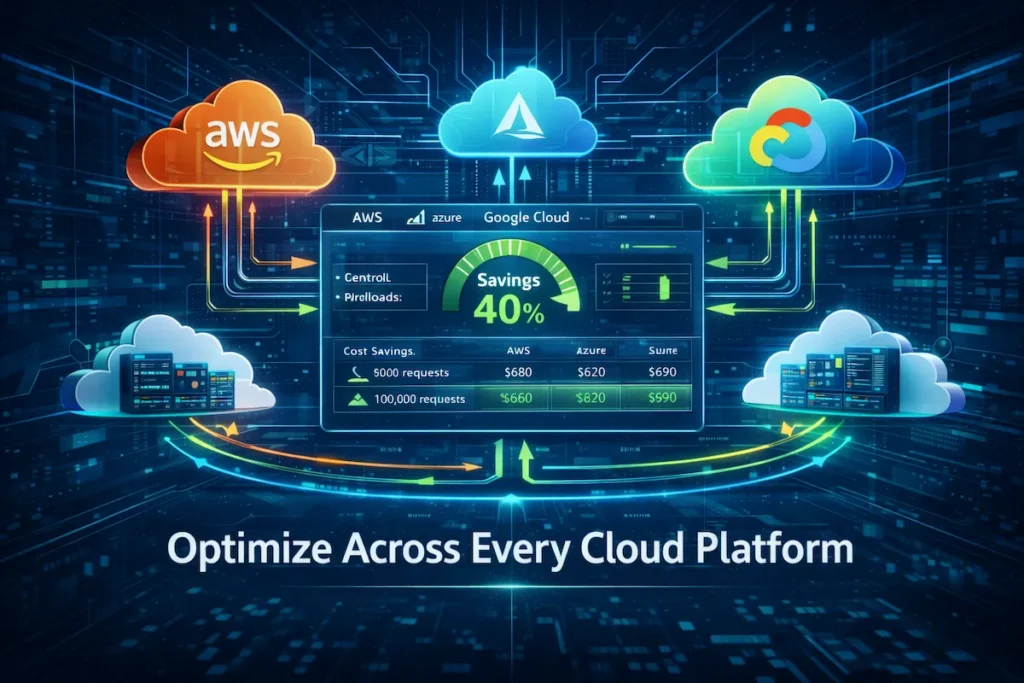
Multi-cloud cost optimization strategies include centralizing billing visibility through platforms like CloudHealth or Apptio, negotiating enterprise agreements with multiple providers to create pricing leverage, and making deliberate decisions about which workloads run where based on cost efficiency rather than habit.
If you’re running a hybrid or multi-cloud setup, you’ll want a clear framework for governance before cost optimization becomes possible. This hybrid cloud vs. public cloud decision guide is a useful starting point for understanding where your workloads should live before you start optimizing what you’re spending on them. Similarly, if you’re managing data across multiple providers, the security and cost implications often overlap—this guide to securing data in multi-cloud environments covers the governance layer that makes both security and cost control possible.

Cloud Cost Optimization Tools for Growing Businesses
Native Cloud Cost Optimization Strategies Tools
Every major provider offers built-in cost optimization tools at no additional cost, and they’re genuinely capable for most businesses under $75,000 per month in cloud spend.
AWS: Cost Explorer, AWS Budgets, Compute Optimizer, Trusted Advisor, and the Savings Plans dashboard. Cost Explorer alone gives you enough visibility to identify waste patterns within an hour of reviewing it seriously.
Azure: Azure provides tools like Azure Cost Management, Azure Advisor, and its Pricing Calculator.
Google Cloud: Google Cloud offers tools such as Google Cloud Billing, Recommender, and Active Assist.
Start with native tools before spending money on third-party platforms. For most growing businesses, they’re sufficient until your spending justifies more sophisticated governance capabilities.
Third-Party Cloud Cost Optimization Strategies Platforms
If your monthly cloud bill exceeds $75,000 and multiple departments are deploying resources independently, native tools typically lack the governance enforcement capabilities you need. That’s the inflection point where third-party platforms earn their cost.
CloudHealth by VMware: Enterprise-grade visibility and policy automation across AWS, Azure, and GCP. Strong for governance, showback reporting, and multi-team accountability.
Spot.io (now Spot by NetApp): Focuses on automating Spot Instance usage and intelligent workload placement to maximize discount pricing without the interruption risk.
Apptio Cloudability: Strong financial planning integration, purpose-built for FinOps teams managing shared infrastructure across business units.
Infracost: A developer-facing tool that shows the cost impact of Terraform changes before they’re applied. This is a smart shift-left cloud cost optimization strategy—catching expensive decisions before they’re deployed, not after.
AI-Based Cloud Cost Optimization Strategies
AI-based cloud cost optimization strategies have moved from experimental to practical in the last two years. These tools analyze historical usage patterns and make autonomous or semi-autonomous decisions that no quarterly manual review could replicate.
AWS Compute Optimizer uses machine learning to analyze workload behavior and recommend right-sized instances with measurable confidence scores. Spot.io uses AI to predict interruption rates for Spot Instances, making them safer to use across a wider range of workloads. Platforms like Zesty automate Reserved Instance and Savings Plan commitments in real time based on predicted demand curves—adjusting weekly rather than waiting for annual commitment reviews.
AI-based cost optimization also connects to broader cloud visibility challenges. Knowing what you’re spending is different from understanding why. AI tools are increasingly closing that gap.
FinOps and Cloud Cost Optimization Strategies
What Is FinOps in Cloud Cost Optimization Strategies
FinOps (Financial Operations) is a cultural and operational framework that brings finance, engineering, and business teams together to manage cloud costs as a shared responsibility. It’s not a tool or a software purchase. It’s a practice—and it’s the missing piece in most growing businesses’ cost optimization discipline.
In the context of cloud cost optimization strategies, FinOps means engineers understand the cost implications of their architecture decisions, finance teams get real-time visibility into cloud spending without waiting for month-end reports, and leadership has the data to make informed trade-offs between speed, performance, and cost. The FinOps Foundation, a Linux Foundation project, defines the practice and provides practitioner certification for teams building this discipline formally.
FinOps Best Practices for Cloud Cost Optimization Strategies
Implementing FinOps as part of your cloud cost optimization strategies means building specific operational habits into your organization:
Tag every resource with team, project, environment, and cost center labels—without exception. Establish shared dashboards so engineers can see the cost impact of their infrastructure decisions in near real-time, not at the end of the month. Run monthly cloud cost reviews with engineering and finance together in the room, reviewing actuals against forecasts and identifying anomalies. Create showback or chargeback models so business units understand what they’re actually spending on cloud infrastructure—not just what IT says it costs.
FinOps transforms cost optimization from an IT exercise into a company-wide financial discipline. That cultural shift is what makes savings sustainable over time rather than temporary.
Common Mistakes in Cloud Cost Optimization Strategies
Discount-Focused Cloud Cost Optimization Strategies
The most common mistake businesses make with cloud cost optimization strategies is treating the problem as purely a purchasing decision. They buy Reserved Instances or sign Enterprise Discount Program agreements without first fixing the underlying waste in their infrastructure.
Discounting idle resources just means you’re paying less for nothing. Committing to over-provisioned instances at a 60% discount is still an expensive mistake—it’s just a cheaper version of it. The right sequence is always: eliminate waste first, right-size second, then commit to discounts on what actually remains. Skipping the first two steps locks you into paying for inefficiency at a better rate.
Ignoring Monitoring in Cloud Cost Optimization Strategies
Cloud cost optimization strategies that don’t include continuous monitoring fail within months. Cloud spend is dynamic. New services launch, usage patterns shift, engineers provision resources for experiments that never get cleaned up. What was optimized in January looks nothing like what’s running in July.
Set anomaly detection alerts in AWS Cost Explorer or Azure Cost Management. Any spike greater than 10–15% of your weekly average should trigger immediate investigation—not a month-end surprise. Without real-time monitoring embedded into your cost optimization discipline, any savings you achieve will erode steadily. This is the same dynamic that drives cloud security visibility gaps—the infrastructure you can’t see in real time is the infrastructure that causes problems.
Measuring the Success of Cloud Cost Optimization Strategies
KPIs for Cloud Cost Optimization Strategies
You can’t improve what you don’t measure. The right KPIs for cloud cost optimization strategies tie infrastructure performance to business outcomes—not just raw dollar figures.
Cost per unit: Cloud spend divided by a meaningful business metric—per customer, per transaction, per API call. This is the number that shows whether cloud efficiency is keeping pace with actual growth. If your cloud bill doubles but your customer count triples, your cost per unit improved. That’s what healthy scaling looks like.
Reserved Instance and Savings Plan coverage: The percentage of eligible spend covered by committed pricing. Most growing businesses should target 70–80% coverage. Below 50% is a clear signal you’re overpaying on on-demand.
Cloud waste rate: The percentage of total cloud spend attributable to idle, unattached, or over-provisioned resources. Tracking this monthly shows whether your optimization efforts are working or eroding.
Cost variance: The difference between forecasted and actual monthly cloud spend. Consistent overruns indicate poor forecasting and governance maturity—not just budget problems.
Continuous Improvement With Cloud Cost Optimization Strategies
Cloud spend governance is not a one-time project. Treat it as an ongoing engineering discipline with defined review cycles. Monthly reviews should cover anomalies and quick wins. Quarterly reviews should address right-sizing, commitment purchases, and governance policy updates. Annual reviews should examine your overall cloud architecture for structural inefficiencies that have accumulated over time.
Build cost reviews into sprint retrospectives and architecture review processes so optimization becomes part of how your team builds—not a separate initiative that competes for attention with product work.
Future Trends in Cloud Cost Optimization Strategies
AI-Driven Cloud Cost Optimization Strategies
AI is increasingly central to cloud cost optimization strategies—and the next generation of tools won’t just recommend changes, they’ll execute them autonomously within defined guardrails. Auto-scaling groups that predict traffic before it spikes. Savings Plan managers that adjust weekly commitments based on ML forecasting. Anomaly detection systems that distinguish between a legitimate business spike and runaway resource consumption without human review.
For US businesses evaluating vendors in 2025 and beyond, AI-driven cost optimization capabilities should be a key selection criterion alongside security architecture. Speaking of which—if you’re building out cloud governance practices, it’s worth understanding how zero trust security architecture intersects with cost governance. Both disciplines depend on the same foundation: clear resource ownership, real-time visibility, and automated policy enforcement.
Predictive Cloud Cost Optimization Strategies
Predictive cloud cost optimization strategies use historical usage data and business pipeline signals to forecast future cloud spend before it happens. Instead of reacting to cost spikes, businesses anticipate them and make infrastructure decisions proactively.
This connects directly to business planning at the executive level. If your forecasting model projects cloud spend increasing 40% next quarter based on the sales pipeline, finance can plan for it and engineering can prepare the architecture. If it shows spend decreasing because a large client churned, you can pre-emptively scale down infrastructure rather than discovering the savings opportunity three months too late.
Predictive cost optimization is where the discipline matures from reactive cost-cutting to proactive financial management—and that’s a meaningful shift for capital-constrained growing businesses.
Frequently Asked Questions About Cloud Cost Optimization Strategies
Q1: What is the fastest way to reduce cloud costs without changing architecture?
Start by eliminating idle and unattached resources—unused EC2 instances, unattached EBS volumes, forgotten load balancers. Then set up auto-shutdown schedules for non-production environments outside business hours. These two actions alone typically recover 20–30% of monthly cloud spend within the first 30 days.
Q2: How do Reserved Instances differ from Savings Plans in cloud cost optimization strategies?
Reserved Instances lock you into specific instance types and regions in exchange for up to 72% off on-demand pricing. Savings Plans offer similar discounts but apply more flexibly across instance families and regions. For most growing businesses, Savings Plans are the better starting point because they don’t require predicting exact instance types years in advance.
Q3: When should a growing business move from native cloud tools to third-party cost platforms?
The practical threshold is around $75,000 per month in cloud spend, especially when multiple teams or departments are deploying resources independently. At that point, native tools typically lack the governance enforcement, cross-team chargeback reporting, and automated policy capabilities that third-party platforms provide.
Q4: What is FinOps and why does it matter for cloud cost optimization strategies?
FinOps is a cross-functional practice that brings finance, engineering, and business teams together to manage cloud costs as a shared responsibility. It matters because cloud cost problems are almost always organizational before they’re technical—no tool fixes a culture where engineers have no visibility into what their infrastructure decisions cost.
Q5: How often should a growing business review its cloud cost optimization strategies?
Monthly reviews should cover anomalies and quick wins. Quarterly reviews should address right-sizing decisions and commitment purchases. Annual reviews should examine the overall cloud architecture for structural inefficiencies. Treating cost optimization as a scheduled discipline—rather than a reaction to a bad bill—is what separates businesses that sustain savings from those that lose them.
Q6: Can cloud cost optimization strategies affect application performance?
Done incorrectly, yes. Right-sizing to an instance that’s too small for the workload creates performance problems that cost more to recover from than the savings justified. The right approach is to analyze actual utilization data over 30–90 days before making changes, and to test right-sizing decisions in staging environments before applying them to production.
Q7: How do cloud cost optimization strategies connect to cloud security practices?
More directly than most businesses realize. Both disciplines depend on resource tagging, clear ownership, real-time visibility, and automated policy enforcement. Poor governance that leads to cloud waste is often the same governance gap that creates security exposure. Building strong cost optimization practices typically strengthens your security posture at the same time.
Final Thoughts on Cloud Cost Optimization Strategies
Cloud cost optimization is not a technical cleanup task you assign to a junior engineer during a slow sprint. It is an operating discipline—one that requires governance, cultural buy-in, and continuous measurement to sustain.
The businesses that treat their cloud bill as a product to be engineered—not just an invoice to be approved—are the ones that scale efficiently, protect their margins, and outlast competitors who are burning capital on infrastructure they don’t need. In capital-constrained markets, operating discipline separates durable companies from fragile ones. And right now, cloud spend is one of the most controllable cost levers most growing businesses have available to them.
Start with visibility. Audit your resources, tag everything, and set up cost monitoring this week. Then right-size, eliminate idle waste, and move stable workloads onto committed pricing. Build a FinOps culture that makes cost awareness part of how engineers think. And treat optimization as a continuous discipline—not a quarterly fire drill that produces a one-time saving and then fades.
The money is there. The tools exist. The only thing most businesses are missing is the structure to capture it consistently.