
Introduction
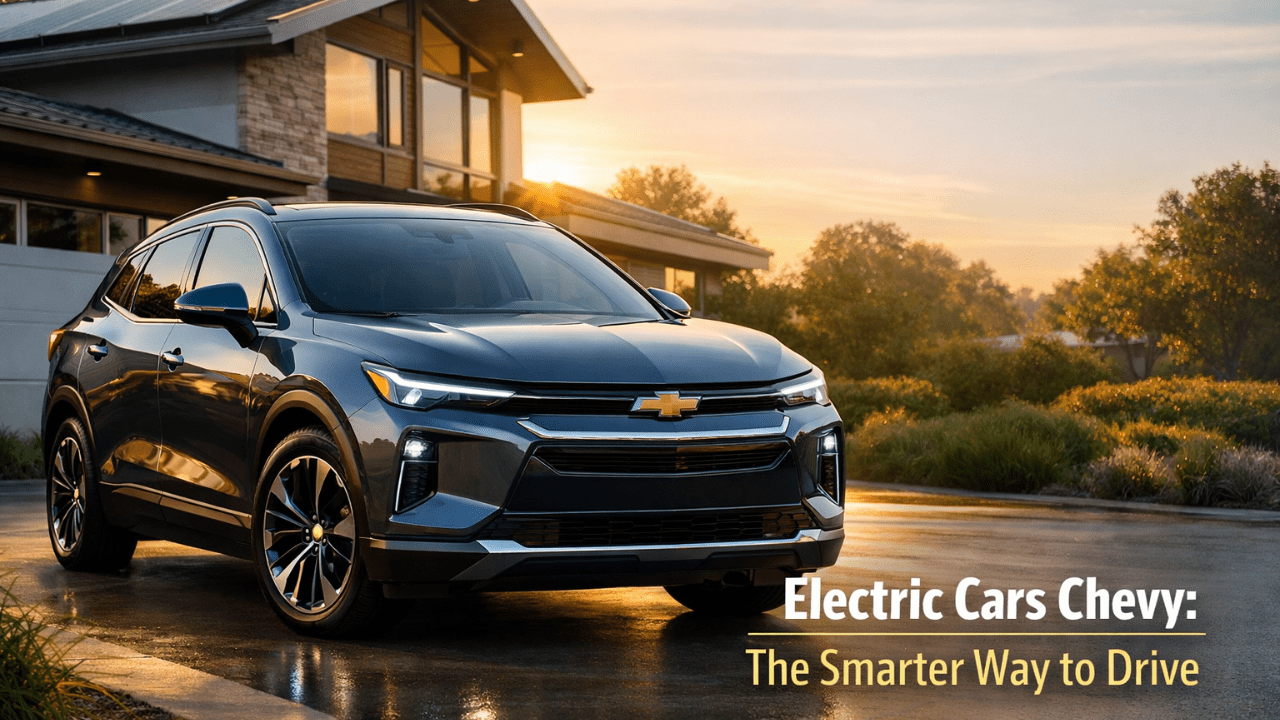
Electric vehicles have moved from niche experiments to mainstream transportation faster than most analysts predicted. Charging networks are expanding, battery costs are falling, and buyers are no longer treating EVs as compromises. Chevy electric cars enter this shift with a strategy that favors practicality over spectacle, aiming squarely at drivers who want modern technology without abandoning familiar automotive values.
Chevrolet’s role in the EV transition is rooted in scale and restraint. Instead of chasing luxury positioning, the brand has focused on accessible pricing, recognizable design, and vehicles that slot naturally into existing lifestyles. That approach has allowed Chevy electric cars to gain attention not through hype cycles, but through steady adoption across urban and suburban markets.
The appeal extends beyond the U.S. Global demand for affordable electric mobility has opened doors for Chevrolet in regions where premium EV brands struggle on price. Lower emissions, fewer mechanical components, and predictable ownership costs make these vehicles appealing to first-time EV buyers.
What truly sharpens the value proposition is how modern technology is integrated without overwhelming the driver. From intuitive infotainment systems to advanced driver assistance, Chevrolet’s EV lineup emphasizes usefulness over novelty. The result is an electric portfolio designed for daily driving, not just showroom admiration.
What Are Electric Cars by Chevy?
Chevrolet’s electric lineup represents a deliberate shift rather than a radical reinvention. Chevy Electric cars are built to mirror the usability of traditional models while removing the friction often associated with early EV adoption. The brand positions its electric vehicles as direct replacements—not experiments—for gasoline-powered cars.
The most immediate difference lies beneath the bodywork. Electric motors replace internal combustion engines, eliminating oil changes, exhaust systems, and many wear-prone components. Despite that change, driving ergonomics remain familiar, which is a defining strength of Chevy electric cars compared to more futuristic competitors.
At the center of this transition is General Motors’ Ultium battery platform. Designed to be modular, it allows Chevrolet to scale battery sizes, performance outputs, and vehicle formats without redesigning entire architectures. This flexibility supports sedans, SUVs, and trucks under a shared technological foundation.
Ultium also improves efficiency and packaging. Flat battery packs lower the center of gravity, improving handling while freeing cabin space. Combined with over-the-air updates and long-term battery warranties, Chevy’s EV approach focuses on longevity rather than novelty. The goal is simple: electric vehicles that feel normal on day one and reliable for years.
List of Chevy Electric Cars Offers in 2025
Chevrolet’s 2025 electric lineup reflects a clear expansion strategy built around variety and accessibility. Chevy electric cars now span compact hatchbacks, midsize SUVs, and full-size pickups, addressing buyers at nearly every price tier. This breadth is intentional, positioning Chevrolet as a volume EV manufacturer rather than a niche player.
What unifies the lineup is consistency in software, charging compatibility, and interior philosophy. While body styles and performance vary, the ownership experience remains familiar across models. That consistency is one reason Chevy electric cars continue to gain traction among buyers transitioning from gas-powered vehicles.
Chevrolet Bolt EV
The Bolt EV remains a compact, city-focused option with strong efficiency credentials. Its range comfortably covers daily commuting needs, and its small footprint makes urban driving effortless. Buyers looking for a straightforward entry into electric ownership often gravitate toward this model.
Chevrolet Bolt EUV
The EUV builds on the Bolt’s foundation with added interior space and a more refined cabin. Advanced driver-assistance features and improved materials elevate its appeal. It suits drivers who want compact efficiency without sacrificing comfort.
Chevrolet Blazer EV
Positioned as a performance-oriented SUV, the Blazer EV offers multiple power configurations. Styling leans sporty, and higher trims emphasize acceleration. It targets buyers seeking presence and capability in an electric format.
Chevrolet Equinox EV
Designed as an affordable electric SUV, the Equinox EV focuses on value. Competitive pricing and practical range make it attractive to families. It is expected to become one of Chevy’s highest-volume EVs.
Chevrolet Silverado EV
The Silverado EV redefines electric utility with impressive towing figures. Large battery options support extended range, even under load. It caters to professionals who need power without emissions.
Performance & Driving Experience of Chevy Electric Cars
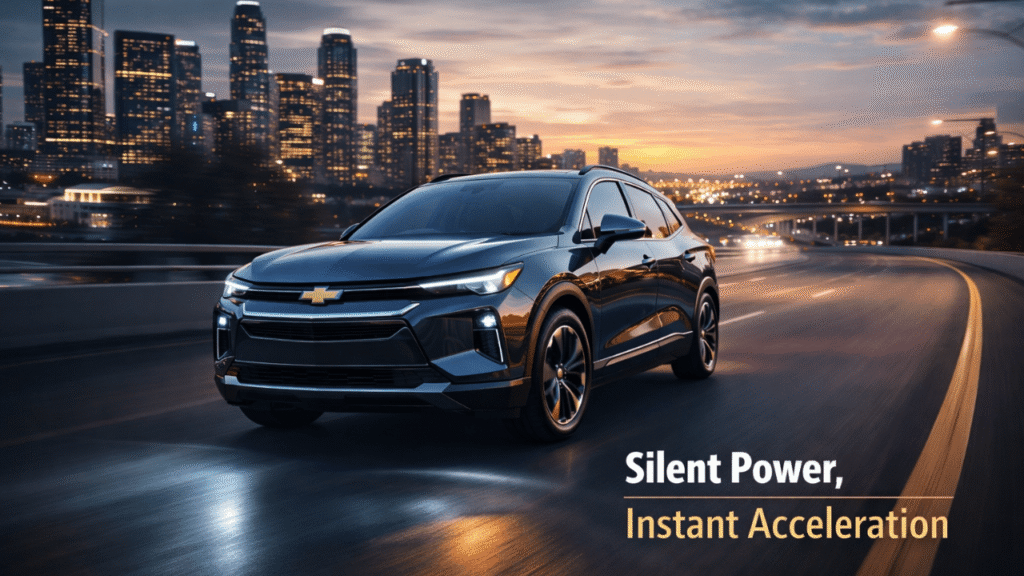
Instant torque changes the character of everyday driving, and Chevy electric cars leverage that advantage without exaggeration. Acceleration is smooth, immediate, and controlled, making stop-and-go traffic noticeably less tiring. Unlike performance-focused EV brands, Chevy tunes throttle response for predictability.
Noise reduction is another defining trait. The absence of engine vibration allows suspension tuning to shine, resulting in a composed ride quality. On highways, Chevy electric cars feel stable and refined, with minimal cabin intrusion from wind or road noise.
City driving benefits most from electric power delivery. Regenerative braking reduces pedal use, while compact models feel agile in tight spaces. At highway speeds, torque remains available for passing without downshifts or engine strain.
Compared to gas-powered Chevy vehicles, the difference is immediate but not disorienting. Steering weight, braking feel, and seating positions remain familiar. That familiarity lowers the learning curve, especially for drivers skeptical about EV adoption. The result is performance that enhances daily usability rather than demanding adaptation.
Battery, Range & Charging Options
Battery technology defines the credibility of any EV, and Chevy electric cars are built around long-term reliability rather than peak specifications. Ultium battery packs use advanced cell chemistry designed for durability, thermal stability, and scalable energy density.
Driving range varies by model, but most Chevy EVs comfortably exceed daily driving requirements. Under mixed conditions, Chevy electric cars offer ranges that reduce charging anxiety without inflating battery size unnecessarily. Efficiency, rather than brute capacity, is the guiding principle.
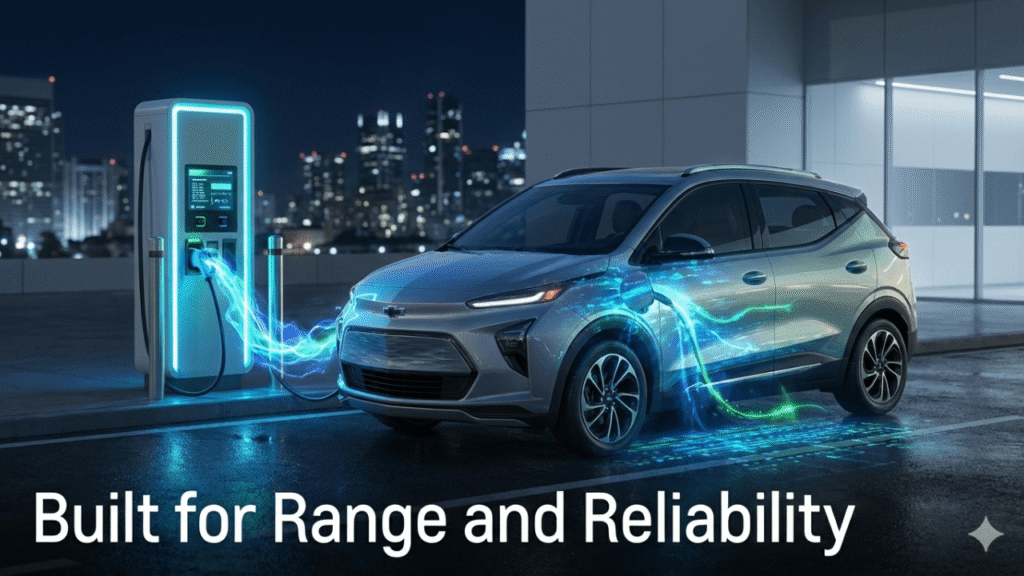
Home charging remains the most convenient option for most owners. Level 2 chargers provide overnight replenishment, while public charging supports longer trips. Chevrolet’s vehicles integrate seamlessly with major charging networks.
DC fast charging is where flexibility becomes critical. Ultium-based vehicles support high charging speeds, allowing significant range recovery in under an hour. This capability transforms road trips from logistical challenges into manageable routines, aligning electric ownership closer to gasoline convenience.
Interior, Technology & Safety Features
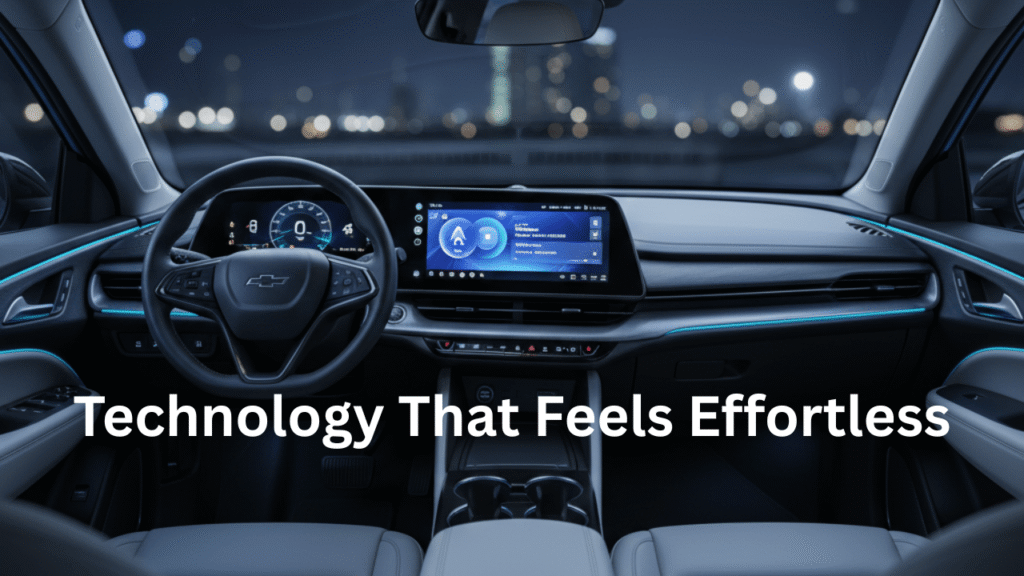
Cabins across Chevy electric cars prioritize clarity and usability over visual excess. Displays are large but not intrusive, and physical controls remain where tactile feedback matters. This balance appeals to drivers who value function alongside modern aesthetics.
Infotainment systems support wireless smartphone integration, navigation, and real-time charging data. In daily use, Chevy electric cars feel digitally competent without overwhelming menus or distracting animations.
Safety technology is deeply integrated rather than treated as optional add-ons. Adaptive cruise control, lane assistance, and automated emergency braking operate smoothly. These systems are tuned conservatively, intervening when necessary without aggressive corrections.
Interior comfort benefits from EV packaging advantages. Flat floors increase legroom, while battery placement lowers ride height without compromising seating position. Connectivity features, including over-the-air updates, ensure vehicles remain current long after purchase, reinforcing long-term value.
Cost, Pricing & Ownership Experience
Affordability remains central to Chevrolet’s electric strategy. Electric cars Chevy are priced to compete directly with well-equipped gasoline vehicles, narrowing the financial gap that has historically slowed EV adoption.
Ownership costs tell a more compelling story over time. Reduced maintenance requirements—no oil changes, fewer moving parts—translate into lower service expenses. For many owners, electric cars Chevy deliver measurable savings within the first few years.
Charging costs vary by region, but electricity remains consistently cheaper than fuel on a per-mile basis. Home charging further stabilizes expenses, shielding owners from fuel price volatility.
Warranty coverage reinforces confidence. Chevy provides comprehensive battery warranties designed to support long-term ownership. Combined with predictable running costs, the overall experience favors drivers planning to keep their vehicles beyond short lease cycles.
Pros and Cons of Chevy Electric Cars
Every vehicle category involves trade-offs, and Chevy electric cars are no exception. The strengths are clear, particularly for value-driven buyers seeking dependable electric mobility without premium pricing.
On the positive side, affordability anchors the lineup. Chevrolet’s reputation for mass-market reliability extends naturally into its EV offerings. Driving range remains competitive, especially within each segment, making daily usage straightforward.
Challenges still exist. Public charging infrastructure varies significantly by region, which can complicate long-distance travel. Additionally, availability of certain models may be limited during early production phases.
Despite these limitations, Chevy electric cars maintain a favorable balance between cost, usability, and technology. The compromises are logistical rather than fundamental, and they continue to shrink as charging networks expand.
Electric Cars: Chevy vs Competitors
Competition in the EV space is intense, and Chevy electric cars occupy a distinct position between premium innovation and mass affordability. Against Tesla, Chevy prioritizes tactile familiarity over minimalist experimentation, appealing to traditional drivers.
When compared to Ford’s electric lineup, differences emerge in pricing strategy and interior philosophy. Chevy Electric cars often undercut comparable models while maintaining similar range and performance figures.
Feature comparisons reveal subtle distinctions. Tesla leads in software polish, Ford emphasizes utility, while Chevy balances both without extremes. This middle-ground approach resonates with buyers who want modern features without lifestyle branding.
Ultimately, Chevrolet’s advantage lies in scale and dealer presence. Service accessibility and replacement parts availability remain strengths that competitors still struggle to match consistently.
Are Electric Chevy Cars Worth Buying?
Value is defined by alignment with lifestyle, and Chevy electric cars suit drivers seeking reliable daily transportation without luxury premiums. Urban commuters benefit from efficiency, while families appreciate predictable ownership costs.
These vehicles work well for households with home charging access and moderate driving patterns. For such users, Chevy electric cars integrate seamlessly into routines without behavioral adjustments.
Buyers prioritizing cutting-edge autonomy or ultra-fast charging networks may look elsewhere. Long-haul drivers in infrastructure-poor regions may also face challenges.
For most mainstream consumers, however, Chevy’s electric lineup offers a balanced entry into EV ownership—familiar, capable, and financially grounded.
Future of Chevy Electric Cars:
Chevrolet’s roadmap signals continued expansion rather than cautious experimentation. Chevy Electric cars will extend into new segments, leveraging Ultium’s flexibility to scale production efficiently.
Upcoming models emphasize affordability and volume, reinforcing Chevy’s commitment to mass adoption. Performance variants and utility-focused designs are also planned, broadening appeal.
Sustainability initiatives extend beyond tailpipe emissions. Chevy Electric cars are part of GM’s broader push toward responsible manufacturing and battery recycling.
Innovation remains practical rather than theatrical. The future strategy centers on refining ownership experience, improving charging convenience, and lowering barriers to entry—quiet progress rather than disruptive spectacle.
FAQs About Chevy Electric Cars
How long do batteries last in Chevy electric cars?
Battery longevity is one of the strongest confidence points for Chevy electric cars. Most modern Chevy EV batteries are engineered to last 8–10 years or more under normal driving conditions. Degradation happens gradually, not suddenly, and real-world data shows capacity loss remains modest over time. Chevy also backs its batteries with long-term warranties, reinforcing trust for long ownership cycles.
Are Chevy electric cars suitable for long-distance driving?
Long trips are increasingly realistic with Chevy electric cars, especially models built on the Ultium platform. Highway range remains stable, and DC fast charging allows meaningful range recovery during short stops. While planning is still required, the experience no longer feels restrictive. For most drivers, road trips are practical rather than stressful.
Do Chevy electric cars qualify for government tax credits?
Eligibility for incentives depends on model pricing, production location, and regional regulations. Several Chevy electric cars qualify for federal or state-level benefits in the U.S., reducing effective purchase cost. These incentives can significantly improve value, especially for first-time EV buyers. Checking current eligibility before purchase is essential.
How much does it cost to charge Chevy electric cars at home?
Home charging is typically far cheaper than fueling a gasoline vehicle. For electric cars Chevy, average overnight charging costs are often a fraction of monthly fuel expenses. Rates vary by electricity provider, but overall cost predictability is a major ownership advantage. Many owners report noticeable savings within the first year.
Are Chevy electric cars expensive to maintain?
Maintenance requirements are significantly lower compared to gas vehicles. Chevy electric cars eliminate oil changes, spark plugs, and many mechanical wear items. Brake systems also last longer due to regenerative braking. Over time, maintenance savings contribute meaningfully to total cost reduction.
Can Chevy electric cars handle extreme weather conditions?
Modern battery management systems are designed to operate reliably in both hot and cold climates. Chevy electric cars adjust thermal performance automatically to protect battery health. While extreme cold can slightly reduce range, everyday usability remains consistent. Cabin preconditioning further improves comfort in harsh conditions.
Is charging infrastructure a limitation for Chevy electric cars?
Charging access varies by region, but coverage continues to expand rapidly. Chevy electric cars are compatible with major public charging networks, including fast chargers. For drivers with home charging, public infrastructure becomes a backup rather than a dependency. Availability is improving year by year.
Conclusion + CTA
The strength of Chevy electric cars lies in restraint, not reinvention. Chevrolet delivers electric vehicles that feel familiar, cost-effective, and durable—qualities that matter more than novelty for most buyers. As the EV market matures, this grounded approach becomes increasingly relevant.
For readers considering a transition to electric mobility, Chevy electric cars deserve close evaluation. Explore current models, compare real-world ownership costs, and review charging options to determine the best fit. The shift to electric no longer requires compromise—only informed choice.
3 thoughts on “Chevy Electric Cars: Inside Chevrolet’s Smart, Scalable EV Strategy”
Comments are closed.