
This guide is for educational purposes and is based on common payment app scam patterns, consumer protection guidance, and publicly available Cash App security information.
Cash App has become one of the most popular peer-to-peer payment platforms in the United States. Millions of Americans use it every day to send money, receive payments, pay bills, and even invest in stocks or Bitcoin. But as the platform has grown, so have the questions—and one of the most common searches out there right now is: can someone hack your Cash App?
It is a fair concern. When real money is involved, security matters. And unfortunately, Cash App users have become a major target for scammers and cybercriminals. Whether you are new to the app or have been using it for years, understanding how Cash App account security works — and what can go wrong — could save you from losing real money.
This article breaks down everything you need to know: the real risks, how attacks happen, warning signs to watch for, and exactly what to do if something goes wrong.
Can Someone Hack Your Cash App Account?
Many US users wonder can someone hack your Cash App account, and the honest answer is that it happens far more often than most people expect.
What People Mean When They Ask, “Can Someone Hack Your Cash App?”
When most people search “Can someone hack your Cash App?”, they are not usually thinking about sophisticated technical attacks. What they often mean is, can someone get into my account and take my money without my permission?
The short answer is yes — but not always through “hacking” in the traditional sense. Most of the time, when a Cash App account is compromised, it happens through social engineering, phishing, or credential theft — not by someone cracking a server or breaking into Cash App’s systems directly. Most people asking can someone hack your Cash App are not worried about complex technical breaches — they simply want to know if a stranger can get in and take their money.
Understanding this distinction matters. Cash App itself uses strong encryption and security controls. The weak point is usually the user, not the platform. Scammers know this and exploit it cleverly.
Real Cash App Security Risks Every User Should Know
Before diving into the specific threats, it helps to understand why can someone hack your Cash App is such a commonly searched question — and why the answer depends heavily on your own security habits. Cash App security risks are real and growing. According to the Federal Trade Commission (FTC), peer-to-peer payment fraud has surged significantly in recent years. Here are the main threats worth knowing about:
- Account takeover attacks: A bad actor gains access to your account using stolen or guessed credentials.
- Cash App phishing scams: Fake emails, texts, or websites trick you into handing over your login details.
- Social engineering: Someone manipulates you psychologically into sending money or sharing your PIN.
- Unauthorized Cash App transactions: Money leaves your account without your knowledge or approval.
Being aware of these Cash App security risks is the first step toward protecting yourself. Understanding why so many people ask can someone hack your Cash App starts with knowing exactly what threats are actively targeting everyday US users right now.
How Can Someone Hack Your Cash App Account?
There are several well-documented methods that directly answer how can someone hack your Cash App, and knowing each one puts you in a much stronger position to defend against them.
Phishing Scams Targeting Cash App Users
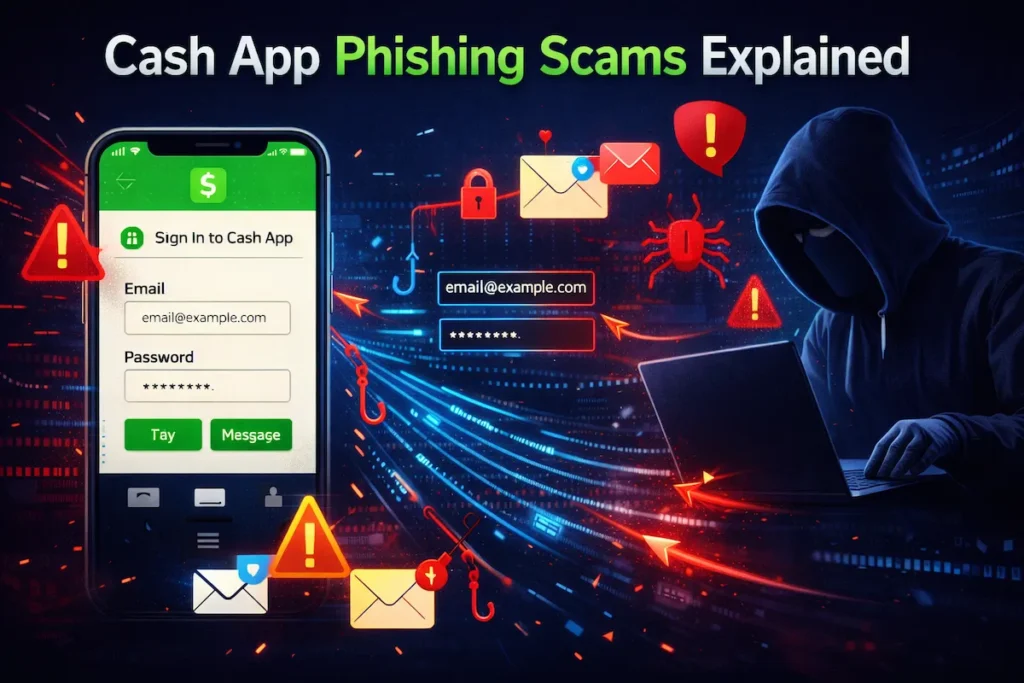
When people ask can someone hack your Cash App through a simple email or text, the answer is yes — and phishing scams are exactly how it happens most of the time. Cash App phishing scams are one of the most common ways someone can hack your Cash App. In a phishing attack, a criminal sends a fake email, text message, or social media notification designed to look like it is from Cash App. The message typically claims there is a problem with your account, a payment is pending, or you have won a prize.
When you click the link, you land on a fake website that looks almost identical to the real Cash App site. You enter your email, phone number, and password—and just like that, the scammer has everything they need to access your account. One of the most direct answers to can someone hack your Cash App is yes — through a phishing scam that tricks you into handing over your login details on a fake website.
Always verify you are on the official Cash App website (cash.app) before entering any information. Never click links in unexpected emails or texts claiming to be from Cash App. If you want to understand how phishing attacks work beyond payment apps, the FTC’s scam alerts page is a reliable and regularly updated resource.
SIM Swap Attacks and Phone Number Hijacking
Can someone hack your Cash App without ever knowing your password? Yes — and a SIM swap attack is exactly how they do it.
A SIM swap attack is a more advanced method that can be used to hack your Cash App account. Here is how it works: a scammer contacts your mobile carrier, pretends to be you, and convinces the carrier to transfer your phone number to a SIM card they control.
A SIM swap attack is one of the most alarming answers to can someone hack your Cash App because it gives an attacker full access without ever needing your password. Once they have your number, they receive your SMS verification codes — including the one Cash App sends during login. This gives them full access to your account, even without knowing your password.
To reduce this risk, contact your mobile carrier and ask about SIM lock or port freeze protections. On iPhone, you also have access to strong device-level encryption tools that make it significantly harder for attackers to reach your personal data—this complete iPhone encryption guide for 2026 walks through exactly how to use them to protect everything on your device, including your payment apps.
Weak Passwords and Credential Reuse
Can someone hack your Cash App using a password stolen from a completely different website? Absolutely — and credential stuffing attacks make it easier than most people expect.
If you reuse passwords across multiple sites, can someone hack your Cash App using credentials leaked from a completely different platform — and the answer is a straightforward yes. This is one of the simplest but most overlooked Cash App security risks. If you use the same password for Cash App that you use elsewhere, and one of those other sites gets breached, your Cash App credentials could end up in a criminal’s hands within hours.
This is called a credential stuffing attack. Hackers take leaked username and password combinations from other breaches and systematically try them on payment apps like Cash App. If your password is weak or reused, can someone hack your Cash App? Absolutely — and with very little effort on their part.
Use a unique, strong password for your Cash App account. A reputable password manager can help you maintain complex passwords across all your accounts without needing to memorize every one of them.
Fake Cash App Customer Support Scams
Can someone hack your Cash App simply by sending you a message on social media pretending to be support? Yes — and thousands of US users fall for this every year.
One of the most surprising ways someone can hack your Cash App involves no technology at all — just a convincing impersonator pretending to offer you help. This is one of the most widespread Cash App scams in the United States. A scammer poses as a Cash App support representative — most commonly on social media platforms like X (formerly Twitter), Facebook, or Instagram — and offers to help you resolve an account issue.
They will ask for your Cash App PIN, your sign-in code, or remote access to your phone. Once they have any of these, account takeover happens immediately. Cash App support will never ask for your PIN or sign-in code under any circumstances. Genuine help is only available through the app itself or through Cash App’s official help center.
What Are the Signs Someone Hacked Your Cash App Account?
Knowing the warning signs that someone hacked your Cash App account is just as important as knowing how to prevent it in the first place. If you are wondering can someone hack your Cash App without you noticing right away, the answer is yes — which is exactly why knowing the warning signs matters so much.
Unauthorized Cash App Transactions
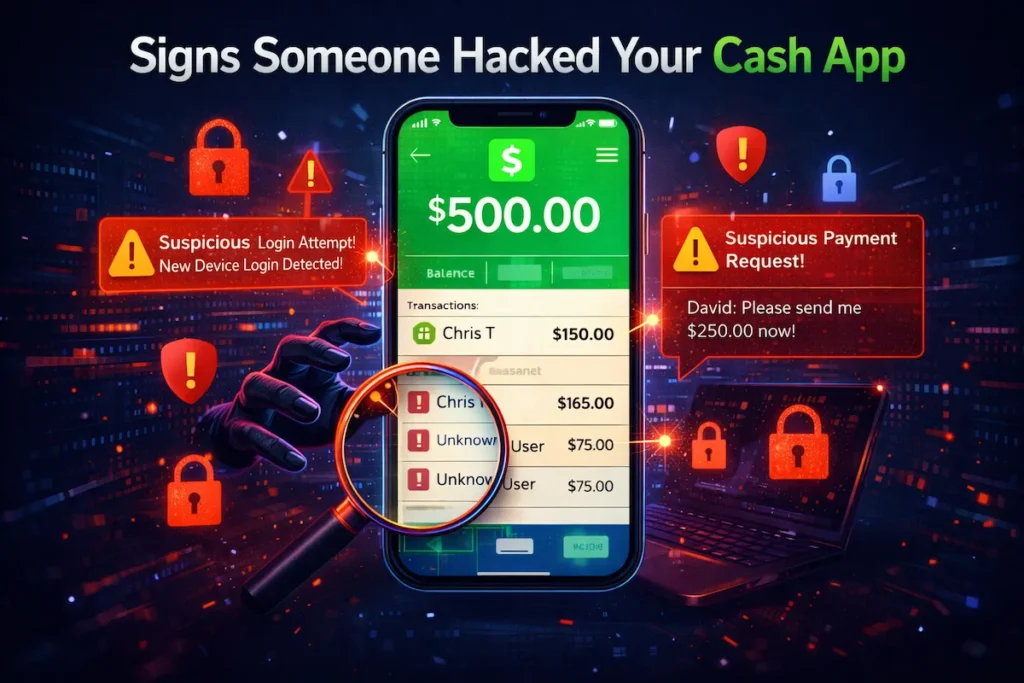
The most obvious answer to can someone hack your Cash App shows up directly in your transaction history — in the form of payments you never made and never approved. The clearest sign that someone hacked your Cash App account is spotting unauthorized Cash App transactions — payments you did not make or approve. Review your transaction history inside the app on a regular basis. If anything looks unfamiliar, act immediately without waiting to see if it resolves itself.
Even small suspicious charges of just one dollar are worth taking seriously. Scammers often run a small test transaction first to check whether the account owner is paying attention before attempting a much larger withdrawal. The clearest proof that someone answered can someone hack your Cash App with action rather than words is finding transactions in your history that you never made.
Login Alerts or Unexpected Account Changes
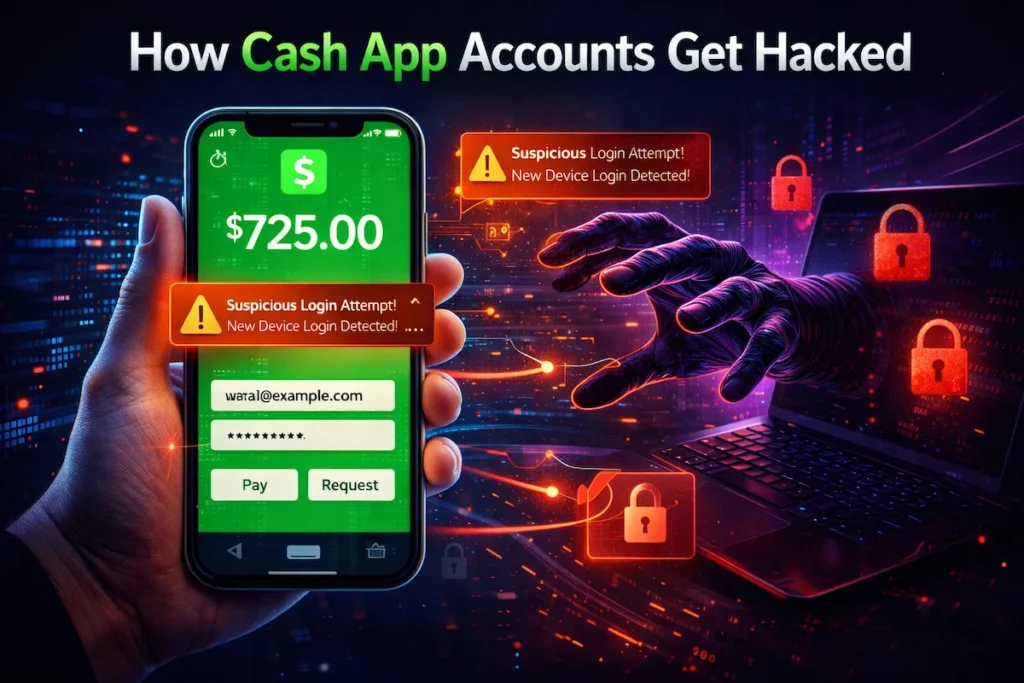
If someone is attempting to hack your Cash App, one of the first things they do is try to change your linked email or phone number to lock you out permanently. Cash App sends push notifications when someone logs in from a new device or makes changes to your account details. If you receive one of these alerts for activity you did not initiate, that is a strong signal someone may have accessed your account without your knowledge.
Keep Cash App notifications enabled at all times so you catch these warnings the moment they arrive. If an unexpected alert appears, change your password and PIN right away before taking any other action. If someone is working to answer can someone hack your Cash App for themselves, one of the first things they attempt is changing your account details to lock you out.
Suspicious Payment Requests
Unusual payment requests are often the earliest warning that someone is trying to hack your Cash App or has already compromised the account of someone you know. Receiving strange payment requests from unfamiliar accounts — or from contacts whose accounts may themselves have been compromised — is another clear red flag. These requests often carry urgent language like “I really need your help, please send now.”
Before responding to any payment request inside Cash App, verify it through a completely separate channel such as a direct phone call or in-person confirmation. Cash App payments are instant and in most cases permanent, which makes verification before sending absolutely essential. Unexpected payment requests are often the first visible sign that someone is actively trying to answer can someone hack your Cash App by manipulating you directly.
What To Do If Someone Hacks Your Cash App
If someone does hack your Cash App, the speed of your response is the single most important factor in limiting the financial damage.
Secure Your Cash App Account Immediately
The very first thing you should do if someone hacks your Cash App is change your PIN and sign out of all active devices before they can make any further changes. If you believe someone hacked your Cash App, your first priority is locking them out as quickly as possible. Follow these steps in order:
- Open Cash App and tap your profile icon in the top right corner.
- Go to “Privacy & Security” and change your PIN immediately.
- Update the email address and phone number linked to your account.
- Enable two-factor authentication if it is not already active.
- Sign out of all devices through Settings > Security > Sign Out Of All Devices.
Do not delay on any of these steps. Every minute matters once an account has been accessed by someone else.
Contact Cash App Support and Report the Fraud
Reporting to Cash App support immediately after someone hacks your Cash App gives you the best possible chance of having unauthorized transactions reviewed and potentially reversed. After locking down your account, report what happened to Cash App directly. Open the app, tap your profile icon, select “Support,” then “Something Else,” and navigate to “Account Issues” to describe the situation in full.
You should also file a fraud report with the FTC at ReportFraud.ftc.gov. Consumer fraud reports help federal agencies identify patterns, track criminal operations, and in some cases recover funds. Save a clear record of every unauthorized transaction including the date, amount, and any available transaction ID number.
Notify Your Bank and Keep Monitoring
If your Cash App was linked to a bank account or debit card, call your bank right away. Let them know your linked payment method may have been compromised and ask whether a new card number should be issued as a precaution. If someone hacks your Cash App while it is linked to your bank account, contacting your bank right away could prevent the damage from spreading beyond the app itself.
Keep a close eye on your bank statements for the following several weeks. Unauthorized transfers from a linked account may be disputable depending on how quickly you report them — your bank’s fraud team can advise on the specific options available to you based on your account type.
How To Prevent Someone From Hacking Your Cash App
The most effective way to prevent someone from hacking your Cash App is to build multiple layers of security so that no single gap is enough to let an attacker through.
Enable All Available Cash App Security Features
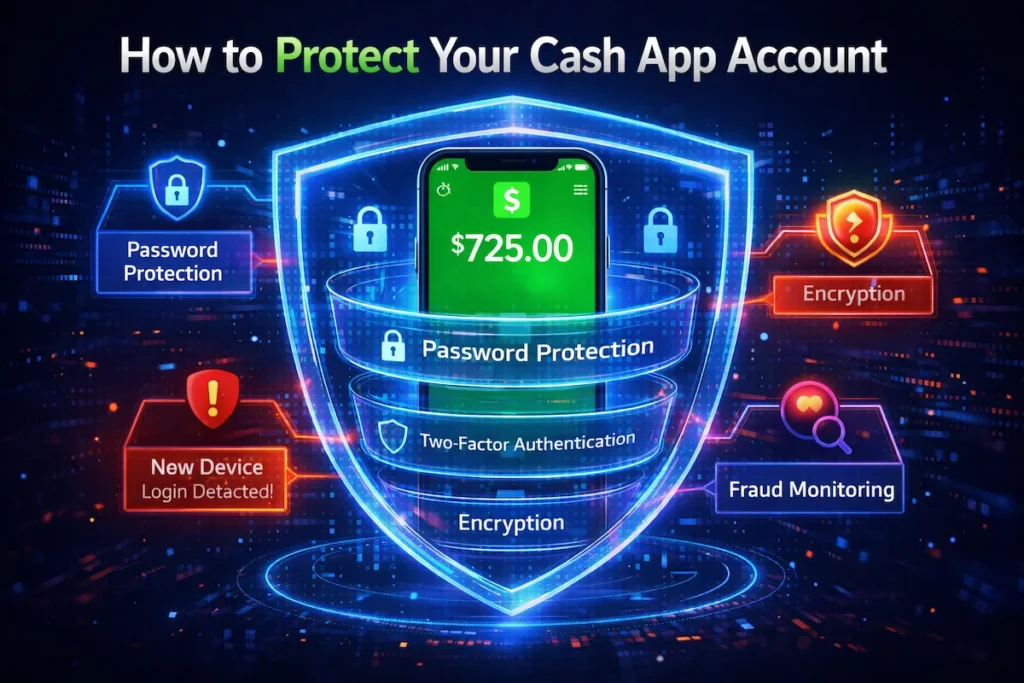
Cash App includes several built-in protections that make it significantly harder for someone to hack your Cash App account. Make sure all of the following are active:
- Security Lock: Requires your PIN or biometrics — fingerprint or Face ID — every single time you open the app.
- Two-Factor Authentication: Any new login from an unrecognized device requires a one-time verification code sent to your phone or email.
- Payment Notifications: Instant alerts for every transaction give you real-time visibility into all account activity.
These features are free, take under two minutes to enable, and dramatically reduce your exposure to Cash App account security threats.
Protect Your Cash App PIN and Login Details
Your Cash App PIN is the most direct path to your money. Never share it with anyone, under any circumstances — not even someone who claims to be calling from Cash App itself. When choosing a PIN, avoid anything predictable such as your birthday, repeating digits, or simple patterns like 1234.
Keep your linked email address and phone number private as well. Avoid posting your $Cashtag publicly on social media accounts that also display your full name or location. The less a scammer knows about you, the harder it becomes for them to build a convincing attack.
Avoid Public Wi-Fi When Using Cash App
Using an open public network is one of the easiest ways to accidentally create an opportunity for someone to hack your Cash App session without you ever realizing it. Open Wi-Fi networks in cafes, airports, hotels, and public libraries are convenient — but they can also expose your connection to anyone else on the same network. When sending money or adjusting your Cash App account security settings, always use your mobile data connection instead of public Wi-Fi.
If avoiding public Wi-Fi completely is not practical, use a reputable VPN to encrypt your internet traffic and keep your session protected from potential interception.
Verify Every Payment Request Before You Send
One of the most effective and underrated payment app security tips is simply this: always verify before you pay. If you receive a Cash App payment request — even from a name you recognize — confirm it through a separate channel before approving anything inside the app.
A quick phone call takes thirty seconds and can save you hundreds of dollars. Once a Cash App payment is sent, recovering it is genuinely difficult and often not possible at all.
Is Cash App Safe To Use, or Can Someone Hack Your Cash App?
Understanding whether Cash App is genuinely safe to use requires an honest look at both what the platform protects and where someone can still hack your Cash App despite those protections.
Cash App’s Built-In Security Controls Explained
Cash App does invest in security at the platform level. Here is what it currently offers users:
- Data Encryption: Information transmitted through Cash App is protected using encryption standards consistent with the broader financial services industry.
- Fraud Monitoring: Cash App uses security controls and monitoring systems designed to flag unusual or suspicious transaction patterns.
- Two-Factor Authentication: Available for all users and strongly recommended as a baseline protection.
- PCI-DSS Compliance: Cash App meets the Payment Card Industry Data Security Standards required of financial platforms handling card data.
Cash App is also registered with FinCEN as a money services business, making it subject to federal financial regulations. According to Cash App, eligible balances may qualify for FDIC pass-through insurance under certain conditions for users who have activated their Cash App Card — always check Cash App’s current terms directly for the most accurate and up-to-date details.
The Real Risks of Peer-to-Peer Payment Apps
So can someone hack your Cash App even with all of these protections in place? Yes — because the platform’s security and your personal security are two entirely different layers.
The core vulnerability with peer-to-peer payment apps is speed. These platforms are designed for instant, frictionless transactions. That convenience becomes a serious liability when a scammer is involved, because there is no waiting period to catch a mistake and no chargeback process like the one that exists with a standard credit card.
Strengthening your device-level security adds an important layer of protection on top of what Cash App provides. If your phone is not properly secured, app-level protections can only go so far. Our complete iPhone encryption guide for 2026 covers how to lock down your device from the ground up — which directly strengthens the security of every app running on it, Cash App included.
Ultimately, no platform can fully protect you from approving a payment you chose to send. The strongest defense will always be your own awareness and habits. Even with strong platform-level protections, someone can still hack your Cash App indirectly by exploiting the speed and irreversibility that make peer-to-peer apps convenient in the first place.
Cash App Security: Pros and Cons
| Pros | Cons |
|---|---|
| Industry-standard data encryption | No chargeback system like credit cards |
| Two-factor authentication available for all users | Instant, irreversible payments increase fraud risk |
| Security Lock with PIN or biometrics | High volume of social engineering scams targeting US users |
| Eligible balances may qualify for FDIC pass-through insurance | SIM swap attacks can bypass SMS-based two-factor authentication |
| Fraud monitoring and security controls | Limited recourse if you willingly send money to a scammer |
| PCI-DSS compliant platform | Fake support scams are widespread on social media |
| FinCEN registered money services business | Users must be proactive — default settings are not always the safest |
Frequently Asked Questions: Can Someone Hack Your Cash App?
Can someone hack your Cash App with just your $Cashtag?
Your $Cashtag is a public-facing display name, and knowing it alone is not enough to hack your Cash App account or access your balance. However, scammers can use your $Cashtag to send fraudulent payment requests or to impersonate you to others. Always keep your actual login credentials — email address, phone number, password, and PIN — completely private, regardless of who already knows your $Cashtag.
Can someone hack your Cash App account without your phone?
It is difficult but not impossible. The most realistic method is a SIM swap attack, where a scammer convinces your mobile carrier to reassign your phone number to a device they control. Once that happens, they can receive your SMS verification codes and log into your Cash App account without ever physically touching your phone. Requesting a SIM lock from your carrier and securing your device with strong encryption are two of the most effective ways to close this vulnerability.
Can someone steal money from Cash App without your password?
In most cases, no — but there are notable exceptions. If a scammer socially engineers you into approving a fraudulent payment request, money can leave your account without them ever needing your password. A successful SIM swap attack can also bypass the password requirement entirely by intercepting your sign-in verification code. This is precisely why enabling Security Lock and biometric authentication provides meaningful protection beyond just having a password in place.
Can Cash App refund money if someone hacks your account?
Cash App fraud refunds are possible but not guaranteed. If genuinely unauthorized transactions occurred without any action on your part, reporting them as quickly as possible gives you the strongest chance of a reversal. However, if you were manipulated into sending the payment yourself — even under false pretenses — Cash App typically treats it as a completed and authorized transaction. Always report suspected fraud immediately through the app, and file a separate report with the FTC at ReportFraud.ftc.gov.
Can someone hack your Cash App through a payment request?
A payment request alone cannot directly compromise your account. However, payment requests are one of the most common tools scammers use to manipulate users into sending money voluntarily. A fraudulent request may appear to come from a trusted friend, a legitimate business, or a fake refund service. If you approve it, the money is gone. Always confirm any unexpected payment request through a completely separate communication channel before responding to it inside the app.
Is Cash App safer than Venmo or Zelle for everyday use?
All three platforms use comparable security technologies including encryption, fraud monitoring, and two-step verification. None of them are immune to scams. One meaningful distinction is that Zelle operates directly through bank accounts, which means fraud involving Zelle can be harder to isolate from your primary finances. Cash App’s eligibility for FDIC pass-through insurance on stored balances — for qualifying users with a Cash App Card — is also worth factoring in. Across all three apps, your own behavior and security habits remain the biggest variable, not the platform itself.
What is the most common reason Cash App accounts get hacked?
The single most common cause is weak or reused passwords combined with two-factor authentication being turned off. Beyond that, a large number of users fall victim to Cash App phishing scams that hand their credentials directly to attackers without any technical breach occurring at all. Can someone hack your Cash App if you use a strong unique password, keep Security Lock enabled, and verify every payment before sending? It becomes dramatically harder. The majority of compromised accounts share one thing in common: entirely preventable security gaps that scammers exploited in seconds.
How do scammers typically target Cash App users?
Cash App scams take many forms. The most common include fake customer support impersonators on social media, phishing links sent via text or email disguised as Cash App security alerts, “Cash App flipping” scams that falsely promise to multiply your money, fake prize or giveaway notifications, and romance scams where an attacker builds emotional trust before eventually requesting a payment. Recognizing these patterns before you encounter them is the most reliable form of protection — because by the time a scam is actively underway, it is often already too late to reverse the damage.
Conclusion: Stay Smart and Protect Your Cash App
So, can someone hack your Cash App? The direct answer is yes — but in the overwhelming majority of cases it happens because of phishing, social engineering, or poor security habits, not because Cash App’s systems were breached. The platform has genuine protections in place. The vulnerability is almost always on the user side.
The good news is that these risks are largely preventable. Turn on Security Lock and two-factor authentication today. Use a strong, unique PIN you have never used anywhere else. Be skeptical of any unsolicited contact that claims to represent Cash App support. Verify every payment request through a separate channel before approving it inside the app. And if something does go wrong, report it immediately to Cash App, to the FTC, and to your bank.
Digital payment security is a habit, not a one-time setup. As scammers continue to evolve their tactics, staying informed is genuinely one of the most valuable things you can do to protect your money. Bookmark this guide, share it with someone who uses Cash App regularly, and make reviewing your transaction history part of your routine.
Stay informed. Stay protected. Your money is worth the extra minute it takes to verify.