
Introduction
Finding the right earbuds for small ears can completely transform your listening experience, providing comfort and a secure fit from the very first use. Finding earbuds that actually fit small ears is more than a minor annoyance—it’s a daily struggle for millions of users. Most mainstream earbuds are designed for average adult ear canals, leaving those with smaller ears struggling with constant slipping, ear fatigue, or even mild pain. A loose earbud isn’t just uncomfortable; it diminishes audio quality, reduces bass, and makes every listening session frustrating.
Earbuds specifically designed for small ears address these challenges with multiple tip sizes, ergonomic designs, and secure-fit features. They not only stay in place but also enhance sound performance by creating a proper seal. This improves bass, clarity, and noise isolation while reducing ear strain over extended periods.
In this guide, we’ll explore the best earbuds for small ears in 2026, from top-performing models to practical buying advice. You’ll discover key features that ensure a perfect fit, common mistakes to avoid, and tips for selecting the right earbuds for sports, commuting, or casual use. By the end, you’ll have all the information necessary to make an informed purchase without compromise.
Why Size Matters: Challenges with Small Ears
Many small-ear users face consistent problems with standard earbuds. Without properly designed earbuds for small ears, users often struggle with slipping, discomfort, and reduced sound quality. Fit issues can result in earbuds slipping out, pressing against sensitive areas of the ear canal, or causing soreness over prolonged use. These issues aren’t cosmetic—they directly impact sound performance, comfort, and listening satisfaction.
A secure fit is crucial. Without it, even premium earbuds lose their effectiveness. Loose earbuds leak audio, compromising bass and clarity, and fail to isolate external noise. Users often find themselves repeatedly adjusting earbuds, which interrupts focus, exercise, or commutes.
Ear canal sizes vary widely across demographics. Women, teenagers, and adults with smaller physiques often have narrower ear canals than the “average” earbuds are designed for. Studies suggest up to 30% of adults fall below the average ear canal diameter, explaining why off-the-shelf models frequently fail to fit. Beyond comfort, ill-fitting earbuds can affect hearing health, as constant pressure or friction irritates the ear canal over time.
Choosing earbuds for small ears is no longer optional—it’s essential. The right pair ensures stability, comfort, and optimized sound performance tailored for smaller ear anatomies.

Key Features to Look for in Earbuds for Small Ears
When shopping for earbuds for small ears, prioritize ergonomic design, multiple tip sizes, and secure-fit features for long-lasting comfort.
Ear Tip Sizes and Materials
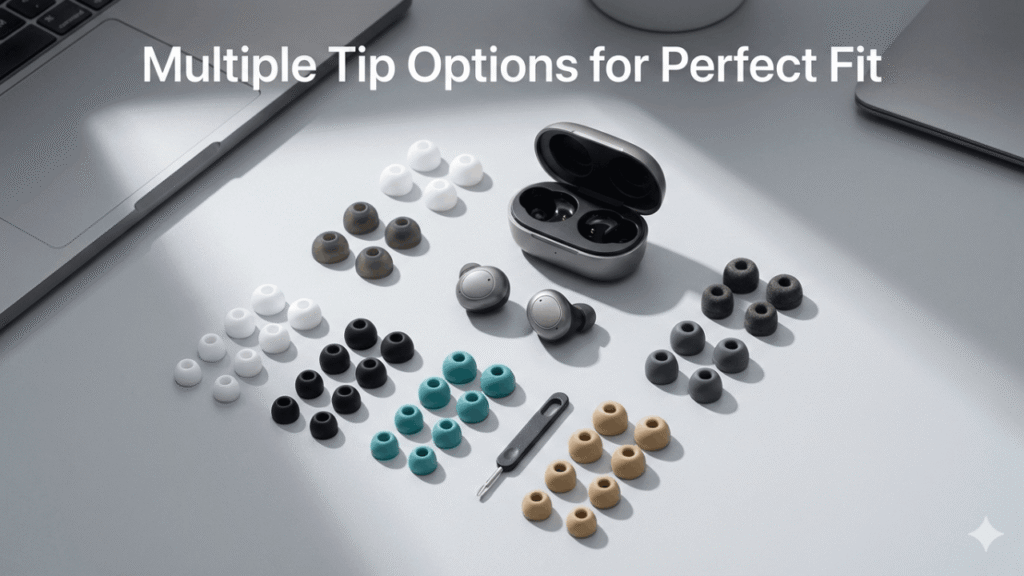
Multiple ear tip options—silicone, memory foam, and hybrid tips—allow users to find the perfect seal. Foam tips expand gently to fit the canal, providing superior comfort and noise isolation for small ears.
Ergonomic and Lightweight Design
The lighter and more ergonomically shaped an earbud, the less pressure it places on sensitive ear areas. Small-ear users benefit from earbuds designed with curved housings or angled tips, ensuring a secure, natural fit.
Secure Fit Mechanisms
Adjustable wings, ear hooks, and customizable tips prevent slipping during movement. For workouts or commuting, these features are critical because small ears often cannot hold standard earbuds securely.
Sound Quality and Noise Isolation
Snugly fitted earbuds for small ears improve bass response and clarity, even in compact models. Passive noise isolation works hand-in-hand with a proper seal, allowing a more immersive listening experience without relying solely on active noise cancellation.
Battery Life and Connectivity
While fit and comfort are priorities, battery life and Bluetooth stability are essential for wireless earbuds. Small-ear designs should balance lightweight construction with long-lasting performance for uninterrupted listening.
Top Earbuds for Small Ears (Product Reviews/Comparison)
These are the top earbuds for small ears in 2026, selected for their comfort, stability, and excellent sound performance.
Sony WF-C500
Fit: Small-ear optimized tips
Features: Lightweight, clear sound, customizable EQ
Pros: Comfortable, secure fit, crisp highs
Cons: No active noise cancellation
Jabra Elite 4 Active
Fit: Adjustable wings, ergonomic design
Features: Sweatproof, IP57 rating, strong bass
Pros: Perfect for workouts, long battery life
Cons: Slightly bulky for very small ears
Anker Soundcore Life P3
Fit: Foam tips, ergonomic
Features: Customizable EQ, noise cancellation
Pros: Affordable, good bass
Cons: Slight midrange distortion at high volume
Apple AirPods Pro
Fit: Small and medium silicone tips included
Features: Active noise cancellation, spatial audio
Pros: Stable, excellent ecosystem integration
Cons: Expensive
Bose QuietComfort Earbuds II
Fit: Adjustable stability bands
Features: Best-in-class noise cancellation
Pros: Clear, immersive audio
Cons: Pricey and slightly heavy
6–10: Other Notables
- Sennheiser Momentum True Wireless 3
- Samsung Galaxy Buds 3
- Beats Fit Pro
- JLab JBuds Air ANC
- Skullcandy Indy ANC
A comparison table with fit, comfort, price, sound quality, and durability provides an at-a-glance view to help readers choose quickly.

Buying Guide & Tips
Measuring ear size before purchase is a smart step. Use disposable tips or soft rulers to gauge ear canal width. Memory foam tips often outperform silicone for small ears because they conform to the canal. Choosing the right earbuds for small ears requires measuring your ear canal, testing different tips, and considering your lifestyle needs.
Materials matter: hypoallergenic silicone reduces irritation, while lightweight plastic reduces pressure. Test-fit earbuds at home if possible to ensure a snug, comfortable seal.
Budget plays a significant role. Premium models like Bose or Apple provide superior noise isolation and sound quality, while mid-range options from Anker or JLab balance comfort, performance, and affordability.
Lifestyle considerations matter too. Small-ear earbuds for sports should have wings or hooks; commuters benefit from noise-isolating or ANC models; casual users may prioritize long battery life. Prioritize fit over features, and everything else follows.
Common Mistakes to Avoid
One of the biggest mistakes small-ear users make is buying generic earbuds instead of earbuds for small ears that offer a secure and comfortable fit. Buying standard earbuds without trying them is the most common mistake. Ignoring reviews specific to small-ear users or assuming “one size fits all” often leads to frustration.
Choosing style over practicality is another trap. Sleek earbuds may look attractive but lack stability. Small-ear users should focus on ergonomic design, secure tips, and light weight.
Other mistakes include neglecting charging habits, ignoring warranty options, and failing to maintain cleanliness, all of which reduce longevity and comfort.
Earbuds for Small Ears vs Standard Earbuds
Unlike standard models, earbuds for small ears provide a snug fit that enhances bass response and reduces ear fatigue. Standard earbuds are often designed with “average” ear sizes in mind, which leaves users with smaller ear canals struggling with slippage, discomfort, and poor sound quality. The difference becomes immediately noticeable during extended listening sessions or physical activities. Standard models may feel loose, causing constant readjustments, which diminishes user experience.
Earbuds designed for small ears solve these issues through ergonomic shaping, multiple tip sizes, and adjustable stability features. A snug fit ensures that the earbuds remain in place, delivering consistent bass and clear mids, while also blocking external noise effectively. In contrast, standard earbuds may leak sound, reducing bass response and making active noise cancellation less effective.
Beyond sound, fit affects ear health and comfort. Small-ear-specific earbuds reduce pressure points and prevent friction in sensitive ear canals. They also provide better long-term stability for activities like running, cycling, or commuting, where standard earbuds are prone to popping out.
Investing in earbuds for small ears guarantees a combination of comfort, stability, and performance that standard earbuds often cannot deliver. For users with smaller ear canals, choosing the right fit is just as important as sound quality and often outweighs brand or style considerations.
Maintenance Tips for Small-Ear Earbuds
Regular cleaning and tip replacement are essential for keeping earbuds for small ears comfortable, hygienic, and performing at their best. Proper maintenance can significantly extend the lifespan and performance of earbuds for small ears. Regular cleaning is essential because earwax, sweat, and dust can accumulate on tips and in the earbud mesh, degrading sound quality and fit. Use a soft, dry cloth or a lightly dampened microfiber cloth for the exterior and a small brush or cotton swab for mesh cleaning.
Tip replacement is critical, especially for foam or silicone tips. Foam tips can lose elasticity over time, which compromises fit and comfort. Replace them every 3–6 months, or sooner if they show signs of wear. Small-ear users must pay attention to size selection during replacements to maintain the perfect seal.
Storage also matters. Keep earbuds in their charging case when not in use to protect tips and prevent deformation. Avoid exposing them to extreme heat, moisture, or direct sunlight, which can warp materials.
Battery care for wireless models is another often-overlooked maintenance step. Avoid leaving earbuds fully drained for extended periods and charge them regularly to maintain battery health. By combining cleaning, proper storage, and tip replacement, small-ear earbuds can retain comfort, sound quality, and performance for years.

FAQs
Many people wonder if earbuds for small ears can still deliver deep bass and stay secure during workouts—they absolutely can with the right fit.
Can earbuds for small ears have deep bass?
Yes. A snug, sealed fit improves acoustic performance, allowing even compact earbuds to deliver rich bass. Foam tips or custom-sized silicone tips are particularly effective.
Are custom-fit earbuds worth the investment?
For users with unusually small or irregular ear shapes, custom-fit models offer unparalleled comfort and stability. While more expensive, they often outperform standard small-ear models in prolonged use.
How can I prevent earbuds from falling out during workouts?
Look for earbuds with adjustable wings, hooks, or memory foam tips that expand to fit securely. Testing different tip sizes is crucial for active use.
Do small-ear earbuds support wireless features?
Absolutely. Many wireless earbuds now come with Bluetooth 5.2 or higher, long battery life, and ANC features while still accommodating small ear canals.
How should I clean earbuds for small ears?
Regularly wipe tips with a soft cloth and clean mesh with a small brush or cotton swab. Replace foam tips every few months to maintain fit and sound quality.
Can I use small-ear earbuds for running or sports?
Yes, provided they have hooks or wings and are lightweight. Sweat-resistant or IP-rated models are ideal for durability during exercise.
Will noise cancellation work for small-ear earbuds?
Yes, both passive noise isolation from a snug fit and active noise cancellation work better in small-ear designs, often outperforming standard models that leak sound.
Conclusion / CTA
Investing in the right earbuds for small ears ensures comfort, superior sound, and stability, making every listening session enjoyable. Choosing earbuds for small ears isn’t just about comfort—it transforms the listening experience entirely. Properly fitted earbuds provide stability, superior sound quality, and long-term comfort, turning music, podcasts, and calls into seamless experiences rather than daily frustrations.
When selecting a pair, prioritize fit, tip options, and ergonomic design over brand or aesthetic appeal. Consider your lifestyle, whether it’s commuting, workouts, or casual listening, and match earbuds that stay secure and comfortable throughout the day.
Take action today: check reviews, test tips if possible, and invest in earbuds designed specifically for smaller ear canals. The difference is noticeable immediately—from improved bass response and clearer audio to a stable, fatigue-free fit. Your small ears deserve earbuds that fit perfectly, deliver excellent sound, and last for years. Make 2026 the year you finally upgrade to a listening experience tailored to your needs.