
Introduction
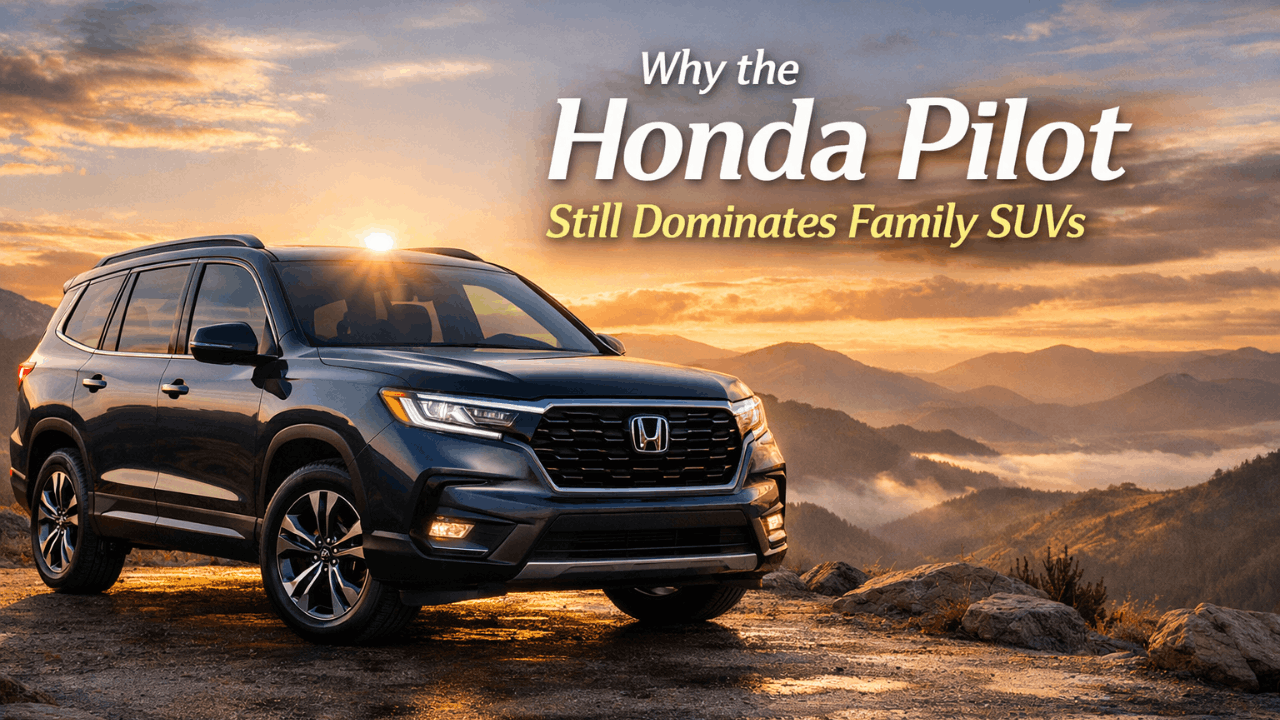
The Honda Pilot enters the midsize SUV conversation with quiet authority, not by chasing trends but by refining what families and long-distance drivers actually need. It doesn’t shout for attention on the road, yet its presence feels deliberate, engineered for people who value space, balance, and long-term dependability over flashy gimmicks. This approach has helped it stay relevant even as the SUV market becomes increasingly crowded.
What keeps the Pilot Honda firmly planted in the mainstream is consistency. Owners trust it because it delivers comfort without compromise, predictable performance, and a cabin designed for real people—not marketing photos. In the middle of the lineup, the vehicle manages to feel substantial without being overwhelming, which explains its broad appeal across age groups and lifestyles.
Reliability has always been part of its identity, but comfort and usability are just as important. From school runs to cross-state drives, the experience remains calm and controlled. By the time you reach the middle of this article, you’ll see how the Pilot Honda balances everyday practicality with thoughtful engineering choices that still matter years after purchase.
This article breaks down design, performance, technology, and ownership value in clear sections, helping you decide whether this SUV fits your needs or simply fits the market.
Honda Pilot Overview
The Honda Pilot is positioned as a three-row midsize SUV built for people who need flexibility without stepping into full-size territory. It’s designed to carry passengers comfortably, manage cargo efficiently, and handle varied driving conditions without drama. The emphasis is on predictability rather than personality, which is often exactly what buyers in this segment want.
Families remain the core audience, but the appeal extends further. Outdoor-focused drivers appreciate its ability to handle gear and light towing, while daily commuters value the stable ride and manageable footprint. The vehicle doesn’t lean aggressively toward any single lifestyle, which makes it adaptable rather than specialized.
Over time, the Pilot Honda has evolved from a soft-road family hauler into something more composed and refined. Earlier generations focused heavily on interior space, while newer versions introduce improved handling, stronger safety systems, and modern technology. Midway through its evolution, the Honda Pilot shifted toward a more rugged image without abandoning its comfort-first philosophy, allowing it to remain competitive without losing its identity.
Honda Pilot Exterior Design
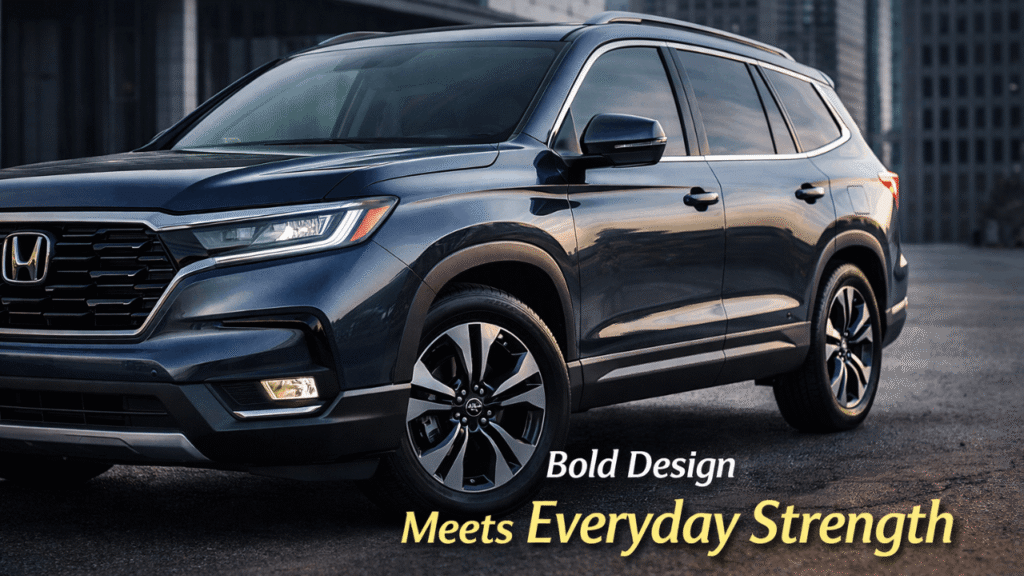
The Honda Pilot adopts a visual language that favors confidence over complexity. Instead of excessive sculpting or aggressive angles, the exterior relies on proportion and stance to communicate strength. The result is a design that feels mature, capable, and appropriate in almost any setting, from suburban driveways to long highway stretches.
Up front, the grille and lighting work together to establish presence. The LED headlights are sharp without appearing ornamental, while the body lines remain clean and purposeful. Nothing feels exaggerated, which helps the vehicle age more gracefully than trend-driven rivals. This restraint is intentional and effective.
Color options and wheel designs offer just enough customization to avoid looking generic. Buyers can lean toward understated tones or choose bolder finishes without pushing the design into excess. In the middle of its design philosophy, the Pilot Honda manages to look modern without trying too hard, a balance many SUVs struggle to achieve as styling trends shift.
Honda Pilot Interior & Comfort
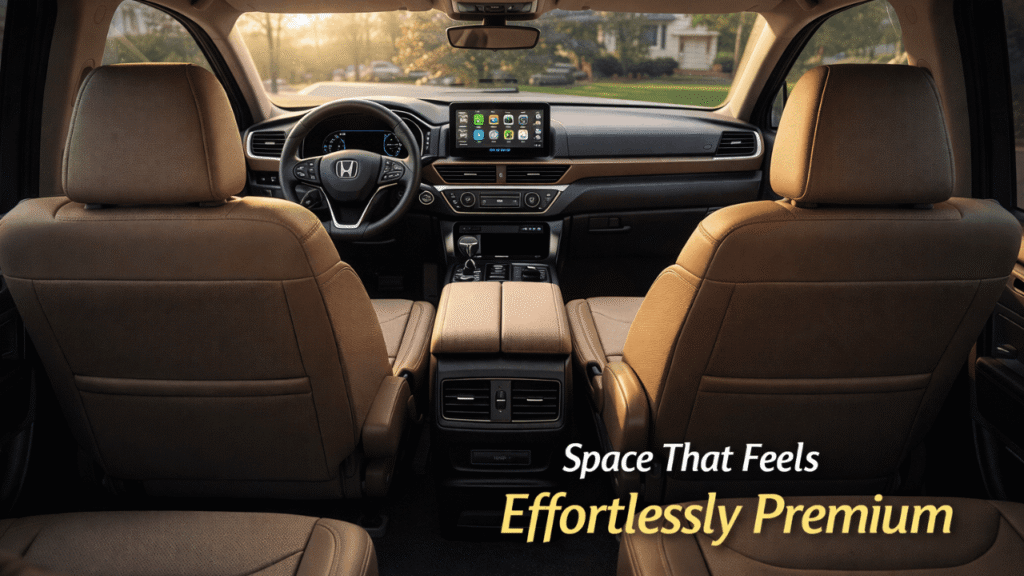
Step inside the Honda Pilot, and the focus on usability becomes immediately clear. The cabin is arranged logically, with controls placed where hands naturally fall and materials chosen for durability rather than visual drama. This is a space designed for living, not just impressing during a showroom visit.
Seating comfort is one of its strongest traits. Legroom across all three rows feels intentional rather than squeezed, making longer trips less tiring for passengers. Even adults in the third row avoid the cramped feeling common in this segment, which is a quiet but meaningful win.
Cargo flexibility further supports daily practicality. Seats fold smoothly, storage areas are well distributed, and loading doesn’t feel like a puzzle. Midway through real-world use, the Pilot Honda proves that interior design doesn’t need gimmicks to feel premium—clarity and space do the job better.
Honda Pilot Engine & Performance
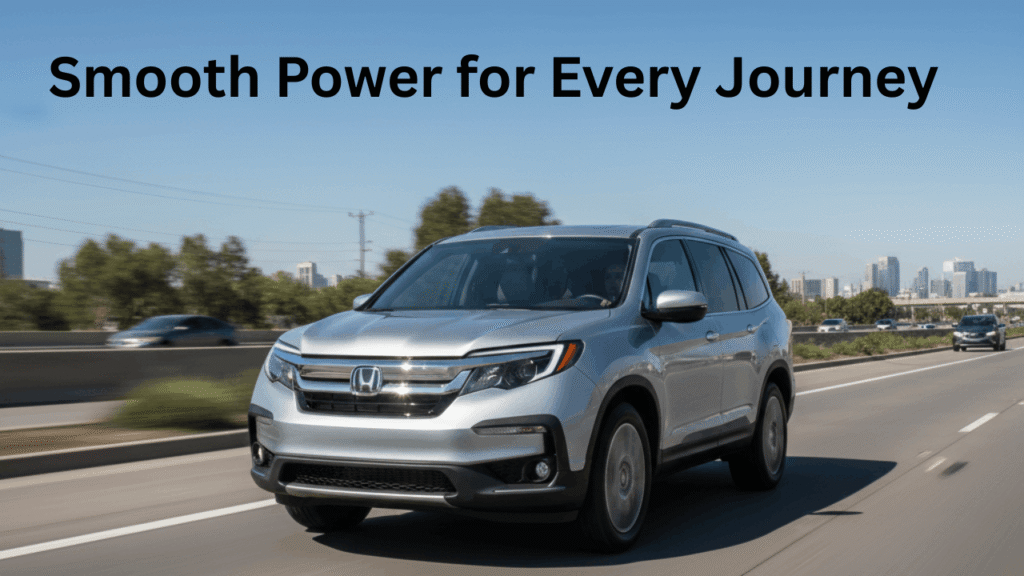
The Honda Pilot delivers performance with restraint, focusing on smoothness rather than spectacle. Its engine setup is tuned to provide consistent power across driving scenarios, whether navigating city traffic or maintaining speed on long highway stretches. Acceleration feels controlled, not rushed.
Horsepower and torque figures are competitive without chasing extremes. Instead of sharp throttle responses, the vehicle prioritizes linear delivery, which contributes to a calmer driving experience. This approach suits its family-oriented nature and reduces fatigue over time.
On the road, the ride remains composed, absorbing imperfections without disconnecting the driver from the surface. Towing capability adds another layer of versatility, allowing light recreational use without strain. In the middle of its performance profile, the Pilot Honda emphasizes balance—strong enough to feel capable, restrained enough to feel reliable.
Honda Pilot Fuel Economy
Fuel efficiency in the Honda Pilot reflects its size and purpose rather than attempting to redefine expectations. City and highway mileage numbers remain reasonable for a three-row SUV, especially considering the vehicle’s weight and capacity. It doesn’t aim to lead the segment, but it avoids falling behind.
Compared to some rivals, efficiency feels honest rather than optimized for test cycles. The vehicle performs predictably in real traffic, where driving style and load often matter more than official ratings. This consistency is often more valuable than impressive numbers on paper.
Over extended use, fuel consumption remains stable, which helps owners plan expenses with confidence. In the middle of the ownership experience, the Pilot Honda rewards steady driving habits and avoids sudden drops in efficiency that can frustrate long-term users.
Honda Pilot Technology Features
Technology in the Honda Pilot focuses on integration rather than overload. The infotainment system is designed to be intuitive, reducing the learning curve for new drivers. Menus feel structured, and essential functions remain easily accessible while driving.
The touchscreen responds reliably, avoiding the lag that plagues many competitors. Smartphone integration through Apple CarPlay and Android Auto works seamlessly, allowing drivers to rely on familiar interfaces rather than proprietary systems.
Navigation and connectivity options support daily use without demanding constant attention. Midway through its tech experience, the Pilot Honda proves that functionality matters more than flashy animations, especially in a vehicle designed for shared use across different age groups.
Honda Pilot Safety Features
Safety is not treated as an optional upgrade in the Honda Pilot; it’s foundational. The Honda Sensing suite comes standard, reinforcing the brand’s long-standing emphasis on preventative technology. These systems work quietly in the background rather than interrupting the drive.
Driver-assist features operate smoothly, offering support without creating dependence. Lane guidance, adaptive cruise control, and collision mitigation function predictably, which builds trust over time. This predictability is key for family-focused vehicles.
Crash safety ratings further strengthen confidence, especially for buyers transporting children or elderly passengers. In the middle of its safety philosophy, the Pilot Honda prioritizes reassurance over intrusion, making advanced protection feel natural rather than overwhelming.
Honda Pilot Trim Levels
The Honda Pilot trim lineup is structured to guide buyers rather than confuse them. Entry-level trims focus on core functionality, while higher tiers introduce comfort and technology upgrades without drastically changing the driving experience. This consistency makes decision-making easier.
Differences between trims are meaningful but not excessive. Features scale logically, allowing buyers to choose based on priorities rather than forced bundles. This approach respects budget constraints while still offering premium options.
For value-focused buyers, mid-range trims often strike the best balance. In the middle of the lineup, the Pilot Honda delivers most of its strengths without pushing into luxury pricing territory, which explains why these trims tend to be the most popular.
Honda Pilot Price & Availability
Pricing for the Honda Pilot reflects its positioning as a dependable midsize SUV rather than an aspirational luxury model. The starting range remains accessible for families, while higher trims increase cost in proportion to added features rather than branding.
As trims rise, price differences align closely with tangible upgrades. Buyers aren’t paying solely for aesthetics, which helps justify the investment. This transparency builds confidence during the purchasing process.
Availability remains strong across major markets, ensuring parts access and service support. In the middle of ownership planning, the Pilot Honda benefits from wide distribution and established dealer networks, reducing long-term uncertainty.
Honda Pilot Pros and Cons
The Honda Pilot earns praise for its spacious interior, which remains comfortable even when fully occupied. Engine performance delivers confidence without sacrificing refinement, and safety systems feel thoughtfully integrated rather than intrusive.
However, fuel economy may not satisfy buyers prioritizing maximum efficiency. Higher trims also push pricing into territory where alternatives begin to look attractive. These trade-offs are real but context-dependent.
In the middle of evaluation, the Pilot Honda stands out by offering strengths that remain relevant long after novelty features fade, making its drawbacks easier to accept for the right buyer.
Why Buy the Honda Pilot?
Choosing the Honda Pilot often comes down to trust. It’s designed for families who need reliability over excitement and consistency over constant upgrades. The vehicle supports daily routines without demanding constant attention.
Long-term ownership remains a strong selling point. Maintenance costs stay manageable, and the brand’s reputation supports strong resale value. This stability matters when planning years rather than months ahead.
Comfort on extended trips reinforces its value. In the middle of real-world use, the Pilot Honda proves that calm, predictable performance can be more satisfying than headline-grabbing features.

Honda Pilot vs Competitors
Against the Toyota Highlander, the Honda Pilot feels roomier and more relaxed, prioritizing interior comfort over compact efficiency. The Highlander leans slightly toward fuel savings, while the Pilot emphasizes passenger space.
Compared to the Ford Explorer, the driving experience differs in tone. The Explorer offers sharper performance, but the Pilot delivers smoother behavior and easier everyday usability. This difference shapes buyer preference.
In the middle of competitive analysis, the Pilot Honda distinguishes itself through balance. It may not dominate a single metric, but it avoids significant weaknesses, which is often more valuable in long-term ownership.
Frequently Asked Questions About the Honda Pilot
Is the Honda Pilot a good SUV for large families?
The Honda Pilot is designed with family use at its core, offering three rows of seating that comfortably accommodate adults and children alike. Its interior layout prioritizes legroom and accessibility, making longer trips less tiring. For households that frequently travel together, the Honda Pilot delivers space without feeling oversized.
How reliable is the Honda Pilot for long-term ownership?
Reliability has long been one of the strongest traits associated with the Honda Pilot. Owners typically experience consistent performance with manageable maintenance requirements over time. This reputation makes it a practical choice for buyers planning to keep their vehicle for several years rather than upgrading frequently.
Does the Honda Pilot perform well on highways and long drives?
Highway driving is where the Honda Pilot feels most composed. The ride remains stable at higher speeds, and cabin noise stays well controlled, which improves comfort on extended journeys. Its engine tuning supports smooth cruising rather than aggressive acceleration.
Is the Honda Pilot fuel-efficient for its size?
For a three-row midsize SUV, the Honda Pilot delivers reasonable fuel efficiency. While it may not lead the segment in mileage, real-world performance remains predictable and consistent. This balance suits drivers who value space and comfort over maximum fuel savings.
What makes the Honda Pilot safer than many competitors?
Safety systems in the Pilot Honda are designed to work quietly in the background rather than distract the driver. Features included in the Honda Sensing suite help prevent accidents instead of merely responding to them. This approach enhances confidence, especially for family-focused buyers.
Which Honda Pilot trim offers the best value?
Many buyers find that mid-range trims of the Honda Pilot strike the best balance between price and features. These trims typically include most comfort and technology upgrades without reaching premium pricing levels. The result is a well-equipped SUV that avoids unnecessary cost escalation.
How does the Honda Pilot compare to other midsize SUVs?
When compared to rivals, the Pilot Honda stands out for interior space and overall balance. Some competitors may excel in fuel efficiency or performance, but the Pilot avoids major compromises. Its strength lies in delivering a consistently well-rounded ownership experience.
Conclusion
The Honda Pilot remains relevant because it understands its role. It doesn’t chase luxury trends or performance extremes, instead focusing on delivering dependable value across years of use. That clarity keeps it competitive.
For buyers prioritizing space, safety, and long-term comfort, it continues to make sense. Different lifestyles will find different strengths, but the core experience remains consistent.
If you’re considering trims or planning a test drive, exploring how the Pilot Honda fits your daily needs is the best next step—because this SUV proves its worth over time, not at first glance.