

Design & Build Quality
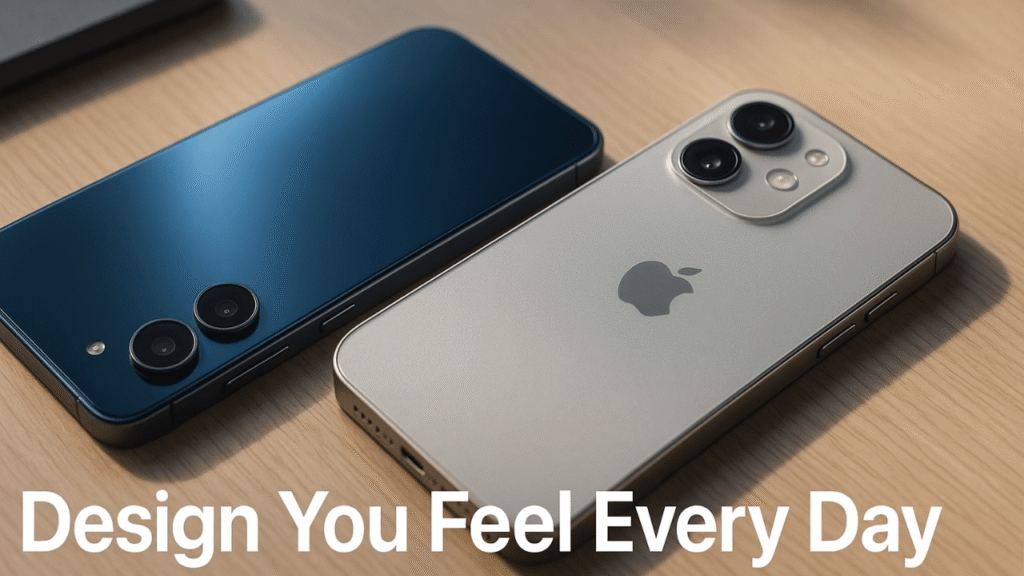
The moment you start living with a phone—not admiring it—you realize design is about endurance, not beauty. In the Galaxy S25 vs. iPhone 17, both devices feel undeniably premium, yet they express craftsmanship in radically different ways. Samsung leans toward functional elegance, shaping its design around how hands actually move throughout the day.
Apple, meanwhile, doubles down on architectural precision, creating a phone that feels engineered rather than shaped. After several days of constant use, weight balance, grip texture, and edge comfort begin to influence satisfaction more than finishes or colors. The Galaxy S25 vs. iPhone comparison becomes less about aesthetics and more about physical harmony—how naturally the device integrates into pockets, palms, and habits without demanding attention.
How each phone feels in the hand during daily use—Galaxy S25 vs. iPhone
Extended daily use reveals comfort in unexpected moments. The Galaxy S25 feels easier during prolonged scrolling sessions, especially when navigating one-handed. The iPhone 17 counters with balance and rigidity that never feels awkward. Muscle memory adapts quickly, but preference forms slowly. Comfort becomes instinctive rather than noticeable.
Materials, durability, and long-term comfort—Galaxy S25 vs. iPhone
Material choices influence more than durability. Samsung’s surface treatment resists fingerprints and warmth buildup. Apple’s denser frame feels colder and sturdier. Over weeks, this affects fatigue and grip confidence. Durability becomes emotional as much as physical.
Practical differences you notice after a week, not a demo—Galaxy S25 vs. iPhone 17
Short demos hide long-term truths. The Galaxy S25 vs. iPhone difference becomes clear through repeated actions—unlocking, pocketing, and reaching buttons. One disappears into routine. The other feels intentionally present.
Display Experience
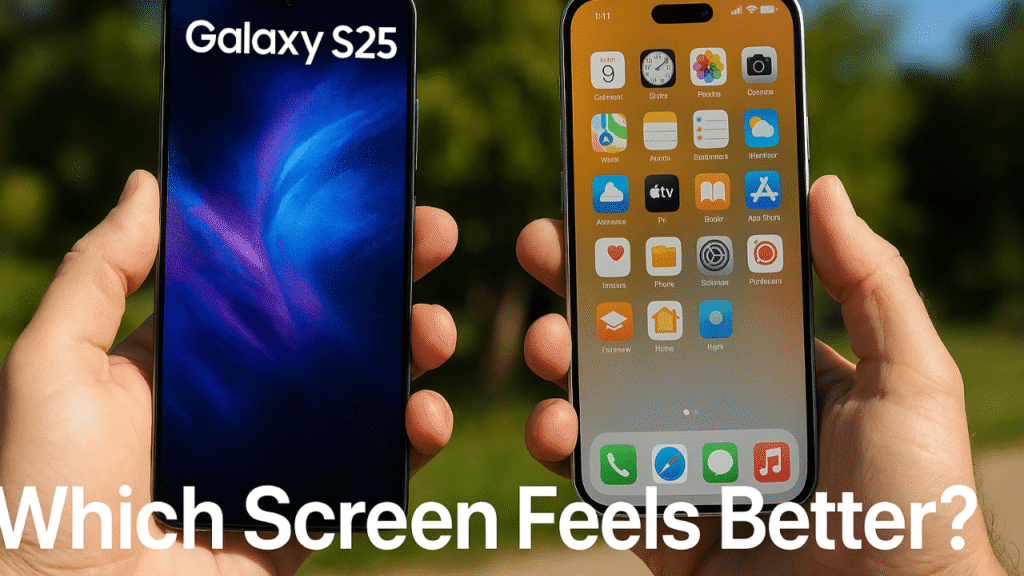
Screens no longer impress through numbers alone—they impress through restraint. In the Galaxy S25 vs. iPhone, display quality reflects how each brand thinks users consume information. Samsung favors vibrancy and adaptability, crafting a screen that reacts dynamically to lighting and content. Apple prefers visual discipline, keeping colors consistent and motion controlled. Over hours of reading, scrolling, and watching, these philosophies shape comfort and fatigue. The Galaxy S25 vs. iPhone distinction becomes less about brightness and more about how often you forget the screen exists—which is the real mark of a great display.
Brightness and clarity in outdoor sunlight—Galaxy S25 vs. iPhone
Sunlight is the ultimate test. Samsung pushes brightness aggressively, ensuring visibility at sharp angles. Apple counters glare with controlled contrast. Both remain usable, but their strategies feel fundamentally different. One fights the sun. The other negotiates with it.
Smoothness, refresh rate behavior, and eye comfort—Galaxy S25 vs. iPhone
Motion defines perceived quality. The Galaxy S25 feels instantly responsive during rapid interactions. The iPhone 17 prioritizes consistency over speed. Over long sessions, eye comfort becomes noticeable. Subtle tuning makes a real difference.
Content consumption: video, reading, and social feeds—Galaxy S25 vs. iPhone 17
Media reveals intent. The Galaxy S25 vs. iPhone contrast appears clearly in video playback and text clarity. Samsung feels cinematic. Apple feels natural. Preference depends on content habits.
Performance & Speed
Raw speed has become invisible. In the Galaxy S25 vs. iPhone, performance is no longer about how fast apps open—it’s about how gracefully the phone handles chaos. Notifications, background tasks, AI features, and multitasking pressure the system constantly. Samsung designs performance to feel elastic, adjusting dynamically based on user behavior. Apple designs performance to feel stable, minimizing variation even under load. The Galaxy S25 vs. iPhone difference emerges during prolonged use, where consistency and adaptability compete quietly beneath the surface.
Everyday app usage vs heavy multitasking—Galaxy S25 vs. iPhone
Casual use feels identical on both. The divergence appears when switching rapidly between tasks. Samsung allows more flexibility. Apple enforces structure. Each approach feels intentional. Preference depends on workflow intensity.
Gaming performance and heat management – Galaxy S25 vs. iPhone 17
Gaming exposes thermal limits. The Galaxy S25 adapts performance to manage heat. The iPhone 17 maintains stability longer. Comfort during extended sessions varies. Heat distribution matters more than peak frames.
How both phones handle AI tasks in real life—Galaxy S25 vs. iPhone 17
AI reveals philosophy. The Galaxy S25 vs. iPhone shows Samsung pushing contextual customization while Apple prioritizes privacy boundaries. Results feel different even when outcomes match.
Camera Experience (Photos & Video)
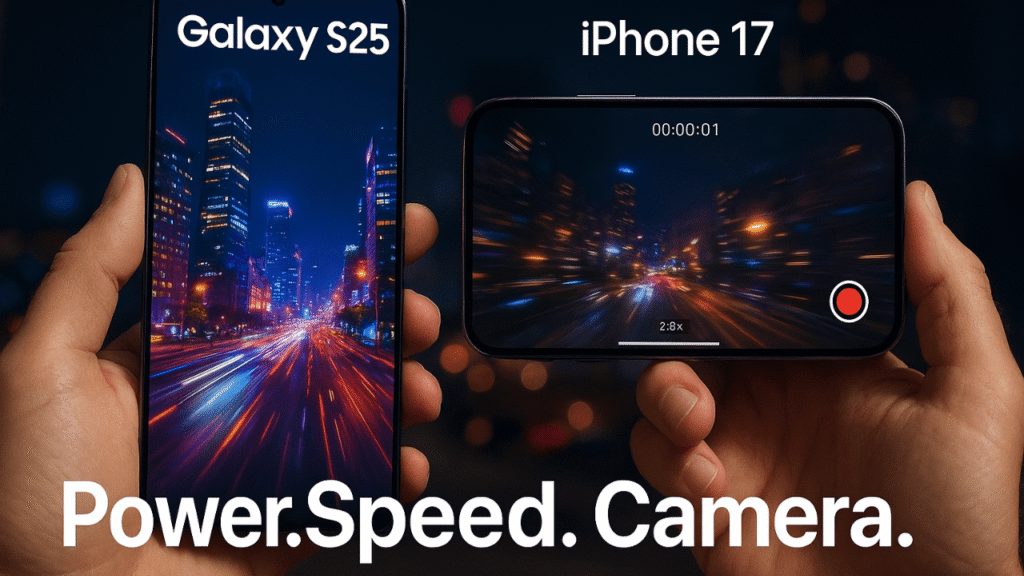
Cameras now shape memory rather than record it. In the Galaxy S25 vs. iPhone 17, image processing reflects how each brand interprets reality. Samsung enhances presence, making moments feel vivid and immediate. Apple preserves atmosphere, favoring subtlety over drama. Over time, this affects emotional recall more than technical quality. The Galaxy S25 vs. iPhone camera debate isn’t about accuracy—it’s about storytelling through light, tone, and motion.
Photo style: realistic vs enhanced output—Galaxy S25 vs. iPhone 17
Samsung amplifies detail and color. Apple preserves nuance and balance. Skin tones differ subtly. Shadows tell different stories. Neither approach is wrong—just intentional.
Low-light, portraits, and zoom performance—Galaxy S25 vs. iPhone 17
Low light separates philosophies. The Galaxy S25 prioritizes clarity. The iPhone 17 preserves mood. Portrait depth feels natural versus dramatic. Zoom favors confidence over subtlety.
Video quality for creators, vloggers, and reels—Galaxy S25 vs. iPhone 17
Video defines reliability. The Galaxy S25 vs. iPhone 17 contrast favors Apple’s consistency and Samsung’s creative control. Workflow matters as much as output.
Battery Life & Charging
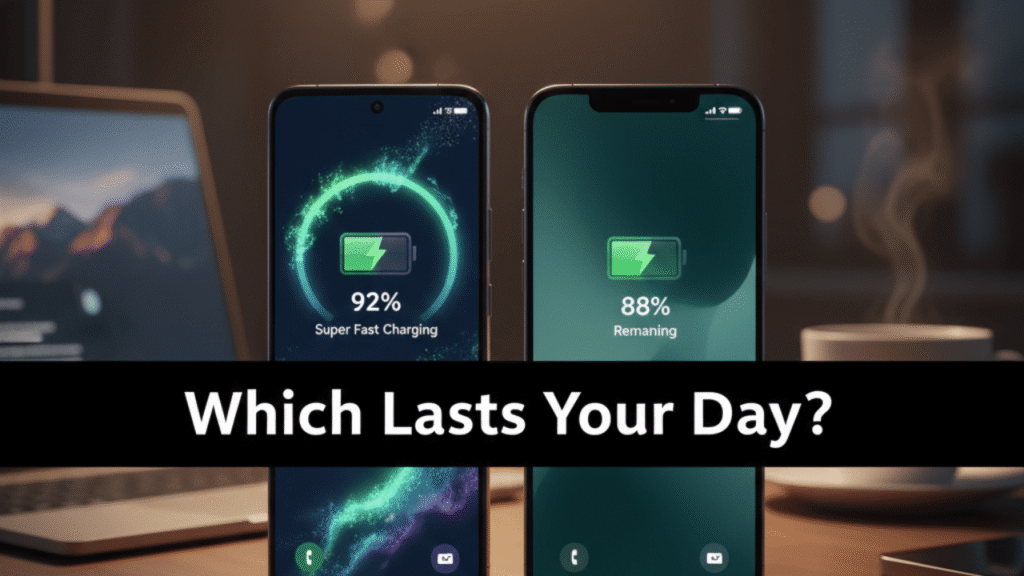
Battery experience is about trust. In the Galaxy S25 vs. iPhone 17, both phones last a full day—but how they manage energy differs. Samsung optimizes aggressively during active use. Apple excels at standby efficiency. Over weeks, users stop checking percentages and start trusting patterns. The Galaxy S25 vs. iPhone difference becomes emotional—confidence versus caution.
Screen-on time and standby drain—Galaxy S25 vs. iPhone 17
Idle time matters. Apple minimizes background drain. Samsung stretches active usage. Results depend on routine. No universal winner exists.
Fast charging vs battery health over time—Galaxy S25 vs. iPhone 17
Charging shapes behavior. Samsung enables quick recovery. Apples preserve long-term health. Months later, this difference becomes noticeable. Convenience competes with longevity.
Which phone lasts longer in real routines—Galaxy S25 vs. iPhone 17
Real life decides outcomes. The Galaxy S25 vs. iPhone shifts depending on usage intensity. Power users lean one way. Minimalists lean the other way.
Software, Updates & User Experience
Software determines how hardware ages. In the Galaxy S25 vs. iPhone, philosophy outweighs features. Samsung treats software as a toolbox. Apple treats it as a system. Over time, this affects satisfaction more than innovation cycles. The Galaxy S25 vs. iPhone experience matures differently depending on tolerance for change.
Android freedom vs iOS consistency—Galaxy S25 vs. iPhone 17
Freedom encourages experimentation. Consistency encourages trust. Samsung empowers customization. Apple enforces harmony. Comfort follows mindset alignment.
Update reliability and feature longevity—Galaxy S25 vs. iPhone 17
Apple delivers predictable updates. Samsung delivers feature-rich ones. Longevity feels different based on expectations. Stability competes with evolution.
Learning curve for new users—Galaxy S25 vs. iPhone 17
Transitions reveal friction. The Galaxy S25 vs. iPhone 17 feels easier for first-time users than switchers. Familiarity defines comfort speed.
Ecosystem & Connectivity
Phones are now anchors, not islands. In the Galaxy S25 vs. iPhone 17, surrounding devices define value. Apple’s ecosystem feels effortless. Samsung’s feels adaptable. Both reward loyalty differently. The Galaxy S25 vs. iPhone choice often depends on what’s already on your desk.
Smartwatches, earbuds, laptops, and car integration—Galaxy S25 vs. iPhone 17
Apple emphasizes seamlessness. Samsung emphasizes compatibility. Both reduce friction. Paths differ, outcomes satisfy.
Cross-device syncing and convenience—Galaxy S25 vs. iPhone 17
Syncing defines workflow. The Galaxy S25 vs. iPhone 17 reflects ecosystem priorities. Openness versus reliability shapes efficiency.
Privacy, Security & Trust
Trust grows quietly. In the Galaxy S25 vs. iPhone 17, privacy is handled philosophically rather than theatrically. Samsung offers control. Apple offers containment. Over time, confidence forms through consistency. The Galaxy S25 vs. iPhone difference lies in how much responsibility users want.
Data handling and user control—Galaxy S25 vs. iPhone 17
Samsung allows deeper permissions. Apple restricts by default. Both protect users. Trust manifests differently.
Biometric reliability and safety features—Galaxy S25 vs. iPhone 17
Biometrics should fade into habit. The Galaxy S25 vs. iPhone 17 shows maturity in execution. Reliability matters more than speed.
Price, Value & Long-Term Ownership
Price is momentary—ownership is permanent. In the Galaxy S25 vs. iPhone 17, value emerges over years. Software support, resale strength, and maintenance costs shape perception. The Galaxy S25 vs. iPhone decision matures with time.
What you actually get for the price – Galaxy S25 vs. iPhone 17
Samsung emphasizes features. Apple emphasizes refinement. Both justify cost differently. Value aligns with expectations.
Resale value and hidden costs – Galaxy S25 vs. iPhone 17
Resale favors predictability. The Galaxy S25 vs. iPhone gap widens over time. Accessories and repairs influence satisfaction.
Frequently Asked Questions (FAQ)
Is the Galaxy S25 better than the iPhone 17 for everyday use?
The answer depends on how you use your phone. In the Galaxy S25 vs. iPhone comparison, Samsung offers more flexibility for multitasking, customization, and power-user features. Apple focuses on smoothness, consistency, and minimal friction. Casual users often prefer the predictability of iOS, while advanced users may value Android’s freedom.
Which phone has better long-term performance: Galaxy S25 vs. iPhone 17?
Both phones are built to last, but they age differently. Apple’s tight hardware-software integration keeps performance stable over many years. Samsung compensates with aggressive hardware upgrades and feature-rich updates. Long-term performance depends more on software expectations than raw power.
Is the camera better on Galaxy S25 or iPhone 17?
In Galaxy S25 vs. iPhone camera use, Samsung produces more vibrant, enhanced photos, especially in low light and zoom. Apple delivers more natural colors and consistent video quality. Photography lovers may prefer Samsung, while video creators often lean toward iPhone.
Which phone is better for battery life?
Battery results vary by usage style. The Galaxy S25 excels during heavy screen-on usage, while the iPhone 17 is more efficient in standby and background tasks. Neither dominates universally; daily habits decide the winner.
Which phone is more secure and privacy-focused?
Apple maintains stricter default privacy controls, limiting background access across apps. Samsung provides more granular user control but expects users to manage permissions actively. In Galaxy S25 vs. iPhone 17, security is strong on both, but privacy philosophies differ.
Is switching from iPhone to Galaxy S25 difficult?
Switching requires adjustment. Android offers more options, which can feel overwhelming initially. However, Samsung’s migration tools reduce friction. The learning curve exists but smooths out quickly with regular use.
Which phone offers better value for money?
Samsung typically delivers more hardware features for the price, while Apple retains higher resale value. In Galaxy S25 vs. iPhone, value depends on whether you prioritize upfront features or long-term ecosystem benefits.
Final Decision: Which One Fits Your Lifestyle?
Choosing a phone is choosing friction—or freedom. In the Galaxy S25 vs. iPhone, alignment matters more than specs. Habits define happiness. The Galaxy S25 vs. iPhone answer becomes obvious when noise fades.
Clear guidance based on user type, not hype–Galaxy S25 vs. iPhone 17
The Galaxy S25 vs. iPhone choice resolves itself through use patterns. Control versus consistency. Flexibility versus predictability. The right phone feels natural.