
Introduction
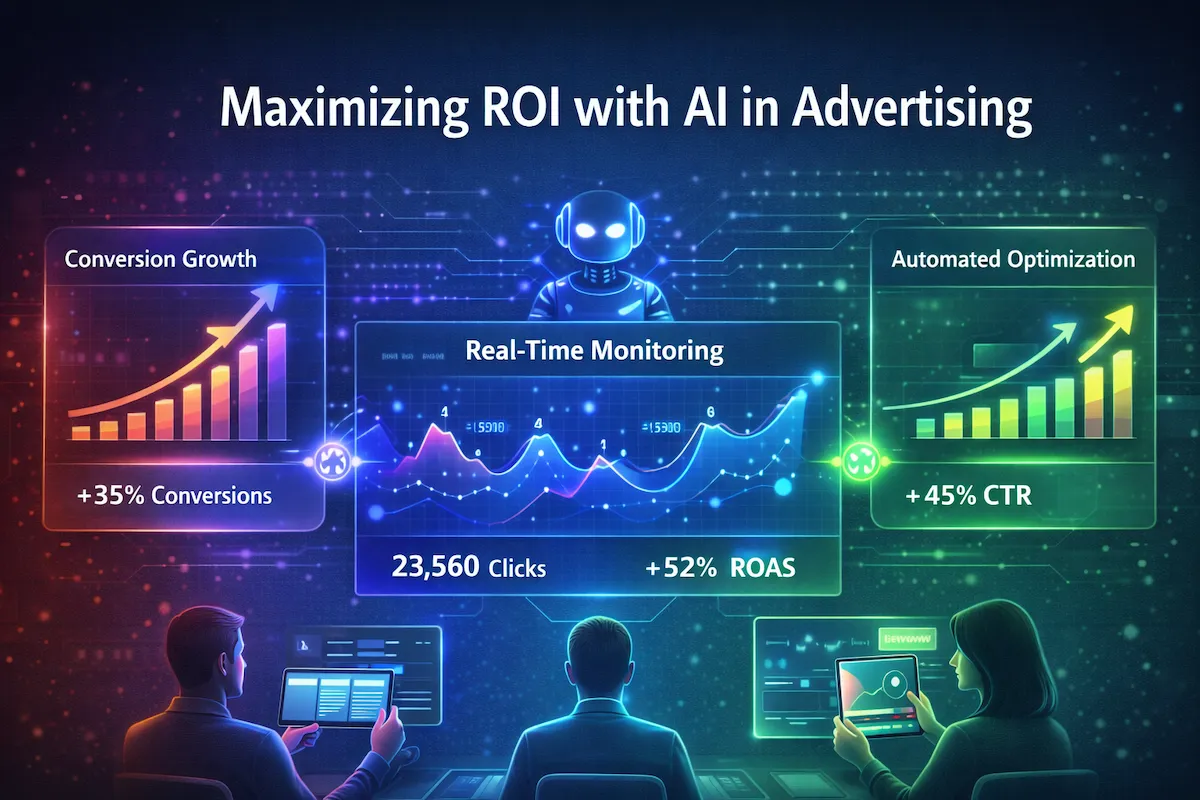
AI in advertising is no longer a future concept — it is the foundation modern marketing is built on. From the moment a user opens a social media app to the instant they search on Google, artificial intelligence quietly decides which ads they see, when they see them, and how those ads are worded.
For digital marketers, startup founders, ad agencies, and ecommerce entrepreneurs, understanding this technology is not optional anymore. It is the difference between campaigns that drain budgets and campaigns that consistently generate revenue.
According to Statista, AI-driven advertising spending is expected to exceed $200 billion by 2028. That figure signals the industry has moved well beyond experimentation.
Businesses are also exploring AI automation for online businesses to streamline marketing workflows, improve campaign management, and gain a measurable edge in efficiency and speed to market.
This guide breaks down exactly what the technology means, how it works, which tools lead the market, and what the future holds. Whether you are spending $500 or $500,000 on ads, this article will help you think smarter about your strategy.
What is AI in Advertising? (Quick Answer)
AI in advertising refers to the use of artificial intelligence technologies such as machine learning, predictive analytics, and natural language processing to automate ad targeting, optimize bidding strategies, and personalize marketing campaigns in real time across platforms like Google Ads, Meta Ads, and Amazon Ads.
What is AI in Advertising?
AI in advertising uses machine learning, natural language processing, and computer vision to automate, optimize, and personalize ad campaigns at scale. Instead of relying on manual decision-making, it processes large volumes of behavioral data to determine the best audience, format, message, and timing for each ad.
Platforms like Google Ads, Meta Ads, and Amazon Ads have integrated these systems deeply. They automatically test creatives, bid on placements, and adjust delivery based on predicted user behavior — all in real time.
Machine learning in AI in advertising
Machine learning is the backbone of modern ad systems. Algorithms learn from past campaign data and continuously improve their decisions. Google Ads Smart Bidding, for example, analyzes hundreds of signals — device type, location, time of day, search history — within milliseconds before placing a bid. The more data processed, the sharper the predictions around conversions, clicks, and placements.
AI in advertising and marketing automation
AI has dramatically expanded what AI marketing automation can do. Today it dynamically generates ad copy, rotates creative variations, adjusts bids in real time, and segments audiences based on predictive scoring. Platforms like HubSpot, Salesforce Marketing Cloud, and Marketo now recommend next best actions, score leads, and personalize messaging across every channel — without manual input from a marketing team.
How AI in Advertising Works in Modern Campaigns
The process runs through a continuous loop: data collection, pattern recognition, prediction, and optimization. Understanding this helps marketers know where to trust the algorithm — and where human creativity still matters.
Data collection
Every system starts with data. Platforms collect browsing behavior, purchase history, app usage, location data, and engagement patterns to build detailed user profiles. Meta Ads, for instance, collects thousands of behavioral signals from Facebook and Instagram. When a campaign runs, its AI identifies which audience segments are most likely to respond — often without any manual targeting rules.
Predictive analytics
Rather than reacting to what happened, predictive models forecast what is likely to happen next. They can identify users about to make a purchase, anticipate which product category a shopper will explore, or estimate when a churned customer will re-engage. Amazon Ads uses this to surface products before users even know they want them — analyzing past purchase patterns and positioning ads accordingly.
Automated ad optimization
Once campaigns are live, the system tests multiple ad versions simultaneously, identifies top performers, and shifts budget toward them — no human review needed. Google’s Responsive Search Ads demonstrate this well: supply up to 15 headlines and 4 descriptions, and the AI learns which pairings drive the most conversions for each search query and user context.
AI Advertising vs Traditional Advertising
The table below shows the key differences across targeting, bidding, testing, and optimization — the areas where automated systems have most transformed the industry.
| Factor | Traditional advertising | AI advertising |
|---|---|---|
| Targeting | Broad demographic segments | Individual behavioral profiles |
| Bidding | Manual, set by humans | Automated, real-time optimization |
| Creative testing | A/B testing over weeks | Simultaneous multi-variant testing |
| Optimization speed | Weekly or monthly reviews | Continuous, 24/7 adjustment |
| Budget efficiency | Higher wasted spend | Reduced waste through smart allocation |
| Personalization | One message to many | Dynamic messaging per user |
Traditional advertising gave marketers control but required significant manual effort. It often resulted in broad targeting that wasted budget. AI shifts decision-making to algorithms processing thousands of signals per second — something no human team can replicate at scale.
Benefits of AI in Advertising for Businesses
The business case is straightforward: it reduces wasted spend, increases relevance, and improves results across every key metric.
Personalized ad targeting
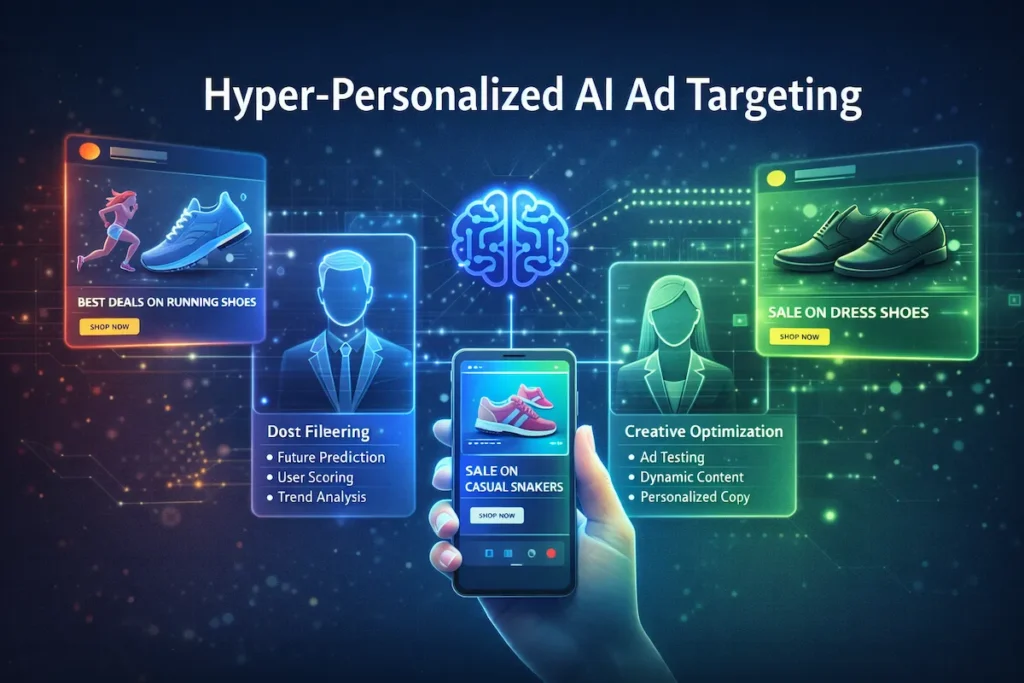
Personalized ad targeting at scale was impossible before machine learning. A single campaign can now dynamically adapt the headline, image, and offer based on who is viewing it. A shoe retailer, for instance, can show running shoes to fitness enthusiasts, dress shoes to office professionals, and casual sneakers to college students — all within the same campaign.
Better ROI
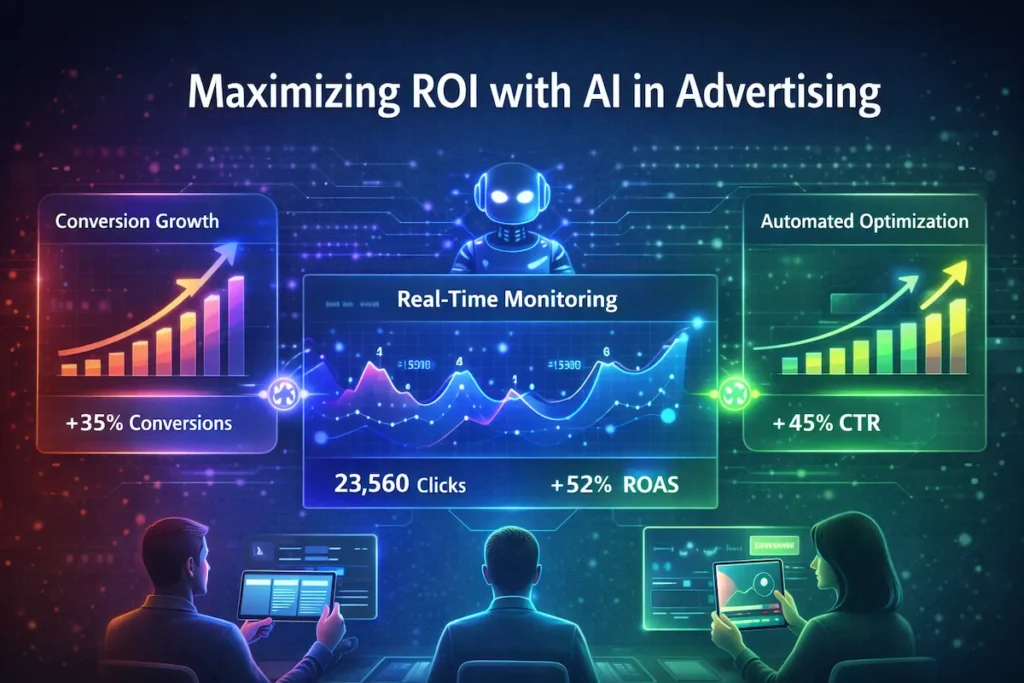
By eliminating poor-performing placements, audiences, and creatives in real time, AI ad optimization ensures every dollar works harder. Businesses switching from manual to AI-powered bidding on Google Ads commonly report measurable improvements in cost per acquisition — often visible within the first few weeks of data collection.
Real-time campaign optimization
AI adjusts bids during peak shopping hours, pauses underperforming ads at midnight, and reallocates budget to high-converting audiences on weekends — all automatically, based on live signals that no human team could monitor around the clock.
AI in Advertising: Key Statistics
Here are the most important AI advertising statistics marketers should know in 2026:
| 📊 AI advertising spending will exceed $200 billion globally by 2028 (Statista) |
| 📊 More than 80% of digital ads are now served through programmatic advertising systems |
| 📊 Personalized ad targeting improves conversion rates by 20–30% vs manual targeting |
| 📊 AI bidding strategies reduce wasted ad spend by up to 40% |
| 📊 McKinsey research shows AI marketing technologies can improve marketing ROI by 10–20% |
| 📊 Brands using AI ad personalization report up to 3x higher engagement rates |
According to Statista, global AI advertising spending is set to exceed $200 billion by 2028 — reflecting how deeply programmatic advertising has become embedded in digital marketing. McKinsey puts the ROI improvement from AI marketing technologies at 10–20%, making it one of the highest-leverage investments available to growth-focused businesses.
Types of AI Technologies Used in Advertising
AI in advertising combines several disciplines. Here is what each one does in practice.
Machine learning
Machine learning platforms learn from campaign outcomes and self-improve over time. Supervised models predict click-through rates and conversion probabilities. Reinforcement learning models optimize bidding based on cumulative reward signals. Together, they power every major programmatic advertising system in use today.
Natural language processing (NLP)
NLP allows platforms to read, write, and understand text — enabling automatic ad copy generation, sentiment analysis of customer reviews, and semantic keyword matching. Google uses NLP to interpret the intent behind search queries, not just the exact words typed. Tools like Jasper, Copy.ai, and Performance Max rely on it to produce multiple ad variants from a single creative brief.
Computer vision
Computer vision analyzes images and video to assess creative quality, detect brand logos in user-generated content, and optimize which visuals to show in dynamic ads. Meta Ads uses it to identify which images and video thumbnails are most likely to stop users from scrolling — improving engagement without any manual creative testing.
Predictive analytics
Predictive models forecast customer lifetime value, identify users likely to convert within a 7-day window, and anticipate which product category a returning visitor will explore next. This allows marketers to bid aggressively for high-value users while conserving budget on low-probability audiences.
Top AI in Advertising Tools Marketers Use
Choosing the right tools is essential for scaling performance. Marketing agencies in particular should review the best AI tools for marketing agencies in 2026 to stay ahead of the competition.
AI ad platforms and automation tools
- Google Ads Smart Campaigns: Fully automated campaigns for small businesses using AI to target, bid, and optimize.
- Meta Advantage+: AI-driven audience expansion and creative optimization for Facebook and Instagram ads.
- Amazon DSP: Demand-side platform using AI to reach audiences across Amazon-owned and third-party properties.
- The Trade Desk: Independent programmatic advertising platform with sophisticated audience segmentation tools.
AI creative generation tools
- Jasper AI: Generates ad copy, social media posts, and email content at scale using NLP.
- AdCreative.ai: Creates visual ad creatives with high conversion potential using AI-generated design templates.
- Canva Magic Studio: AI-powered design features for creating ad visuals quickly and at scale.
Creative agencies looking to scale their output should also explore the best AI tools for creative agencies for a deeper breakdown of production and design tools built for agency workflows.
AI campaign optimization tools
- Optmyzr: Automates bid adjustments, quality score improvements, and reporting.
- Revealbot: Automated ad management for Meta and Google Ads using rule-based and AI-driven optimization.
- Albert.ai: Autonomous system that plans, buys, and optimizes campaigns across all channels.
Real-World Examples of AI in Advertising
These examples show how major brands and growing ecommerce businesses are using AI to achieve measurable results.
How major brands use AI in advertising
Coca-Cola uses AI to monitor sentiment data across millions of social posts and generate ad content that reflects current cultural trends — helping creative teams craft campaigns that feel timely and relevant.
Spotify matches ads to listener moods, time of day, and recently played genres using programmatic advertising — delivering contextually relevant messages that feel native to the experience.
Sephora retargets shoppers on Meta and Google with highly specific product recommendations based on what they viewed on-site, driving users back to complete purchases with precisely relevant ads.
Ecommerce businesses using AI in advertising
For ecommerce, some of the strongest results come from dynamic product ads. When a shopper browses but does not buy, AI-powered retargeting automatically shows that product — or a closely related one — across Facebook, Instagram, and Google’s Display Network. For a full breakdown of scaling with these tools, see this guide on AI for ecommerce growth strategies.
Smaller DTC brands on Shopify routinely use Google’s Performance Max campaigns, which are entirely AI-managed. The system determines the best channel mix, audience, and creative combination to hit the advertiser’s conversion goal.
Challenges and Risks of AI in Advertising
AI in advertising comes with real challenges that marketers need to plan for carefully.
Data privacy concerns
AI advertising depends on vast amounts of user data. GDPR in Europe and CCPA in California restrict how that data can be collected and used. Apple’s App Tracking Transparency has further limited what platforms like Meta can access, reducing targeting precision for many advertisers.
Mitigation: Invest in first-party data strategies — email lists, loyalty programs, and on-site data collection — before third-party cookies disappear entirely. Stay informed about AI data security risks in marketing to identify where your campaigns are exposed.
Algorithm bias
AI learns from historical data. If that data reflects past biases, the algorithm will perpetuate them — systematically showing certain ads to some demographic groups while excluding others, not through intent but through pattern recognition.
Mitigation: Regularly audit audience reach and delivery reports, especially for campaigns related to housing, employment, or financial services. The FTC’s guidance on AI and algorithmic decision-making provides a useful framework for understanding your responsibilities.
Over-automation risks
Algorithms optimize for the metrics they are given. If your goal is clicks, the AI will deliver clicks — even if those clicks never convert. Automated ad placement can also result in ads appearing next to inappropriate content.
Mitigation: Set clear ROAS targets, budget caps, and brand safety exclusions before launching. Keep humans in charge of brand positioning, creative direction, and goal-setting. Let AI handle bidding, pacing, and delivery.
Future of AI in Advertising
The direction is clear: greater automation, deeper personalized ad targeting, and entirely new ad formats.
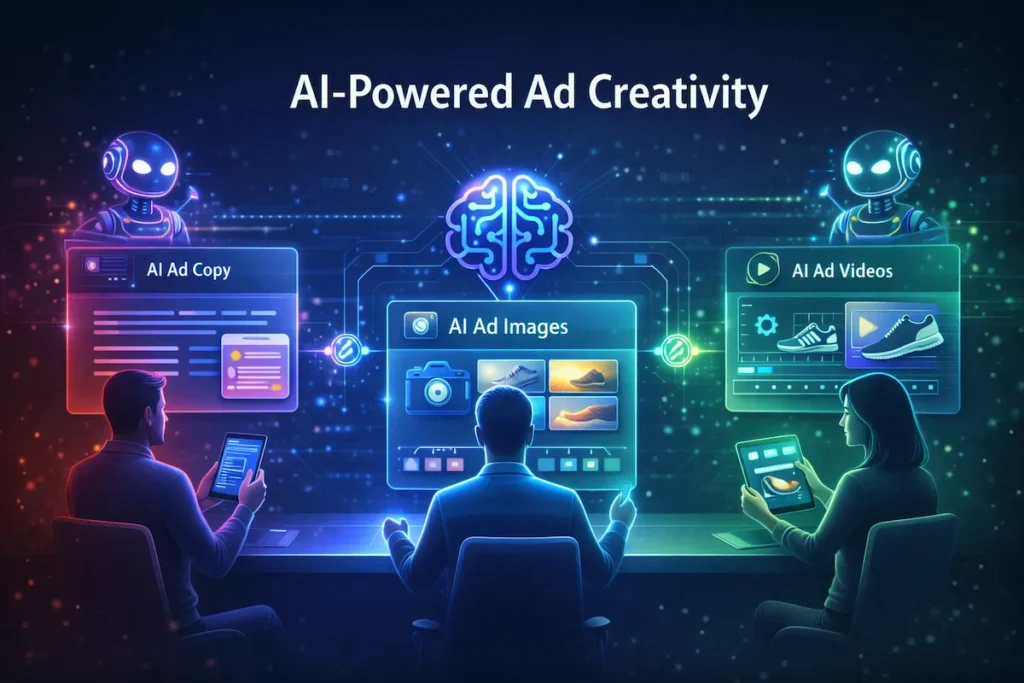
AI-generated advertising content
Tools like Google’s Asset Generation for Performance Max and Meta’s AI Sandbox already produce creative variations without human designers. In the near future, AI-generated content will be the default for most campaign types — with human creatives focused on brand strategy and emotional storytelling. Brands managing reviews and reputation at scale can also benefit from tools covered in this guide to AI review generator tools and strategies for 2026.
Voice and visual search advertising
As voice assistants and visual search tools grow, advertising will expand to meet users in those environments. Voice search will require conversational ad formats. Visual search — already emerging through Google Lens and Pinterest Lens — lets users search with images rather than words, opening new personalized ad targeting opportunities for product-based advertisers.
Autonomous AI advertising systems
The most significant shift ahead is fully autonomous systems — platforms that plan, budget, create, launch, and optimize campaigns with minimal human involvement. Companies like Albert.ai and Persado are already moving in this direction. Within a few years, a single AI system will be capable of managing an entire advertising budget across channels, adapting strategy in real time based on market conditions and competitive signals.
How Businesses Can Start Using AI in Advertising
Getting started does not require a large budget or a technical team. Follow these steps:
- Audit your current ad data. Review existing campaign performance. Find where waste is highest and which audiences or placements are delivering results.
- Enable AI bidding strategies. Switch from manual CPC to Target CPA or Target ROAS in Google Ads. Give the platform two to three weeks to learn before evaluating.
- Use AI creative tools. Generate multiple ad copy variations using Jasper or AdCreative.ai. Let the platform’s AI identify winners automatically.
- Test Performance Max or Advantage+ campaigns. Both manage audience, placement, and creative decisions for you. Start with a modest budget and scale what works.
- Build your first-party data foundation. Encourage customers to share email addresses, purchase preferences, and account data. This fuels better personalized ad targeting as cookie-based tracking declines.
- Monitor and set guardrails. Establish clear ROAS targets, budget caps, and brand safety exclusions. Review performance weekly and intervene when campaigns drift from your goals.
- Scale and iterate. Expand investment once you find what works. Add channels, test new creative formats, and continue refining your audience signals.
AI in Advertising Explained in 5 Key Points
- AI in advertising uses machine learning, NLP, and predictive analytics to automate and optimize ad campaigns in real time.
- Major platforms like Google Ads, Meta Ads, and Amazon Ads have embedded AI deeply into their bidding, targeting, and creative optimization systems.
- Key benefits include hyper-personalized ad targeting, improved ROI, and real-time campaign adjustments without manual intervention.
- Challenges include data privacy regulations, algorithmic bias, and the risks of over-automating without human oversight.
- The future includes autonomous campaign management, AI-generated content, and voice and visual search ad formats.
Key Takeaways
- AI in advertising uses algorithms and real-time data to make every ad dollar work harder and smarter.
- Machine learning, NLP, computer vision, and predictive analytics power modern automated advertising systems.
- Google, Meta, and Amazon lead the space, with sophisticated AI tools built directly into their ad platforms.
- Better targeting, higher ROI, and real-time optimization are achievable for businesses of all sizes.
- Privacy regulations and algorithm bias require strategic planning and regular campaign audits.
- Autonomous AI advertising systems are coming fast — businesses learning these tools now will have a significant competitive advantage.
- The strongest results come from combining AI efficiency with human strategic oversight.
Frequently Asked Questions About AI in Advertising
Q1: What is AI in advertising?
AI in advertising uses machine learning, natural language processing, and predictive analytics to automate campaign management, personalize ad delivery, optimize bidding, and generate creative content. It enables smarter, faster, and more cost-efficient advertising at scale.
Q2: How does AI improve ad targeting?
It analyzes large datasets of user behavior — browsing history, purchase patterns, engagement signals — to identify users most likely to respond to a given ad. Audiences are segmented at a granular level and targeting decisions update in real time based on campaign performance and shifting user signals.
Q3: Which platforms use AI in advertising most effectively?
Google Ads, Meta Ads (Facebook and Instagram), and Amazon Ads are the leaders. Google’s Performance Max, Meta’s Advantage+, and Amazon’s DSP are flagship AI advertising products that manage campaigns with minimal manual input.
Q4: Is AI in advertising suitable for small businesses?
Yes. Google Smart Campaigns and Meta’s Advantage+ Shopping Campaigns are designed for advertisers with limited resources. They automate targeting, bidding, and placement decisions with modest budgets — reducing the expertise required to run effective campaigns.
Q5: What are the biggest risks of using AI in advertising?
The main risks are data privacy compliance failures, algorithm bias leading to discriminatory ad delivery, over-automation without sufficient oversight, and brand safety issues from programmatic placement. Regular performance audits, brand safety exclusions, and a strong first-party data strategy help mitigate all of these.
Q6: How does AI in advertising handle data privacy?
Leading platforms are building privacy-safe targeting solutions as third-party cookies phase out. Google’s Privacy Sandbox and Meta’s Conversion API enable ad measurement and targeting without violating privacy regulations. Advertisers should prioritize first-party data collection and consent-based marketing to future-proof their strategies.
Q7: What is the future of AI in advertising?
Fully autonomous campaign management, AI-generated video and image creatives, voice and visual search ad formats, and deeply personalized ad experiences driven by real-time behavioral signals. Marketers who invest in understanding these tools today will lead the competitive landscape as they mature.
Ready to put AI to work in your ad campaigns?
Start with the platforms and tools covered in this guide — then scale from there.🚀 Start with Google Ads AI 🚀 Try Meta Advantage+ 🚀 Explore more AI tools
About the author
This article was written by a digital marketing researcher specializing in artificial intelligence marketing technologies, search engine optimization, and AI-driven advertising strategies for businesses targeting US markets. The content reflects hands-on expertise with AI ad platforms, AI campaign management tools, and AI ad optimization strategies across Google Ads, Meta Ads, and programmatic advertising ecosystems.
Conclusion
AI in advertising has moved from experimental to essential. The brands and businesses that embrace AI marketing technology today are building a structural advantage that will be increasingly difficult for slower adopters to close.
Whether you are a startup founder managing your first Google Ads campaign, a digital marketer at an established agency, or an ecommerce entrepreneur trying to improve your ROAS, there are tools and strategies here that can meaningfully improve your results — without requiring a team of data scientists to get started.
Start small: enable AI bidding, test AI-generated creative, and build your first-party data foundation. From there, the path to fully leveraging these systems becomes clearer with every campaign you run.
The future of advertising is autonomous, personalized, and always-on. The smartest move any marketer can make today is to start learning — and start testing — before that future arrives.
About the author
This article was written by a digital marketing researcher specializing in artificial intelligence marketing technologies, search engine optimization, and AI-driven advertising strategies for businesses targeting US markets. The content reflects hands-on expertise with AI ad platforms, AI campaign management tools, and AI ad optimization strategies across Google Ads, Meta Ads, and programmatic advertising ecosystems.