
Introduction
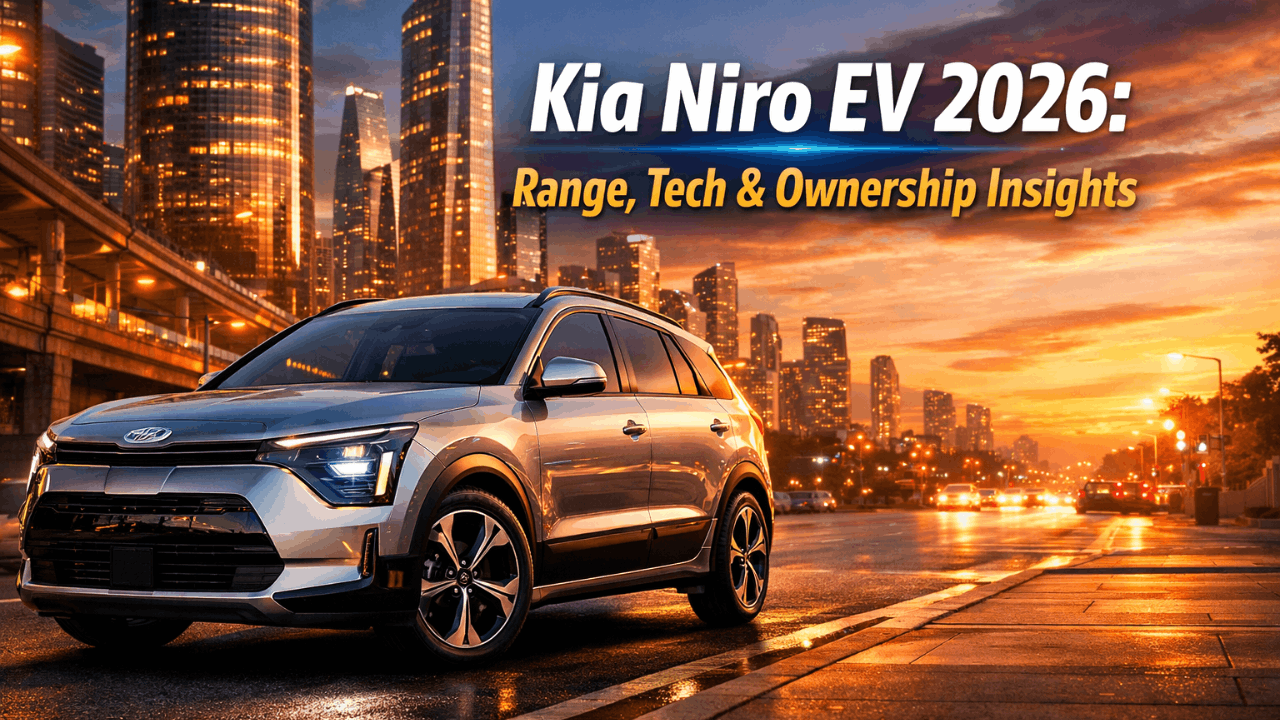
If you’re evaluating electric crossovers that balance affordability with everyday usability, the Kia Niro EV deserves serious consideration. This isn’t about chasing maximum range figures or luxury badge appeal—it’s about understanding whether this electric vehicle fits your daily driving patterns, charging infrastructure access, and budget constraints. The Kia Niro EV is designed for drivers who want a practical electric crossover that fits everyday commuting, charging access, and real-world driving needs.
The 2025 model continues Kia’s momentum in the electric space, competing directly with vehicles like the Hyundai Kona Electric, Chevrolet Equinox EV, and Volkswagen ID. 4. Unlike mainstream coverage that recycles spec sheets, this analysis focuses on ownership realities: charging behavior, real-world efficiency, technology integration, and long-term value considerations.
Whether you’re transitioning from a gas-powered compact SUV or comparing your first EV purchase, you need clarity on what this vehicle actually delivers beyond marketing promises.
Range Performance: EPA vs. Reality
The Kia Niro EV offers an EPA-estimated range of 253 miles, but real-world driving typically delivers 200–230 miles, depending on temperature, driving style, and climate control use. Cold weather and high-speed highway trips reduce efficiency, while city driving can extend it slightly. Regenerative braking helps recover energy, especially in stop-and-go conditions. The Kia Niro EV offers an EPA-estimated 253-mile range, but real-world driving typically delivers slightly less depending on weather, speed, and charging habits.
For longer trips, DC fast charging provides 10–80% in about 43 minutes, and Level 2 home charging fully restores the battery overnight. Understanding these real-world factors ensures that US drivers can plan routes effectively, manage charging stops, and maximize range for everyday commuting and occasional road trips.
Official Numbers and What They Mean
The current Kia Niro EV delivers an EPA-estimated 253 miles of range from its 64.8 kWh battery pack. That figure assumes optimal conditions—moderate temperatures, minimal climate control use, and conservative driving.
Real-world experience typically yields 200-230 miles depending on:
- Temperature conditions (cold weather reduces range by 20-30%)
- Highway vs. city driving (highway speeds drain batteries faster)
- Climate control usage (heating draws more power than cooling)
- Driving style (aggressive acceleration impacts efficiency)
Charging Speed Capabilities
The vehicle supports DC fast charging up to 85 kW, enabling a 10-80% charge in roughly 43 minutes under ideal conditions. Level 2 home charging (240V) completes a full charge overnight in approximately 7 hours.
This isn’t class-leading fast charging—newer competitors offer 150+ kW rates—but it’s adequate for weekly road trips and daily commuting scenarios.

Interior Technology and Infotainment
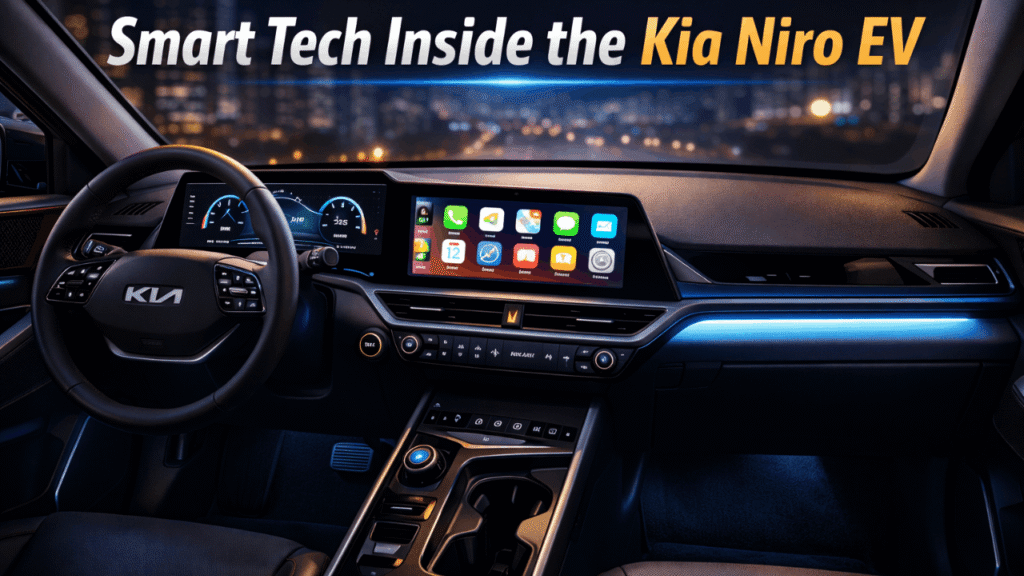
Inside the Kia Niro EV, technology enhances comfort, convenience, and safety. A dual 10.25-inch digital cluster and infotainment touchscreen provide intuitive controls, wireless Apple CarPlay, and Android Auto connectivity. Navigation includes EV-specific charging information, while third-party apps like PlugShare can complement it for real-time charger availability. Inside, the Kia Niro EV features a modern dual-screen infotainment system with wireless smartphone integration and driver-assistance technology designed for daily usability.
The Kia Niro EV features a user-friendly infotainment system with dual digital displays, wireless smartphone connectivity, and built-in EV-focused navigation tools.
Standard driver-assistance features include lane keeping assist, blind spot monitoring, forward collision warning, and smart cruise control with stop-and-go functionality. The interior combines practical, durable materials with thoughtful ergonomics, offering comfortable seating for passengers and adequate cargo space. For US buyers, this blend of infotainment, tech, and safety positions the Niro EV as a modern, user-friendly electric crossover.
Digital Interface Design
The dual-screen setup combines a 10.25-inch digital instrument cluster with a matching touchscreen infotainment display. The system runs Kia’s latest software with wireless Apple CarPlay and Android Auto integration. The Kia Niro EV features a modern digital interface with clear displays and intuitive controls designed for distraction-free interaction.
Navigation includes real-time charging station availability, though third-party apps like PlugShare often provide more reliable data about charger functionality and wait times.
Driver Assistance Features
Advanced safety technologies in the Kia Niro EV assist with lane control, collision avoidance, and adaptive cruising for everyday driving.
Standard safety tech includes:
- Forward collision warning with pedestrian detection
- Lane keeping assist and lane following
- Blind spot monitoring
- Rear cross-traffic alert
- Smart cruise control with stop-and-go capability
The Highway Driving Assist system handles steering and speed regulation on well-marked roads, though it requires periodic steering wheel input and isn’t hands-free technology.
Practical Ownership Considerations
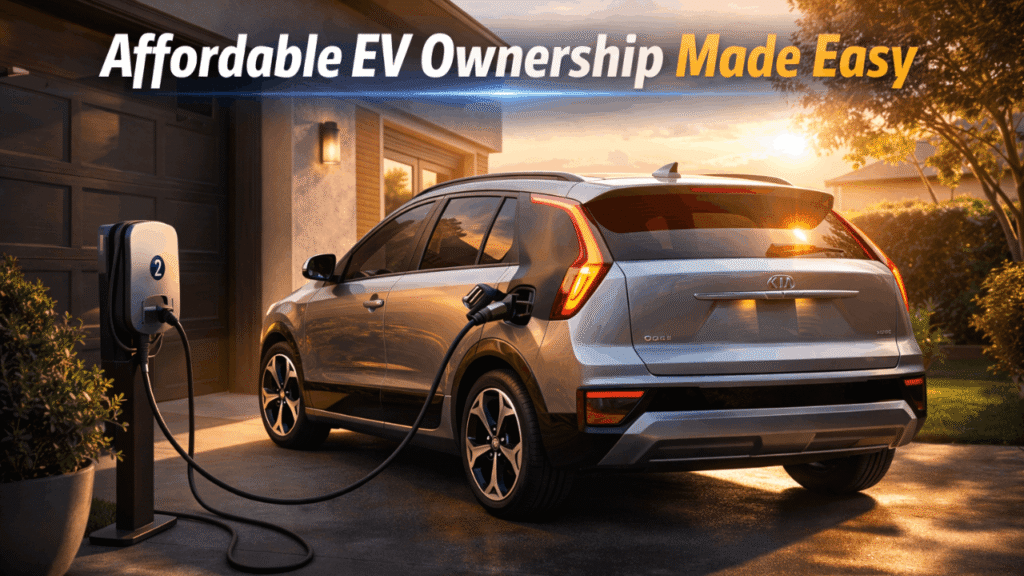
The Kia Niro EV is designed for cost-effective, low-maintenance ownership. With an electric drivetrain, owners avoid oil changes, spark plugs, and transmission service, while tire rotations, brake inspections, and cabin filter replacements remain minimal. For cost-conscious buyers, the Kia Niro EV stands out with low maintenance requirements, predictable charging costs, and long-term warranty coverage.
Electricity costs average $3–$4 per 100 miles, much lower than gasoline, and federal tax credits up to $7,500 may further reduce the purchase price. Kia’s 10-year/100,000-mile battery warranty and 5-year/60,000-mile vehicle warranty provide long-term peace of mind. For US buyers, home or workplace charging is key for convenience. Overall, the Niro EV delivers predictable running costs, reliable performance, and practical benefits for daily commuting and weekend trips.
Total Cost Analysis
Purchase price positioning sits in the $40,000-$50,000 range depending on trim level, before federal tax credits. The federal clean vehicle credit ($7,500) applies if the vehicle meets current eligibility requirements based on assembly location and income thresholds.
[Internal link to related article on EV tax credits and qualification requirements]
Electricity costs vary by region, but averaging $0.13 per kWh nationally translates to roughly $3-$4 for 100 miles of driving—significantly lower than gasoline equivalents.
Maintenance Reality
The Kia Niro EV requires minimal routine maintenance, eliminating oil changes and reducing long-term service costs compared to traditional gasoline vehicles. Electric powertrains eliminate oil changes, transmission service, and spark plug replacements. Scheduled maintenance focuses on:
- Tire rotations
- Brake inspections (though regenerative braking reduces wear)
- Cabin air filter replacement
- Coolant system checks
- Battery conditioning (managed automatically)
Annual maintenance costs typically run $300-$500 compared to $800-$1,200 for comparable gas vehicles.
Warranty Protection
Kia provides a 10-year/100,000-mile battery warranty, which covers capacity degradation below 70%. The comprehensive vehicle warranty extends 5 years/60,000 miles, with powertrain coverage matching the battery timeline.
With extended battery and powertrain coverage, the Kia Niro EV offers strong warranty protection that supports long-term ownership confidence. This warranty structure exceeds most competitors and provides meaningful long-term ownership security.
Cargo Space and Interior Practicality
With 18.5 cubic feet behind the rear seats and 53.1 cubic feet with the seats folded, cargo capacity handles weekly grocery runs and airport luggage without issue. The flat load floor (no transmission tunnel) maximizes usable space. With flexible seating and usable cargo volume, the Kia Niro EV offers enough interior practicality for groceries, luggage, and daily family use.
Rear legroom accommodates adults comfortably for trips under two hours. The seating position sits higher than sedans but lower than traditional body-on-frame SUVs—splitting the difference for entry/exit convenience.
Materials quality skews toward durable rather than luxurious. Hard plastics dominate lower surfaces, while upper touchpoints use softer textures. The overall impression feels purposeful rather than premium.
Performance Characteristics
The single-motor front-wheel-drive configuration produces 201 horsepower and 188 lb-ft of torque. Acceleration reaches 60 mph in approximately 7.5 seconds—adequate for highway merging and urban maneuvering without feeling particularly quick. The Kia Niro EV delivers smooth acceleration and predictable handling, making it well-suited for city traffic, highway merging, and comfortable daily driving.
Regenerative braking offers multiple levels of intensity, including a one-pedal driving mode that brings the vehicle to a complete stop without touching the brake pedal. This system maximizes energy recovery and reduces brake wear.
Handling characteristics prioritize comfort over sportiness. The suspension absorbs road imperfections effectively, though body roll becomes noticeable during aggressive cornering. This tuning aligns with the vehicle’s mission as a practical commuter rather than a performance-oriented crossover.
Charging Infrastructure Compatibility
The vehicle uses the CCS (Combined Charging System) connector standard, compatible with most public charging networks, including Electrify America, EVgo, and ChargePoint stations. Using the CCS charging standard, the Kia Niro EV remains compatible with most public fast-charging networks and home Level 2 charging setups across the US.
Kia partnerships provide complimentary charging credits with Electrify America for initial owners, though specific programs vary by model year and purchase date.
[Internal link to related article on public charging network comparison]
Home charging remains the most economical approach. Installing a Level 2 (240V) charger costs $500-$2,000 depending on electrical panel proximity and permitting requirements. Federal and state incentives may offset installation expenses.
Competitive Position Analysis
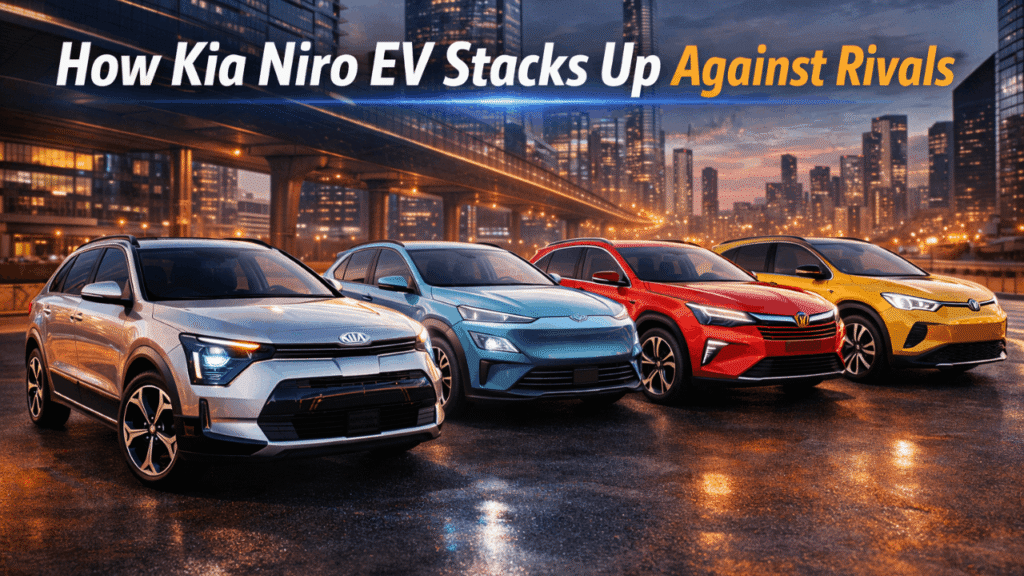
The Kia Niro EV competes directly with the Hyundai Kona EV, Chevrolet Equinox EV, and Volkswagen ID.4. Compared to the Kona EV, it offers similar range and platform benefits, with slightly more interior practicality. Against the Equinox EV, the Niro EV trades slightly shorter range for proven reliability and lower purchase costs. When compared to rivals like the Hyundai Kona EV and Volkswagen ID.4, the Kia Niro EV balances price, range, and technology without pushing buyers into premium pricing.
The Volkswagen ID.4 provides AWD options and a longer range but sometimes lags in interior usability and software intuitiveness. Overall, the Niro EV balances affordability, technology, and practicality, making it a strong contender for US buyers seeking a compact electric crossover that fits daily commuting, family trips, and cost-conscious ownership without compromising essential EV features. Within the compact EV segment, the Kia Niro EV competes closely with models like the Hyundai Kona EV and Volkswagen ID.4 by balancing range, pricing, and features.
vs. Hyundai Kona Electric
Shares the same platform and powertrain but offers different styling and slightly varied standard features. Pricing and capability remain nearly identical—choice often comes down to design preference.
vs. Chevrolet Equinox EV
The Equinox EV provides more range (319 miles) and faster charging capability but with a higher starting price and newer model uncertainty regarding long-term reliability.
vs. Volkswagen ID.4
VW’s offering includes available all-wheel drive and competitive range, though interior quality perceptions and software responsiveness receive mixed reviews compared to Kia’s more intuitive interface.
| Vehicle | Range | Charging | Key Advantage | Notes |
|---|---|---|---|---|
| Kia Niro EV | 253 mi EPA | 85 kW | Practical, family-friendly | Proven reliability |
| Hyundai Kona EV | 258 mi | 77–100 kW | Sporty styling | Platform-shared with Niro |
| Chevrolet Equinox EV | 319 mi | 150 kW | Long range, fast charging | Higher price, newer model risk |
| Volkswagen ID.4 | 275 mi | 125 kW | AWD option | Interior quality mixed vs. Niro |
Climate Considerations for US Regions
Climate conditions strongly influence electric vehicle efficiency across US regions. The Kia Niro EV may lose range in cold northern winters, while extreme heat can affect battery health in southern states. With smart charging habits and thermal management, the Kia Niro EV delivers dependable performance year round for most drivers.
Cold Weather Performance
In colder climates, the Kia Niro EV may experience reduced driving range, but battery preconditioning helps maintain consistent performance. Drivers in northern states should expect a 20-30% range reduction during winter months. Battery preconditioning while plugged in helps maintain efficiency, and heat pump technology (if equipped) reduces energy drain compared to resistive heating.
Hot Weather Performance
The Kia Niro EV uses active thermal management to protect battery health and efficiency during extreme heat conditions. Extreme heat affects battery longevity more than cold, though modern thermal management systems mitigate degradation. Parking in the shade and avoiding constant 100% charge levels extends battery life in southern climates.
Common Questions Answered
How long does the battery last before needing replacement?
Battery packs typically maintain 80%+ capacity for 150,000-200,000 miles. Kia’s warranty covers degradation below 70% for 10 years/100,000 miles. Full replacement costs remain speculative, but declining battery prices suggest future replacements will cost significantly less than today’s $8,000-$12,000 estimates.
Can I tow with the Kia Niro EV?
The vehicle isn’t rated for towing in the US market. The electric motor produces adequate torque, but the chassis and cooling systems aren’t designed for trailer loads.
What happens if I run out of battery charge?
You’ll need roadside assistance with flatbed towing to the nearest charging station. AAA and some manufacturers offer mobile charging services, though availability varies by region. Proactive trip planning and charging stops prevent this scenario.
Does regenerative braking require special driving techniques?
The learning curve takes 1-2 weeks. Start with the lowest regeneration setting and gradually increase intensity as you adapt to one-pedal driving behavior. The system feels intuitive once you understand how lifting the accelerator initiates braking.
How does insurance cost compare to gas vehicles?
Electric vehicles often cost 10-20% more to insure due to higher repair costs for battery and electronic components. Shop quotes from multiple carriers—some offer EV-specific discounts that offset the premium increase.
What’s the real-world charging time at public stations?
A 10-80% charge takes 40-50 minutes at functioning 85 kW DC fast chargers. Actual times vary based on battery temperature, station maintenance condition, and how many vehicles share the charging cabinet. Always add buffer time for route planning.
Final Assessment
The Kia Niro EV succeeds as a practical electric vehicle for buyers prioritizing value and reliability over maximum range or performance specifications. It handles daily commutes, weekend trips, and occasional road journeys without requiring ownership lifestyle compromises.
This vehicle makes sense if you:
- Have home charging capability or consistent workplace charging access
- Drive fewer than 200 miles daily
- Value warranty coverage and brand reliability
- Want proven technology rather than bleeding-edge features
It’s less ideal if you frequently drive 250+ mile distances, lack charging infrastructure access, or prioritize rapid charging speed above all else.
The electric crossover segment continues evolving rapidly, with new competitors launching throughout 2025-2026. The Kia Niro EV represents the current state of mainstream electric vehicles—competent, practical, and increasingly affordable as the market matures.
[Internal link to related article on best EVs for first-time electric vehicle buyers]
Your decision should align with actual driving patterns rather than hypothetical scenarios. Test drive the vehicle in conditions matching your typical usage, verify local charging infrastructure, and calculate total ownership costs including electricity rates, insurance quotes, and available incentives. That data-driven approach produces better outcomes than brand loyalty or range anxiety fears.